
The Bronze Monument
The new doors of the Łomża Parish Church.
There are events in life and history that are monumental from the perspective of time itself. Yes—time. If we talk about the average length of a human life, statistically speaking, we operate within the range of a few decades. In this case, we can speak of 70 or 80 years. From the perspective of a young person, this is a lot. From the perspective of a middle-aged adult, it is already very little. From the perspective of the infinity of time, the course of millennia of human history and civilization, not to mention geological history, these 70–80 years are simply the blink of an eye. It is the spark’s leap. It is the lifespan of a butterfly. Everything and nothing.
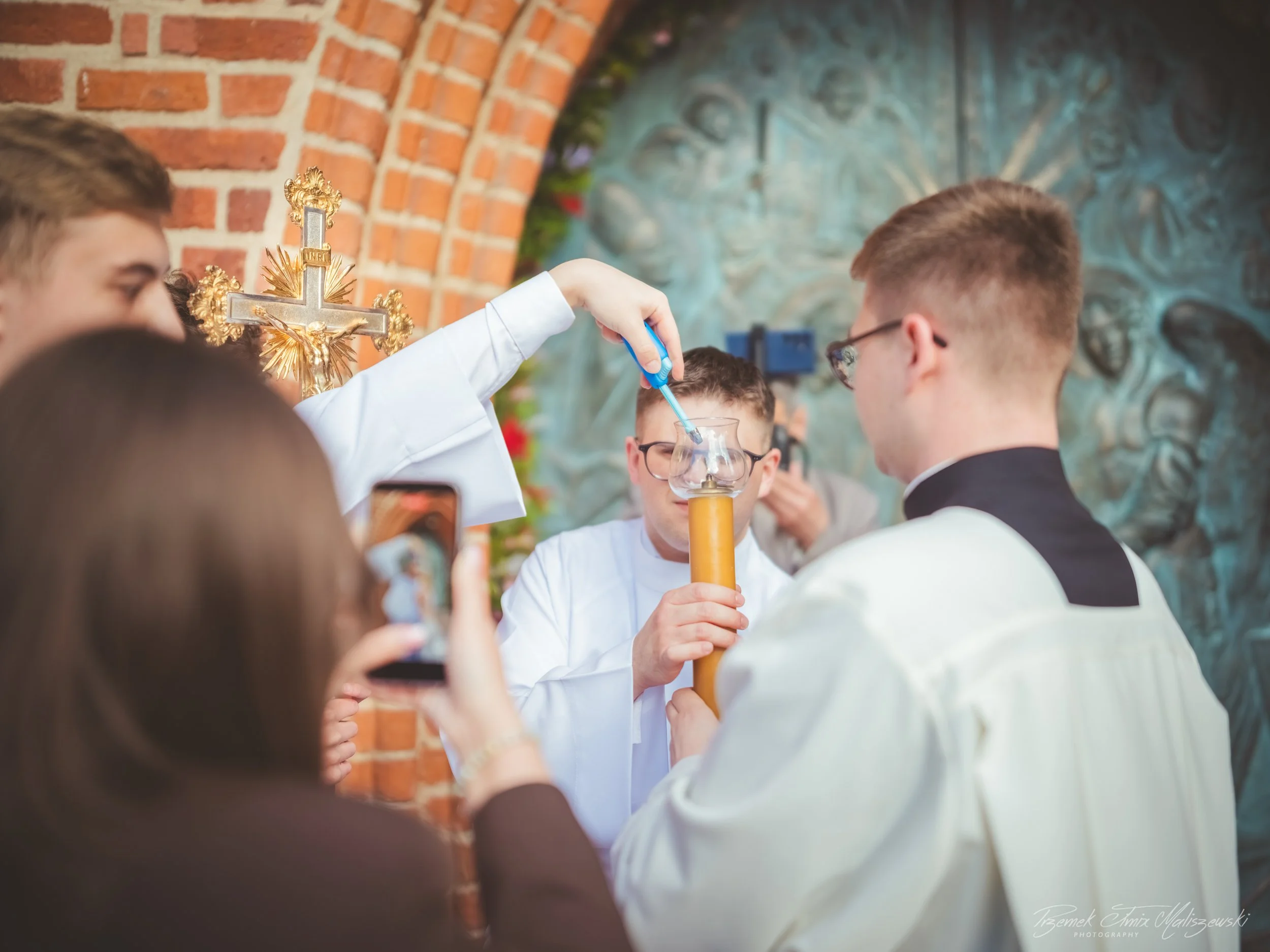
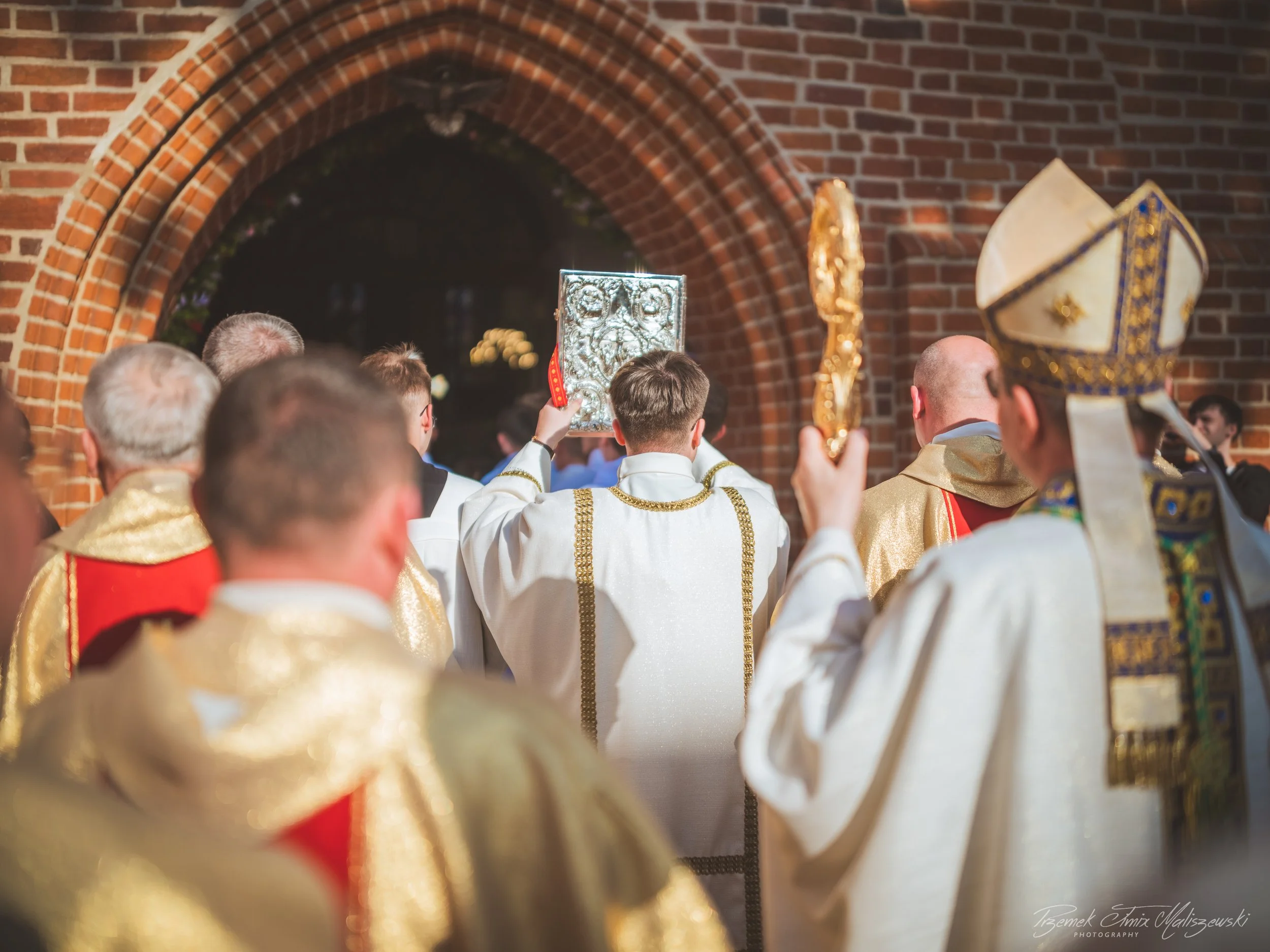
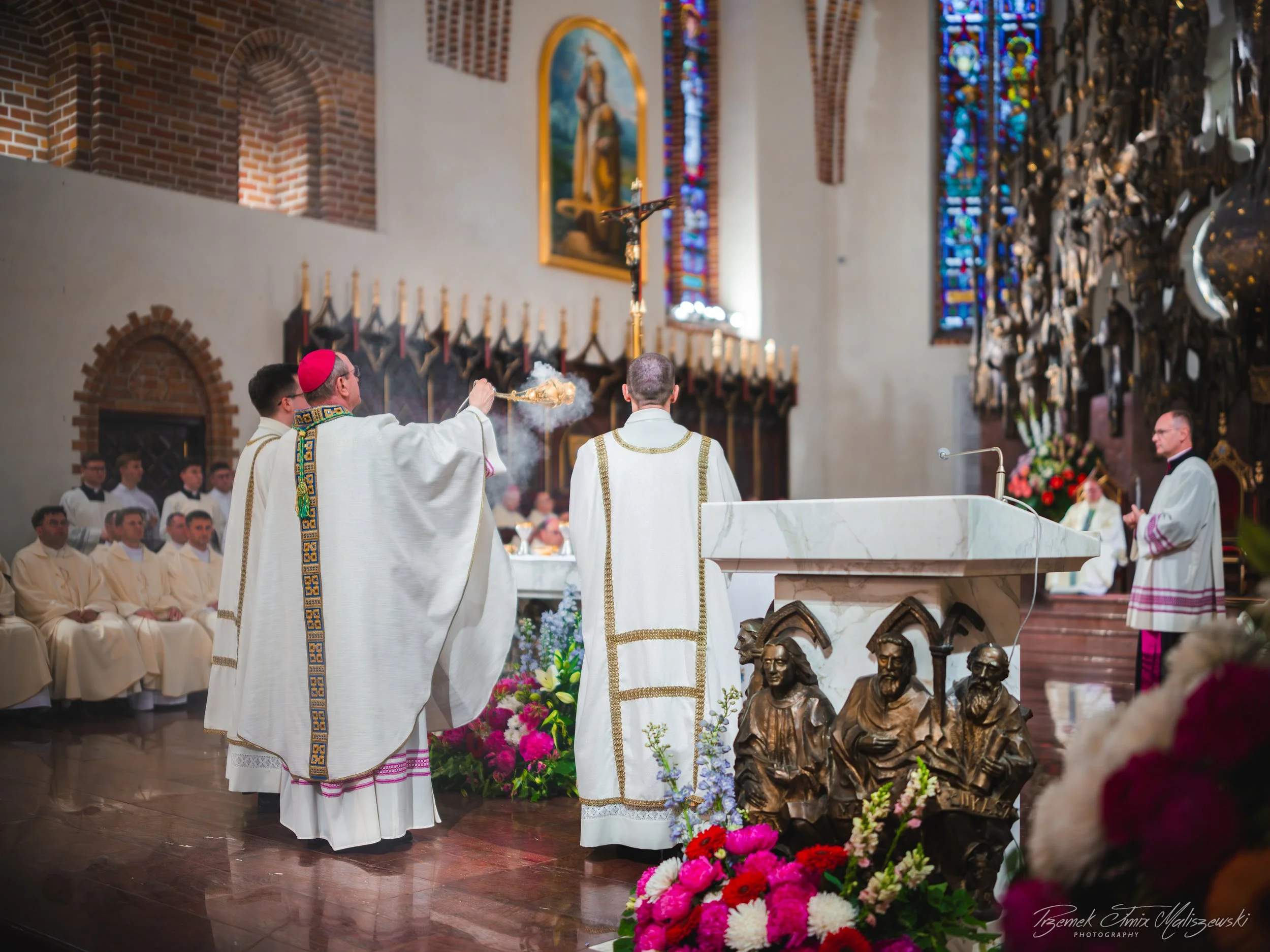
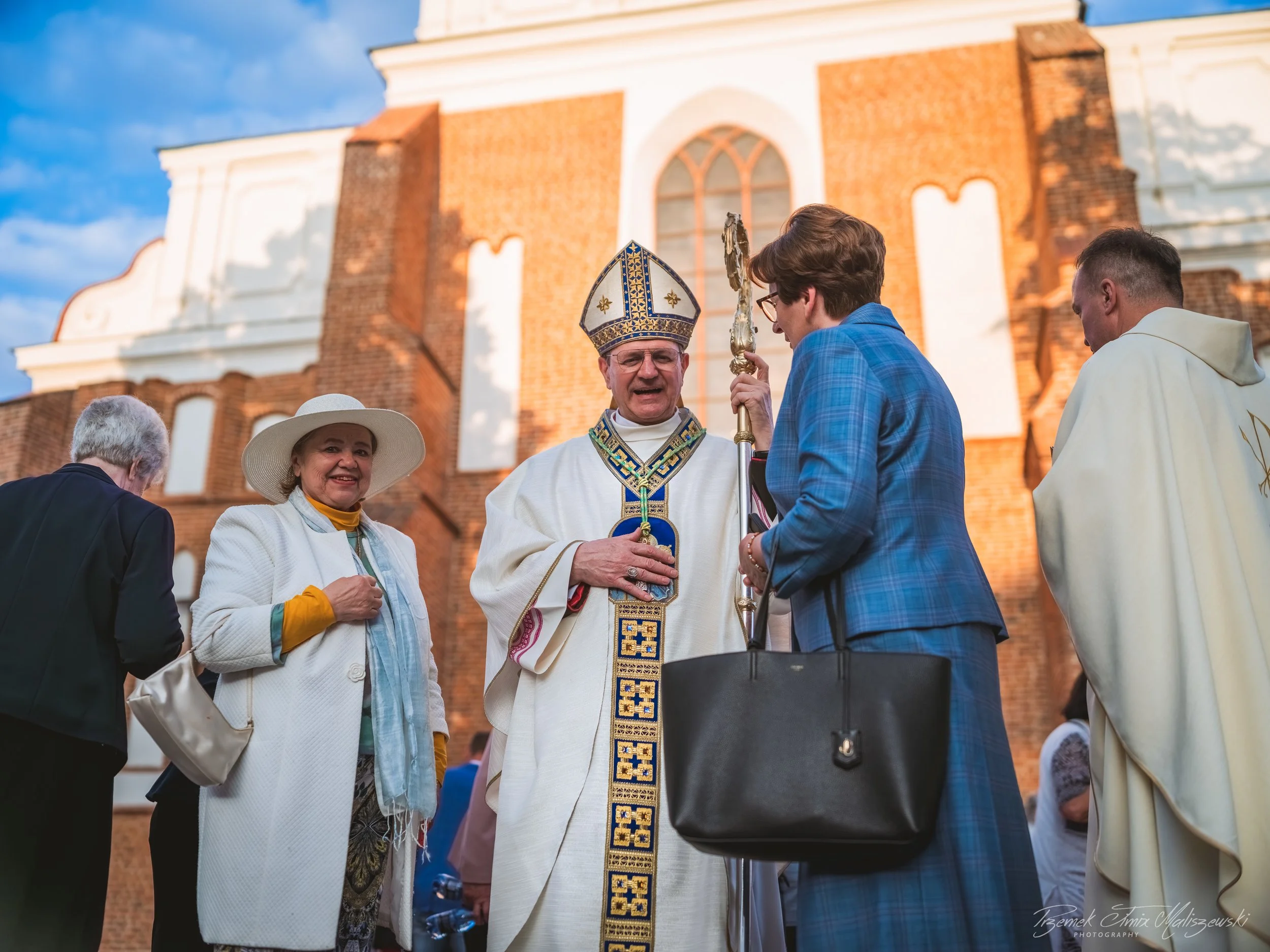
Archbishop Tadeusz Wojda, Metropolitan of Gdańsk, performs the ceremonial opening of the new doors of the Łomża Cathedral.
Human life is short. It is not a soap opera that seems to have no end. It is a short episode, a tiny vignette, a minuscule dot on the infinite timeline of transforming energy and evolving life. It truly is a brief, nanosecond flash. Events such as the invention of the wheel, gunpowder, or the printing press resonate long in history, across entire generations, enduring for centuries and millennia. Roman structures, whose ruins we can still admire in Europe today, bind together—in some cases—almost two millennia. That is nearly 80 generations. Only that much, yet so much.
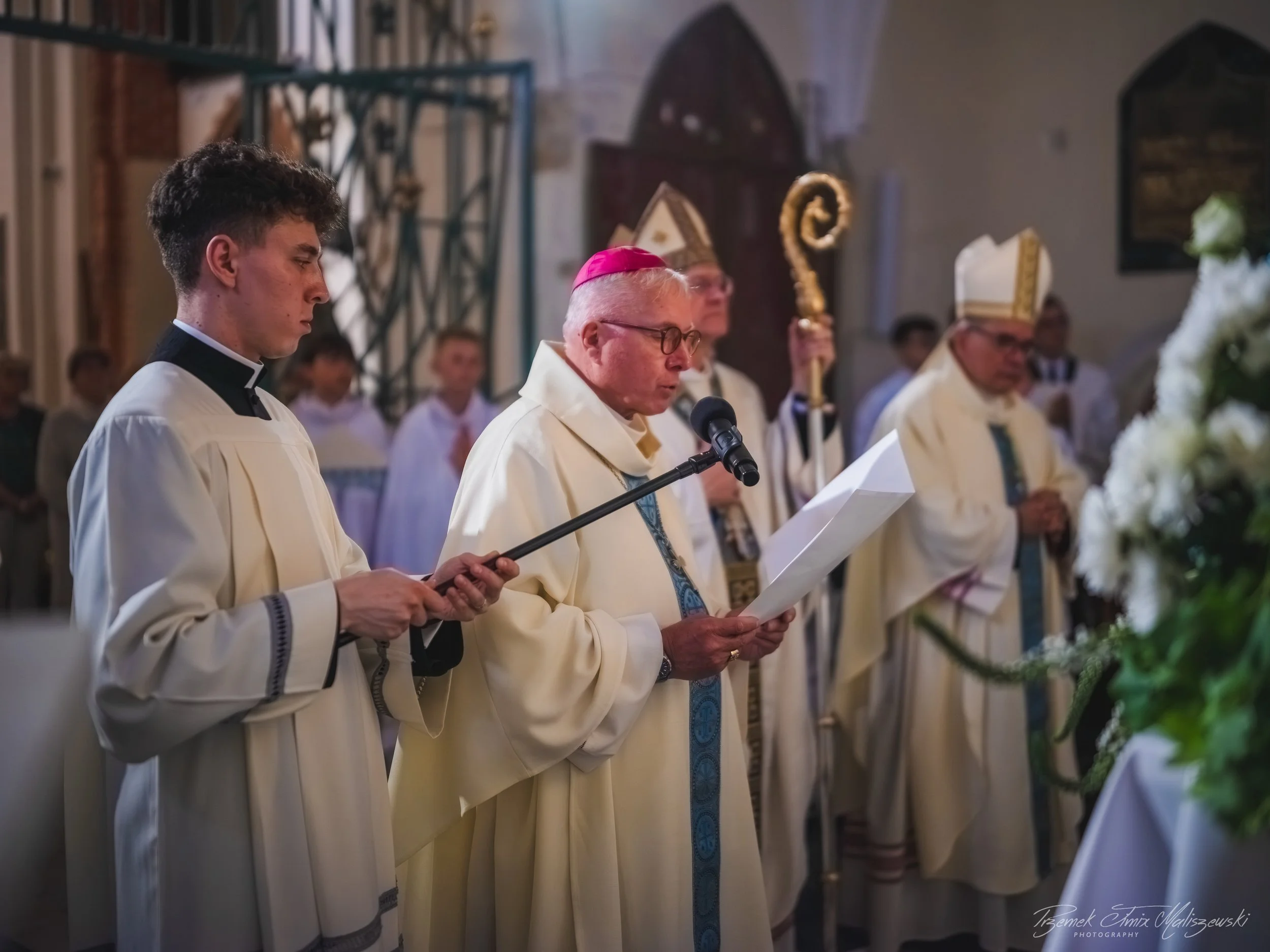
Apostolic Nuncio Archbishop Antonio Guido Filipazzi performs the blessing of the new cathedral doors. Below: the blessing is performed by Archbishop Tadeusz Wojda SAC, Bishop Janusz Stepnowski, and Cardinal Konrad Krajewski.
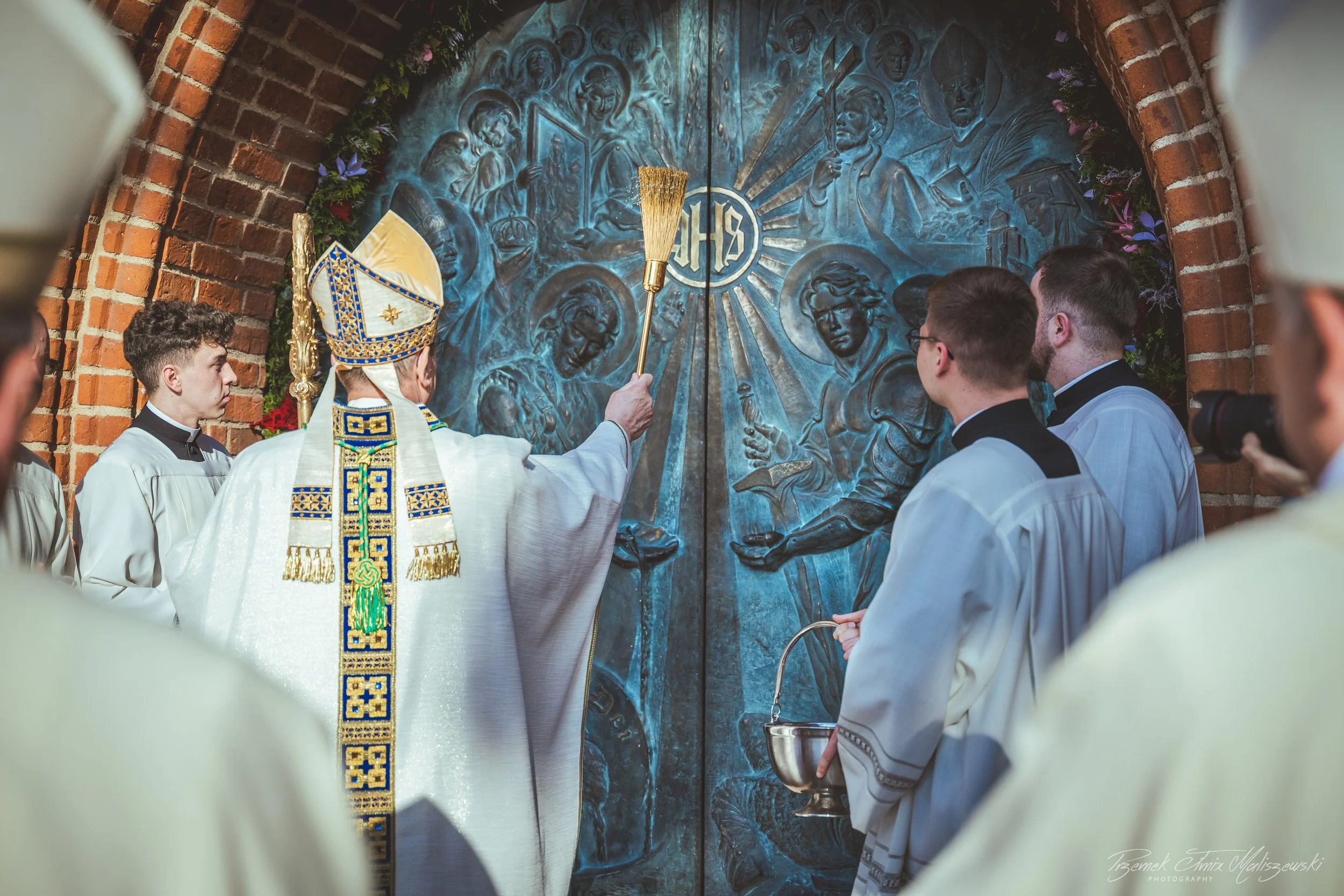
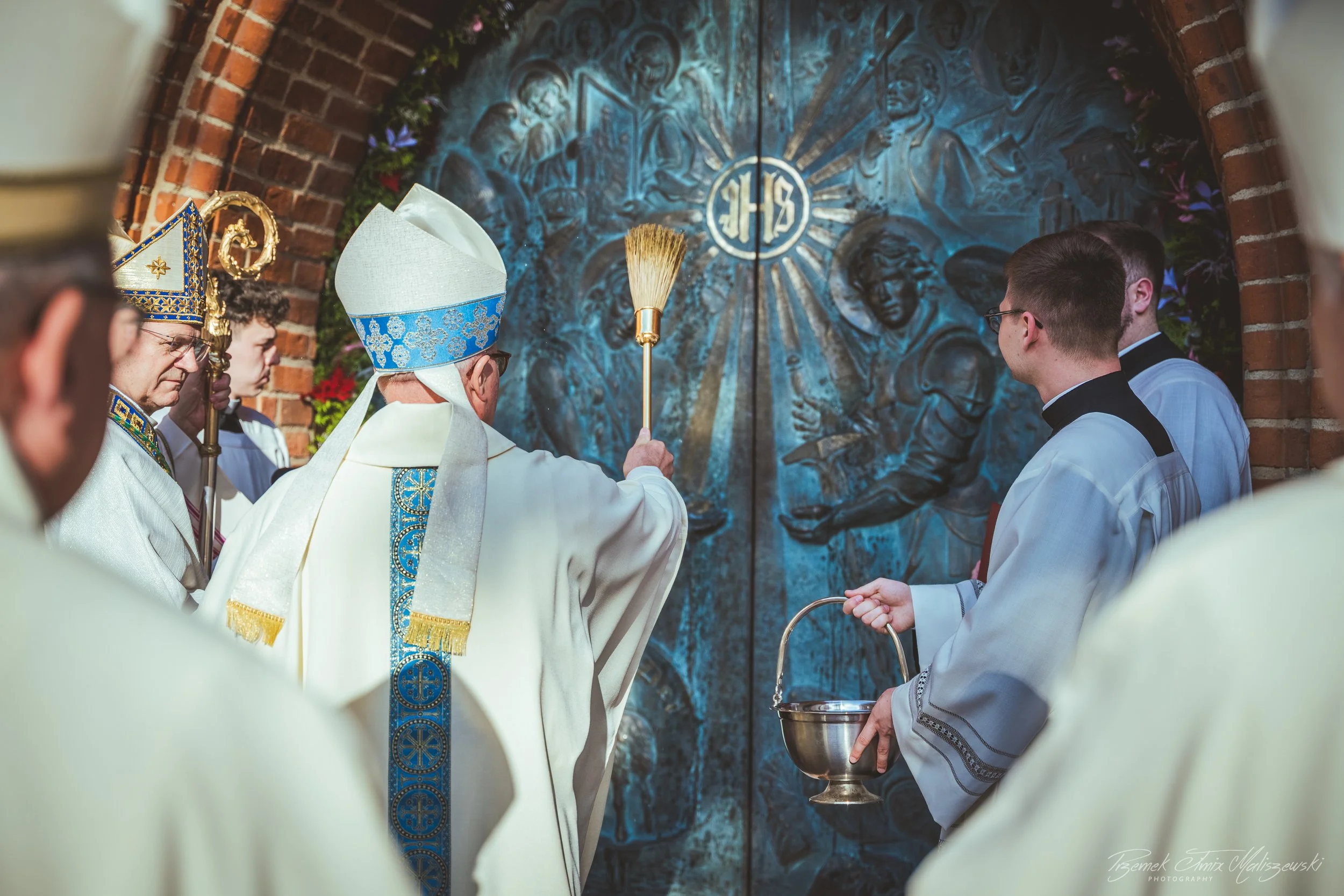
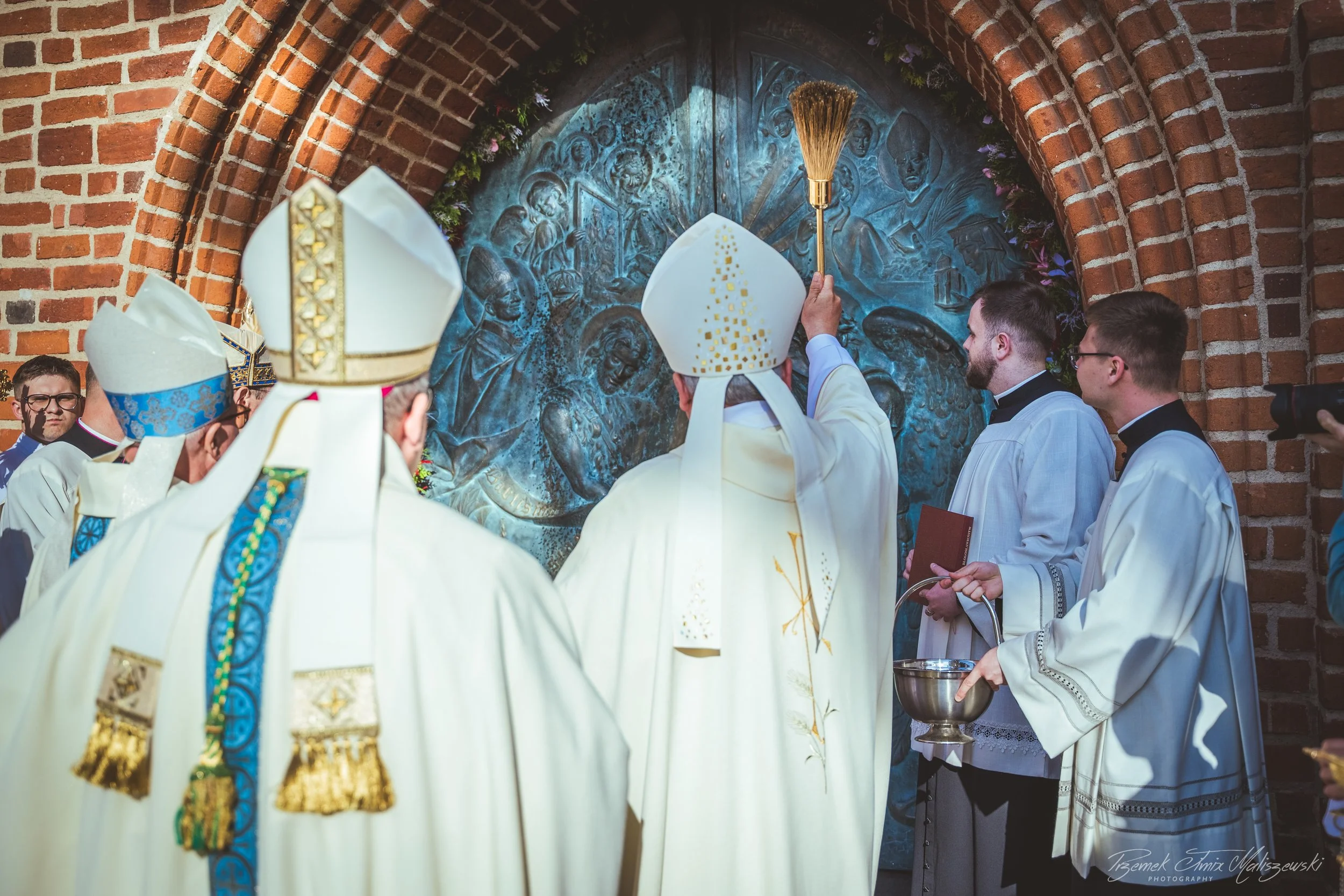
Witnessing History.
On the scale of the Solar System's existence, it is almost absolute zero, but for a human being, it is a vast expanse of time. It is a massive amount of duration. And today, when we stand under the oculus of the Roman Pantheon, we reflect precisely on this duration, on time, on what the commissioning of a new building almost two thousand years ago looked like, and on how many generations after us—when eternal silence will have long fallen upon us—will still be able to admire these testaments of past life, work, and someone's dreams.
Who knows, perhaps someone among the living in the future will think of us, living here and now in 2026? Perhaps they will wonder who we were, what we were like, what we lived for, and what our lives looked like. And, just as we wonder what the Roman Forum looked like in its prime, or what the inauguration of the Charles Bridge in Prague looked like, perhaps someone who visits Łomża in a few hundred years will stand before the old, by then several-hundred-year-old entrance doors, and wonder what they looked like when they were new. What did their inauguration look like? Who were the people present there at that time, and what was their history? And was there perhaps someone who somehow documented it all?
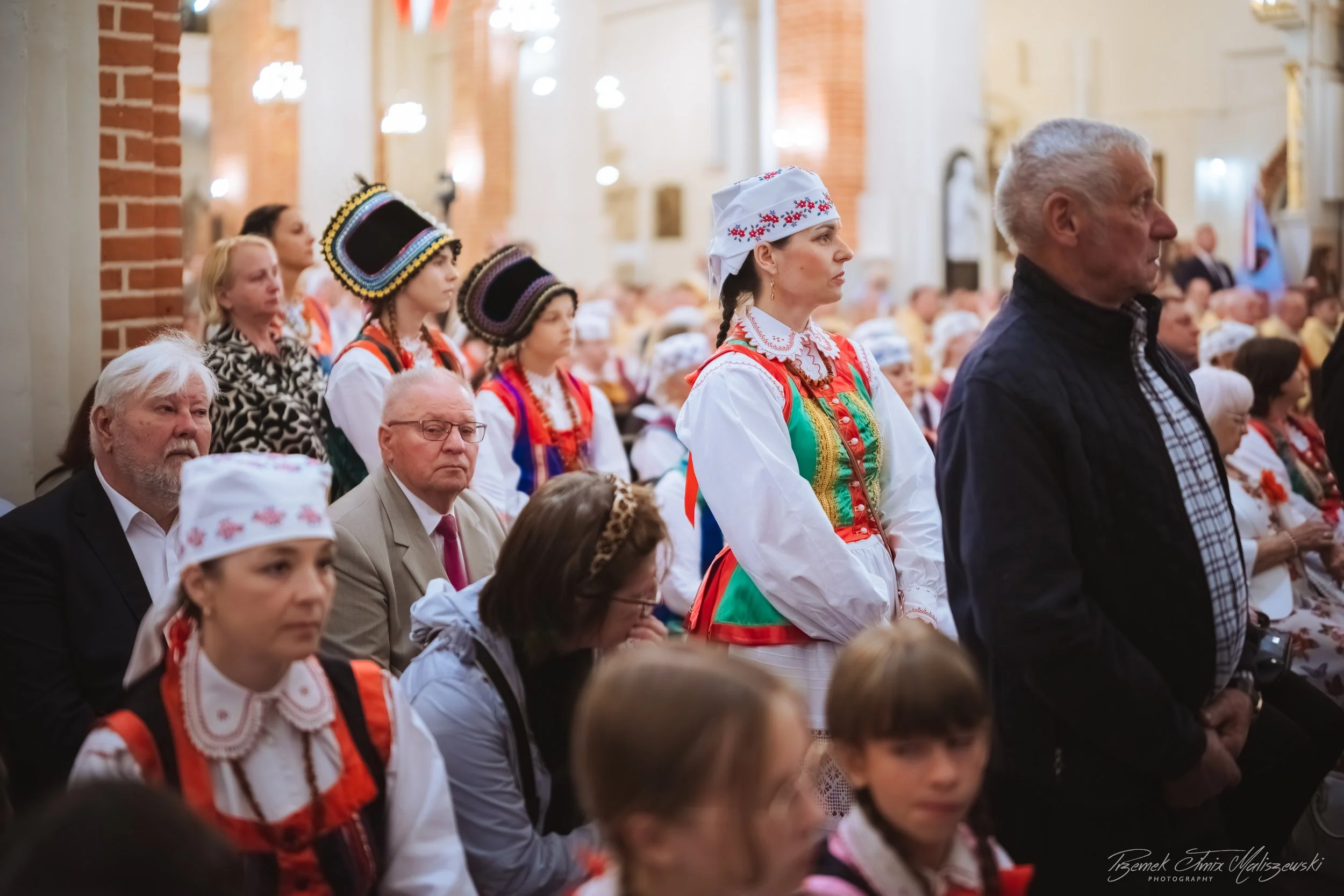
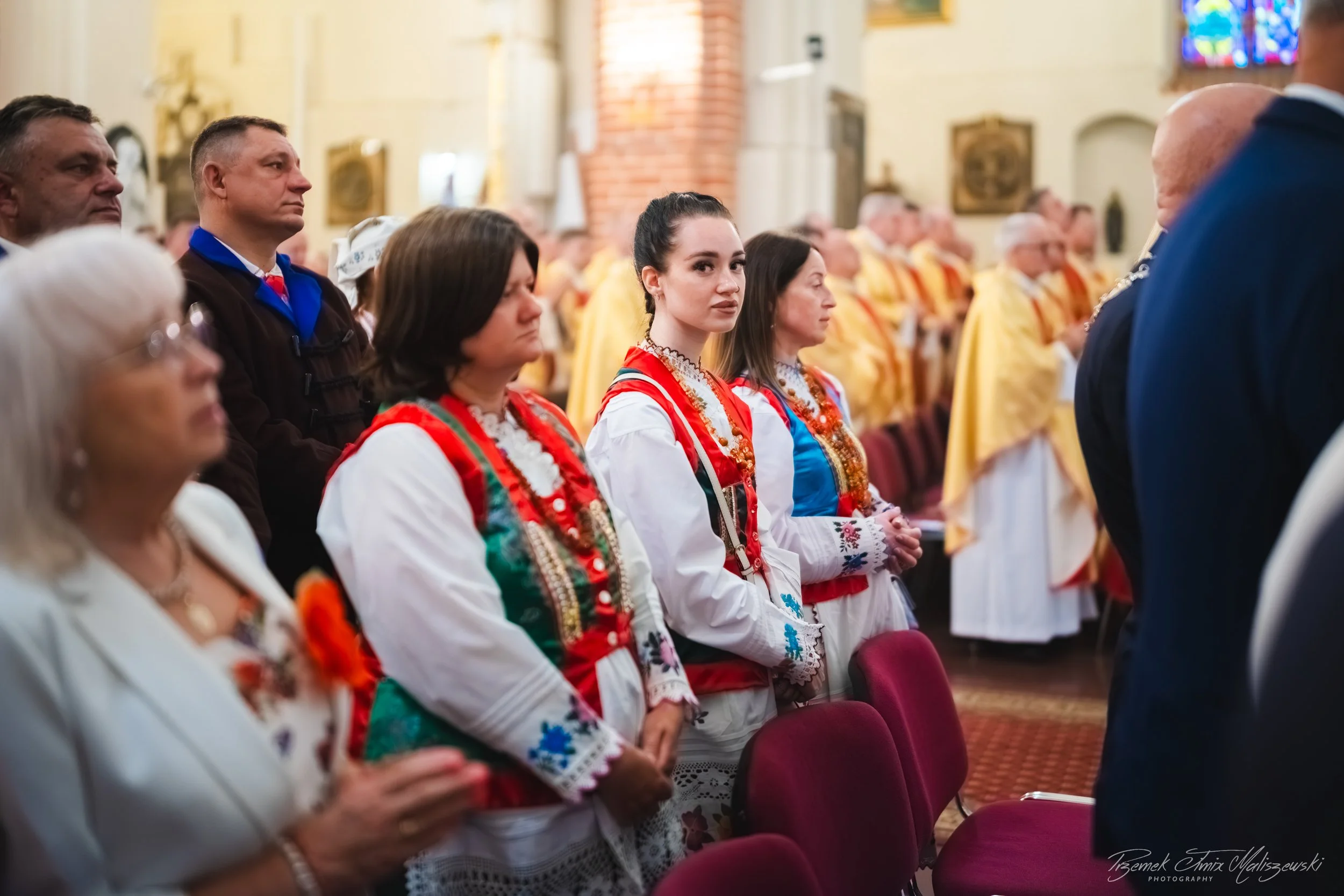
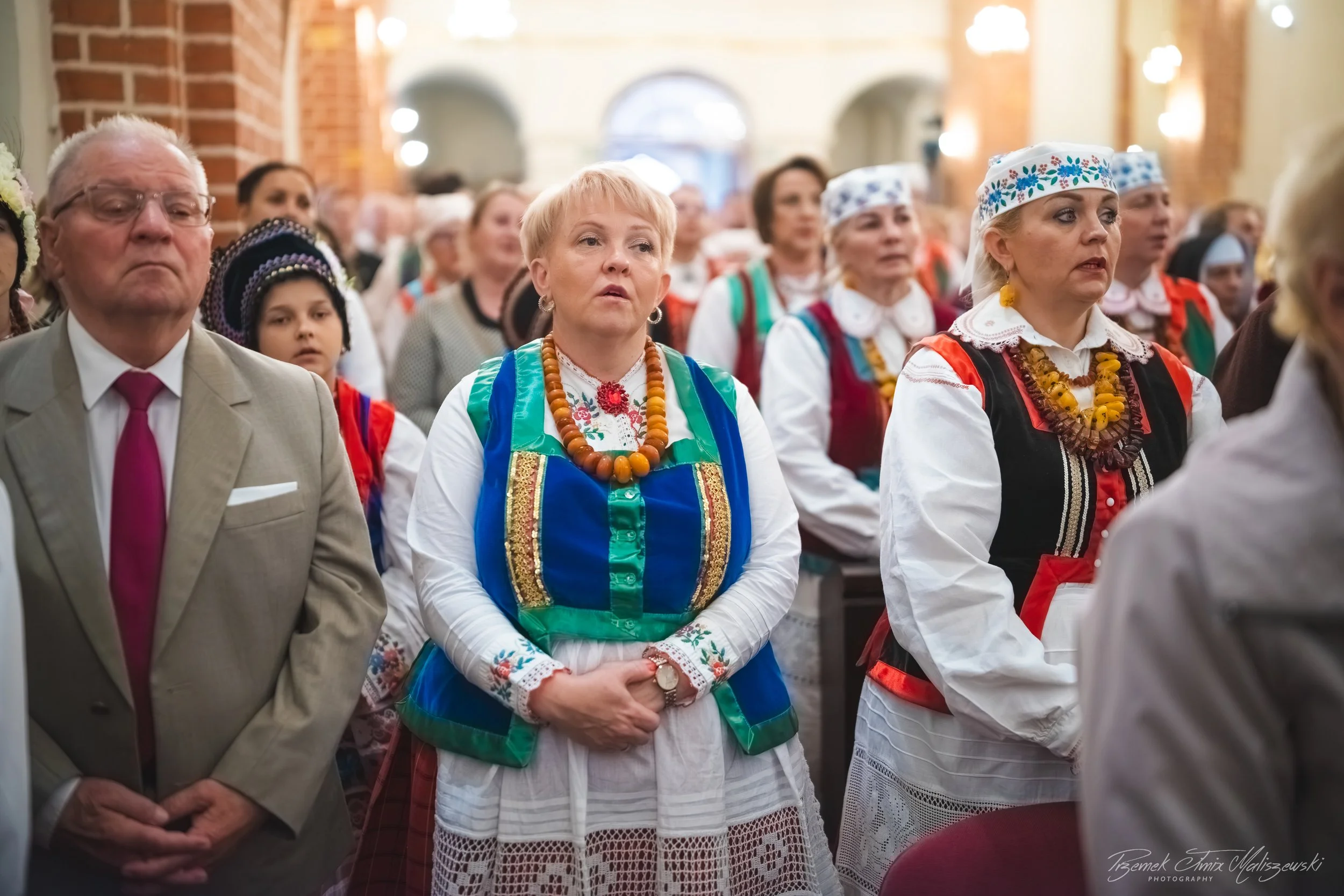
But of course! Among the several photographers and journalists present on that day in that place, I was also there.
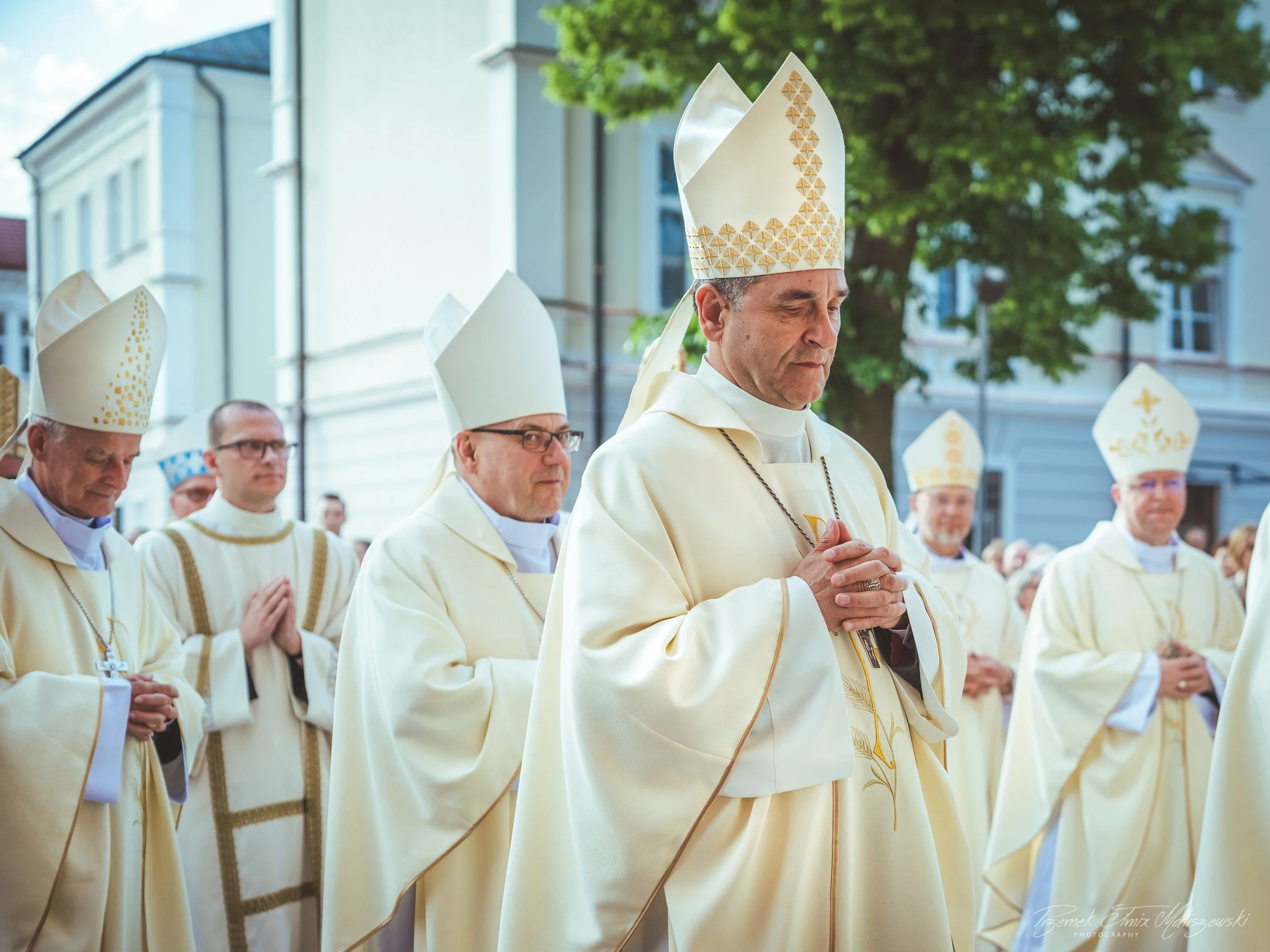
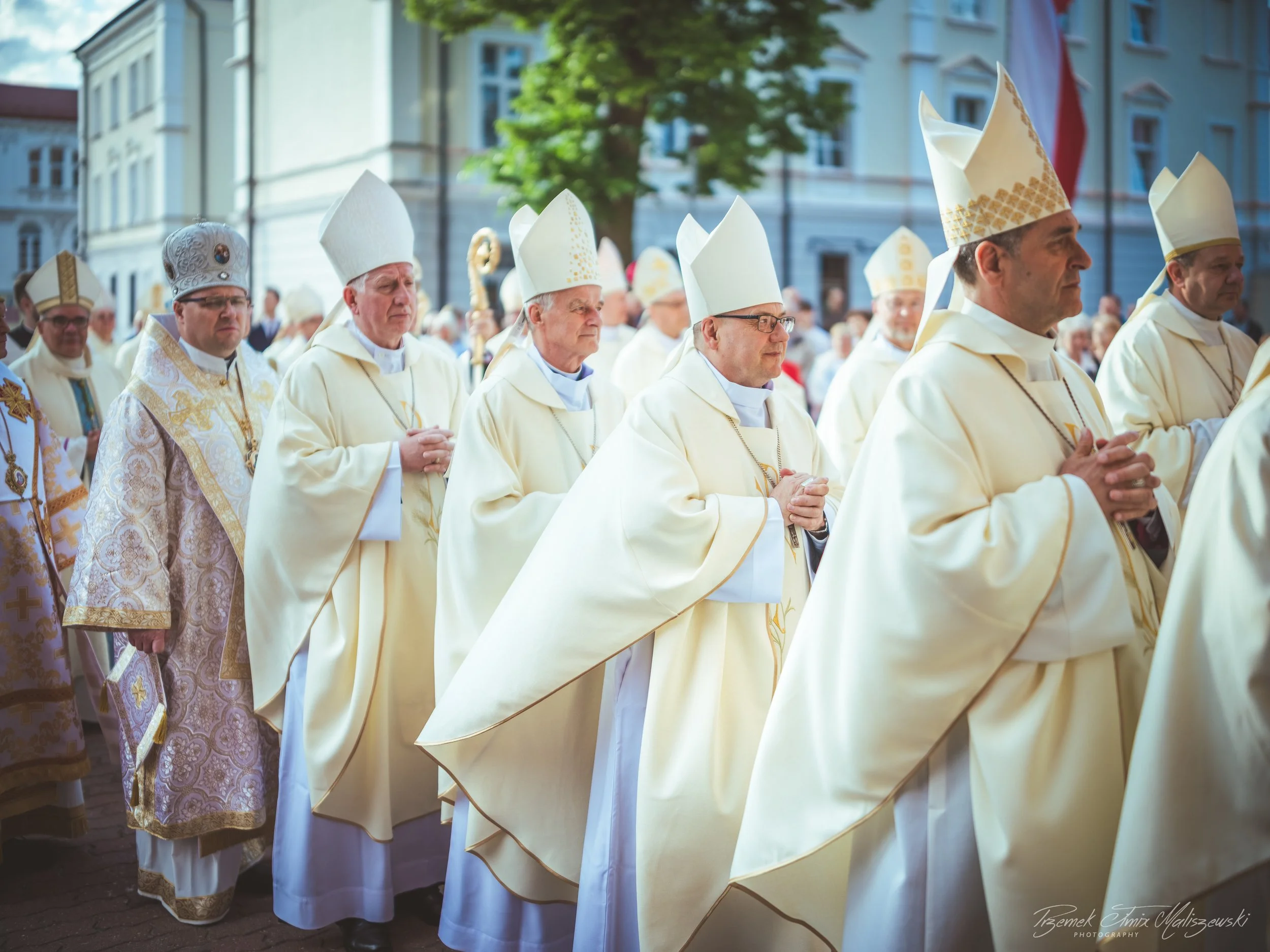
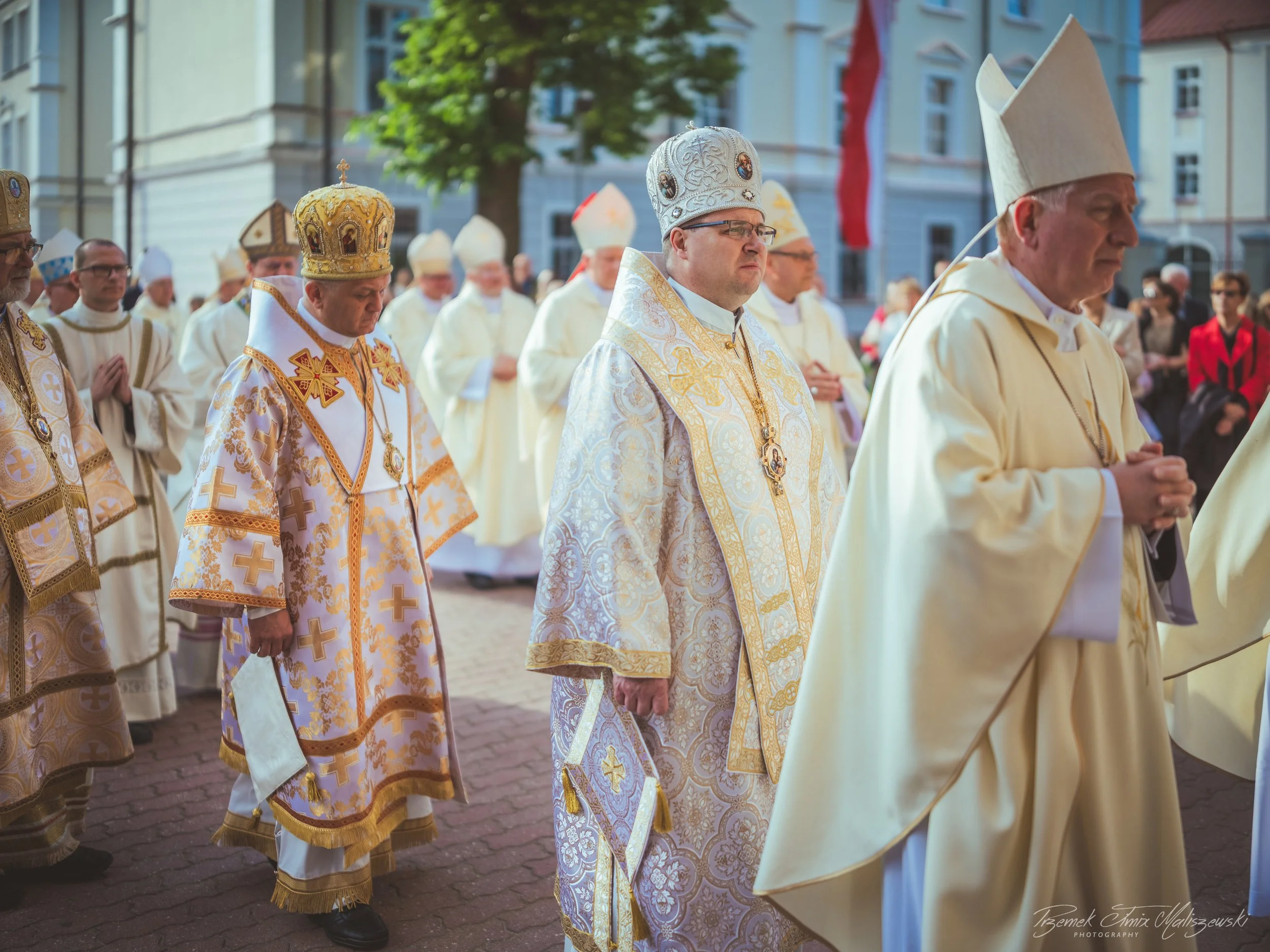
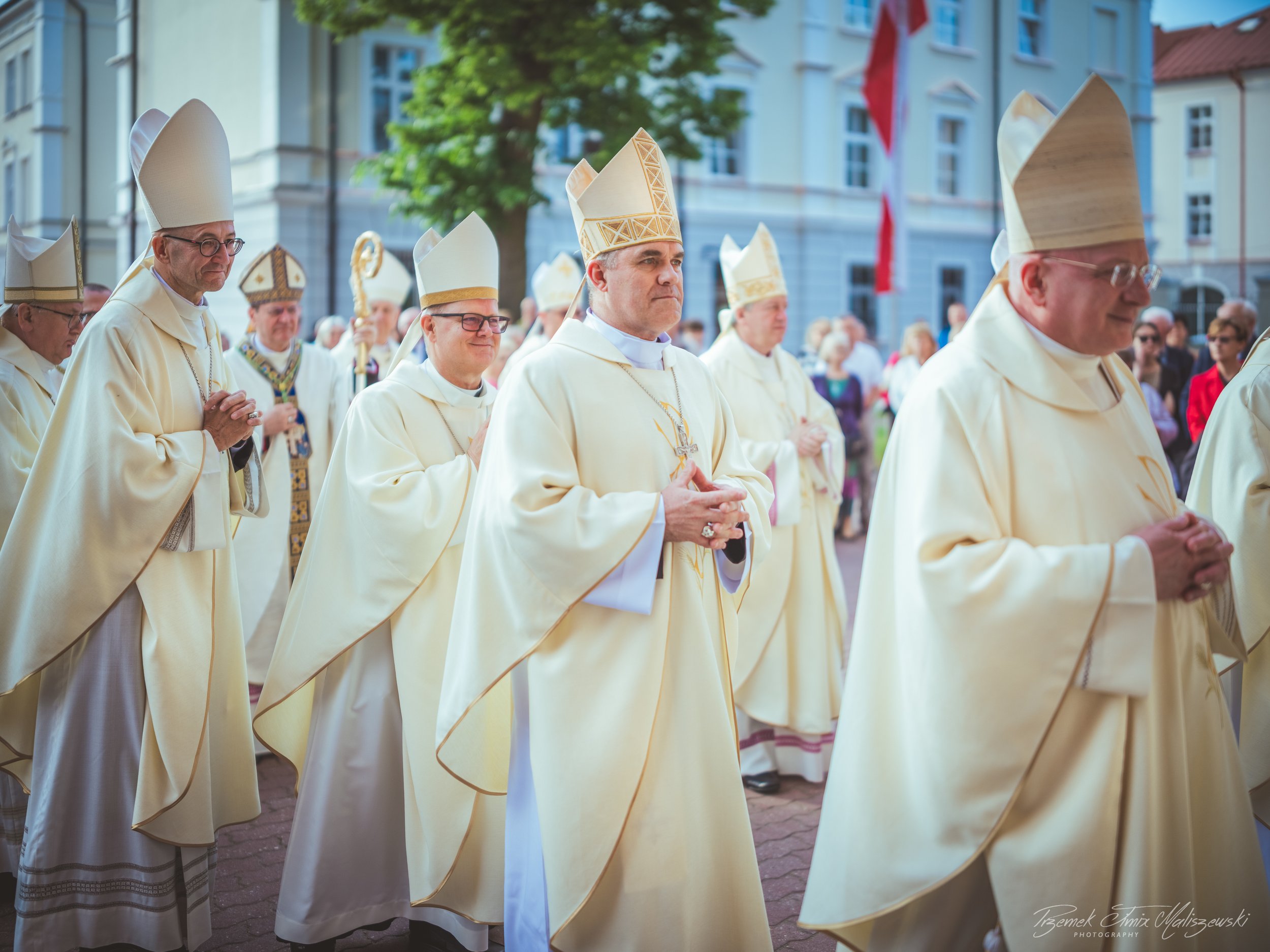
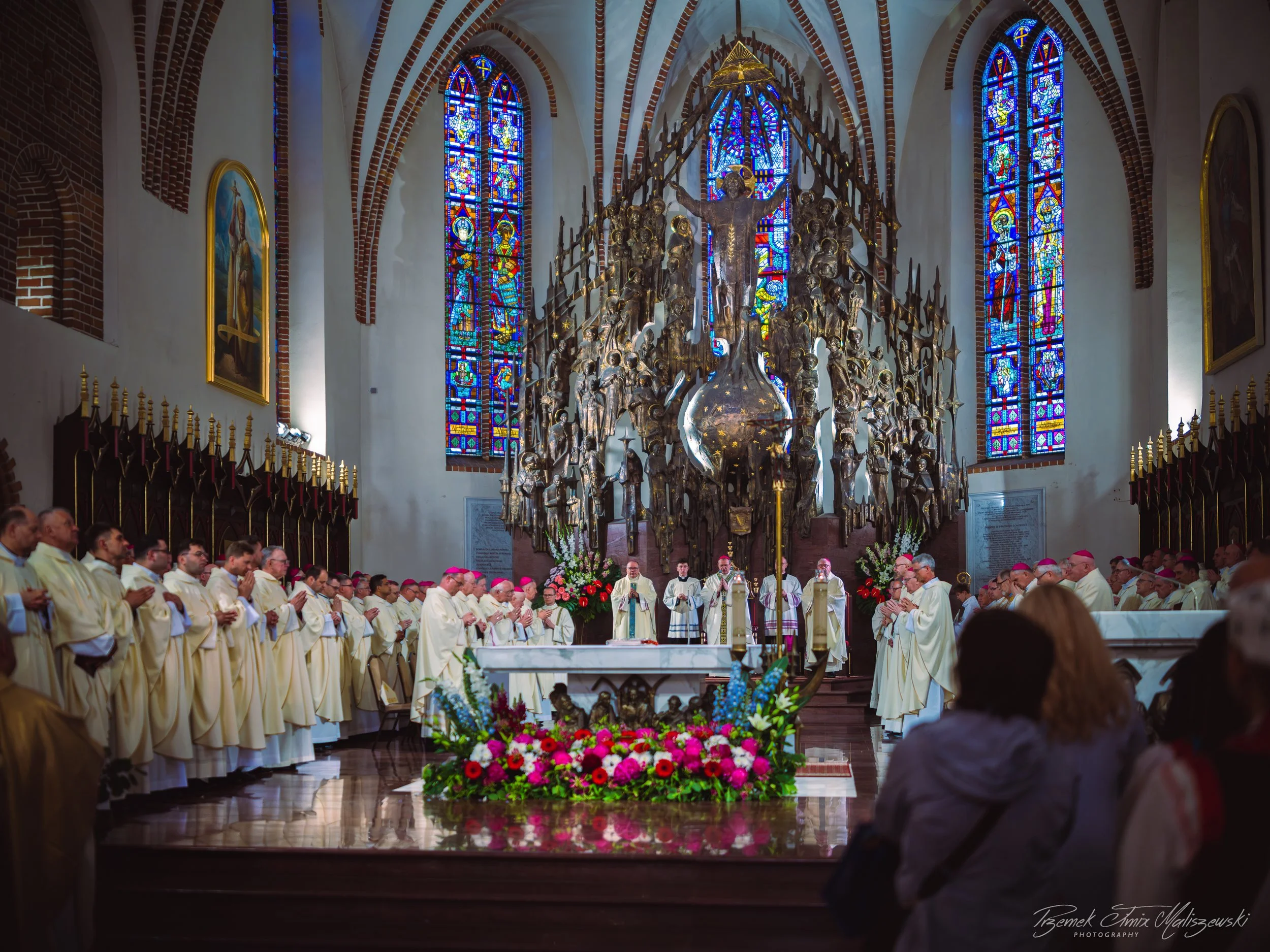
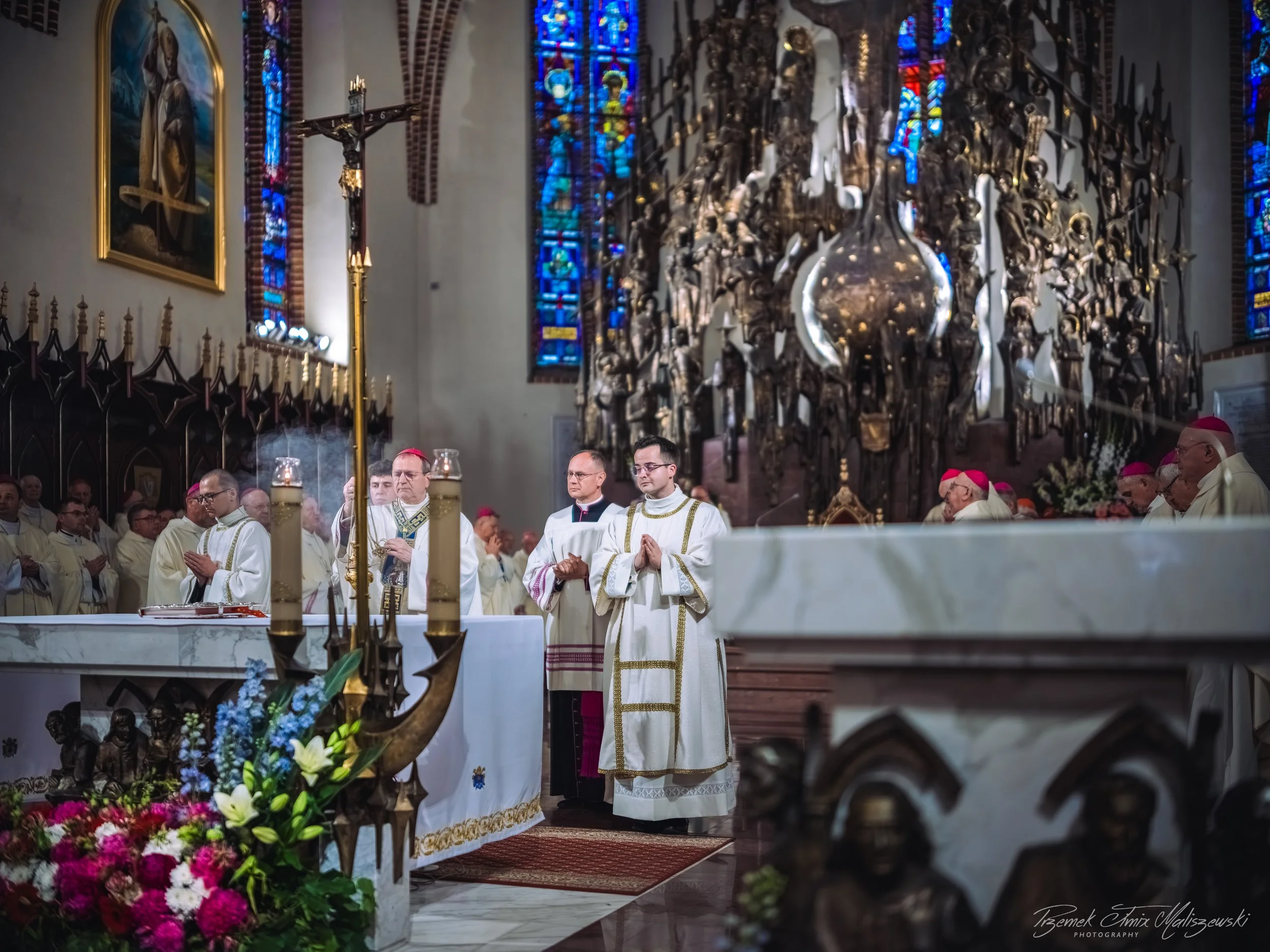
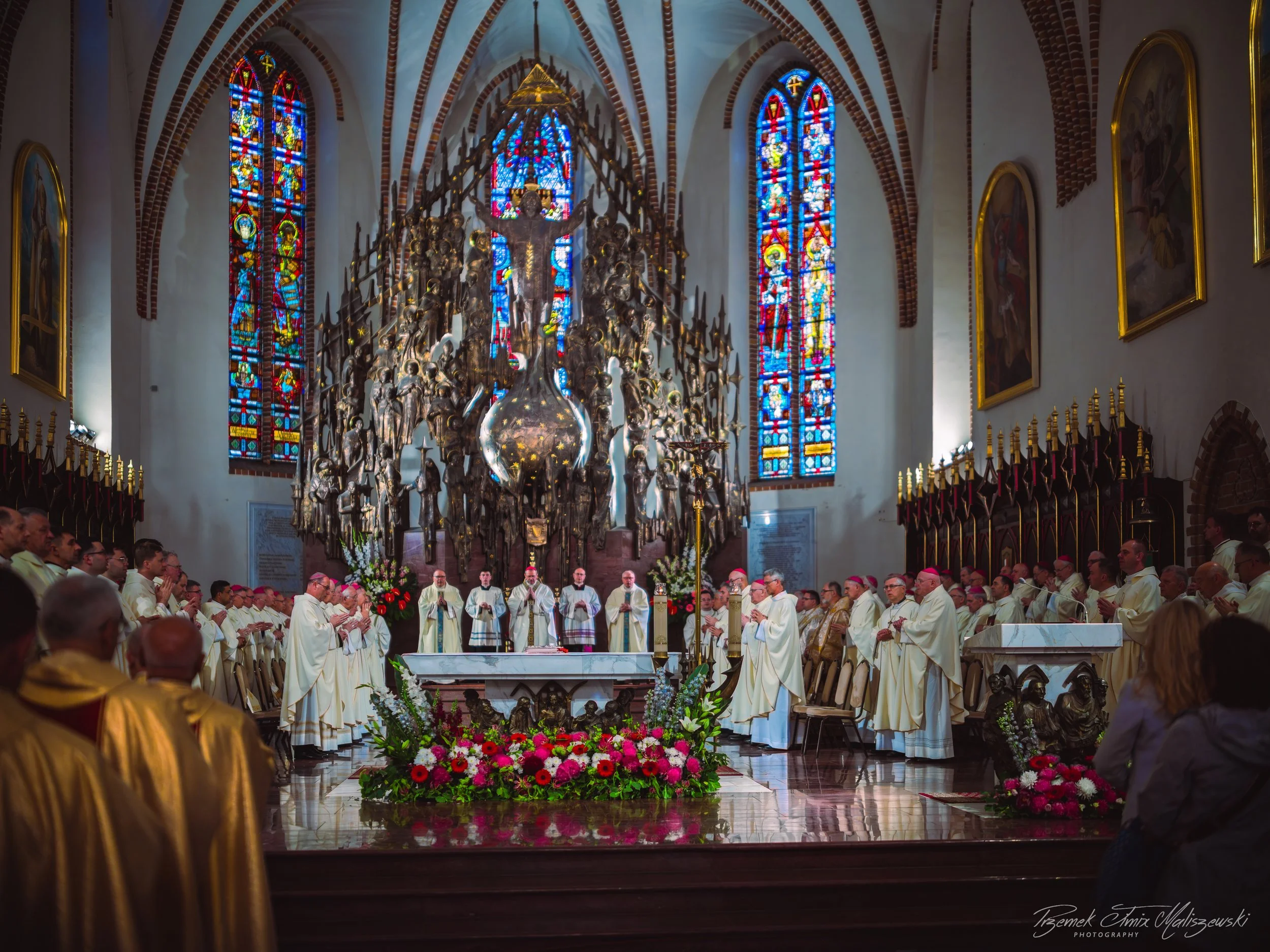
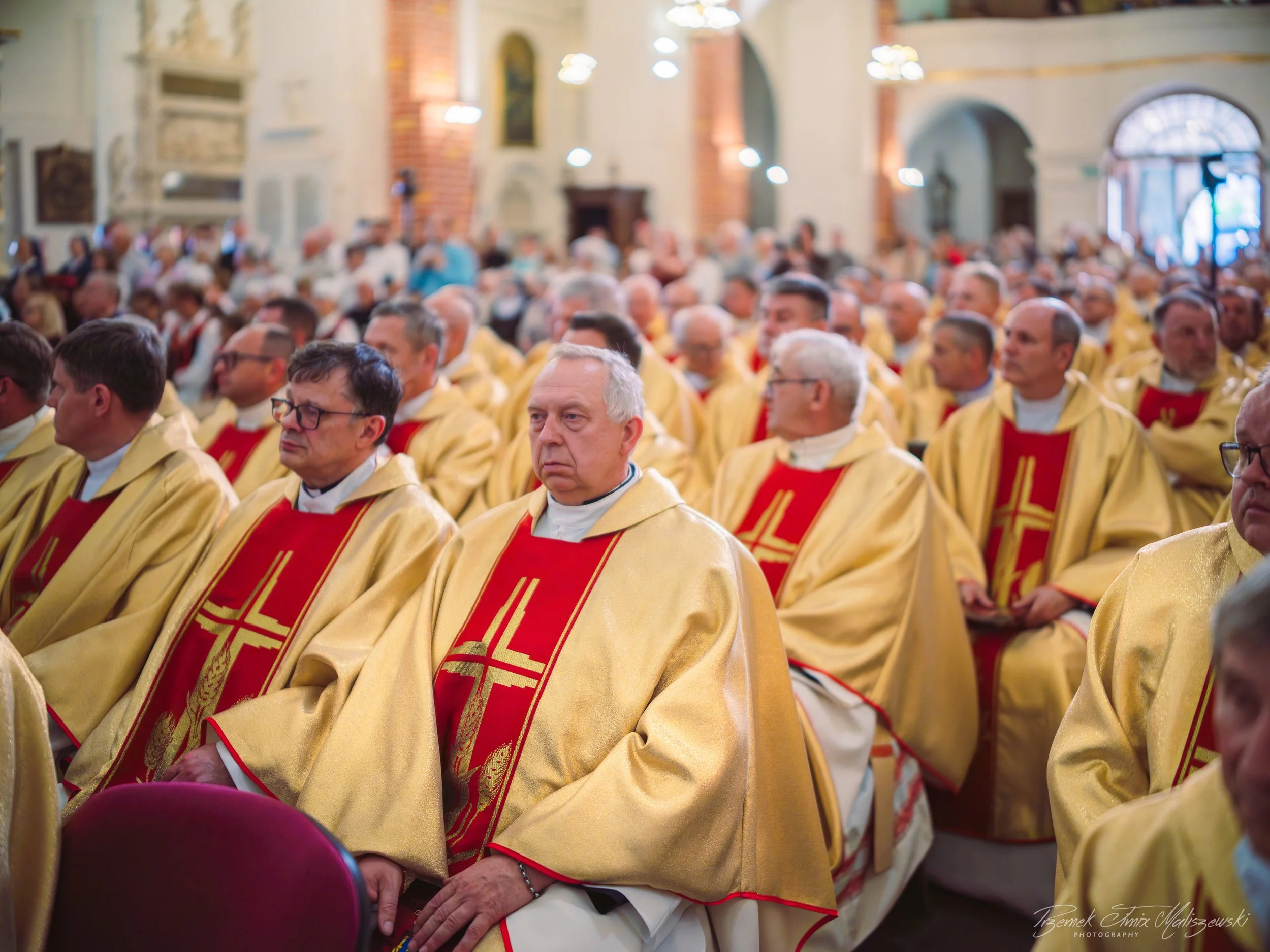
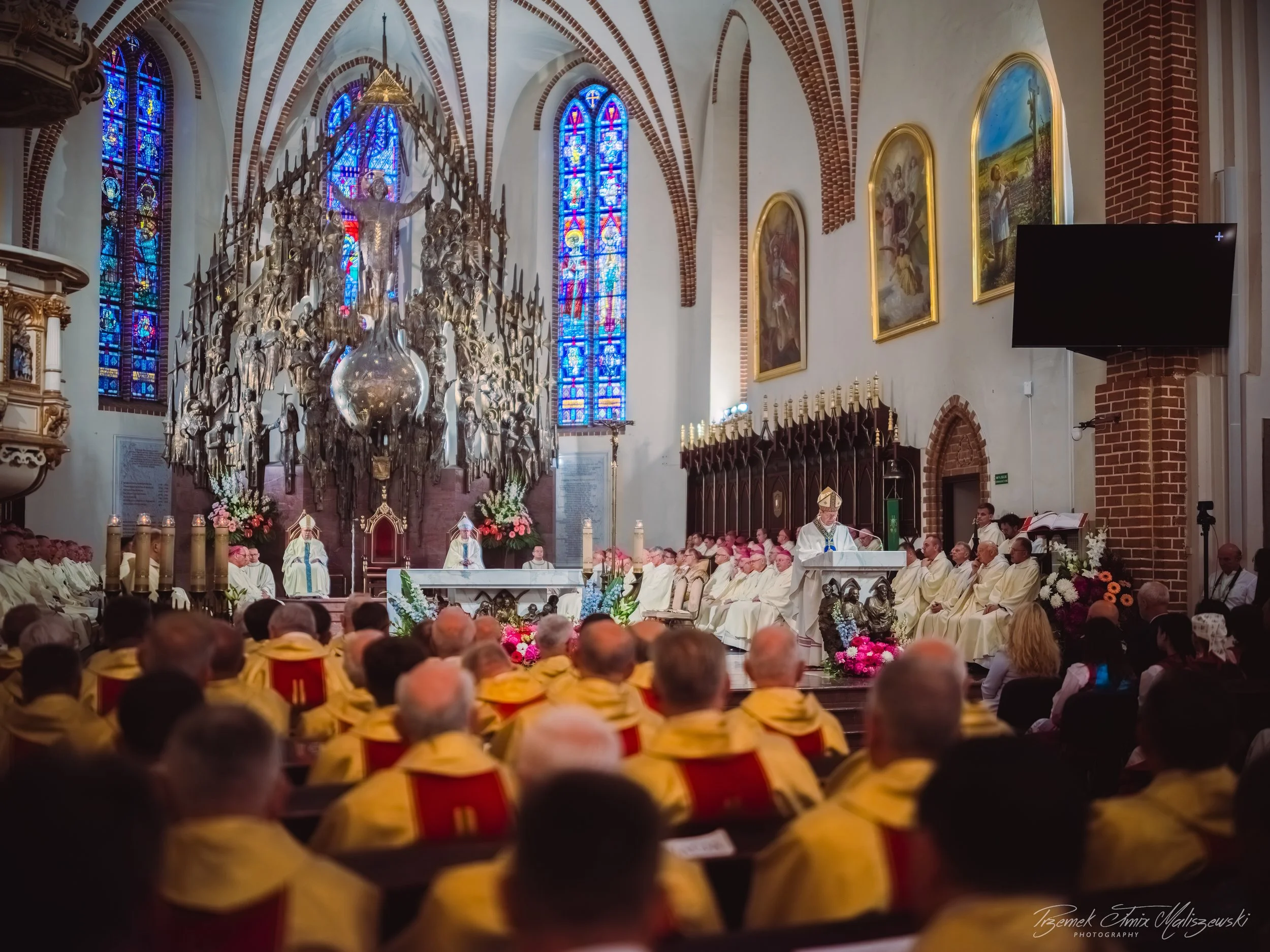
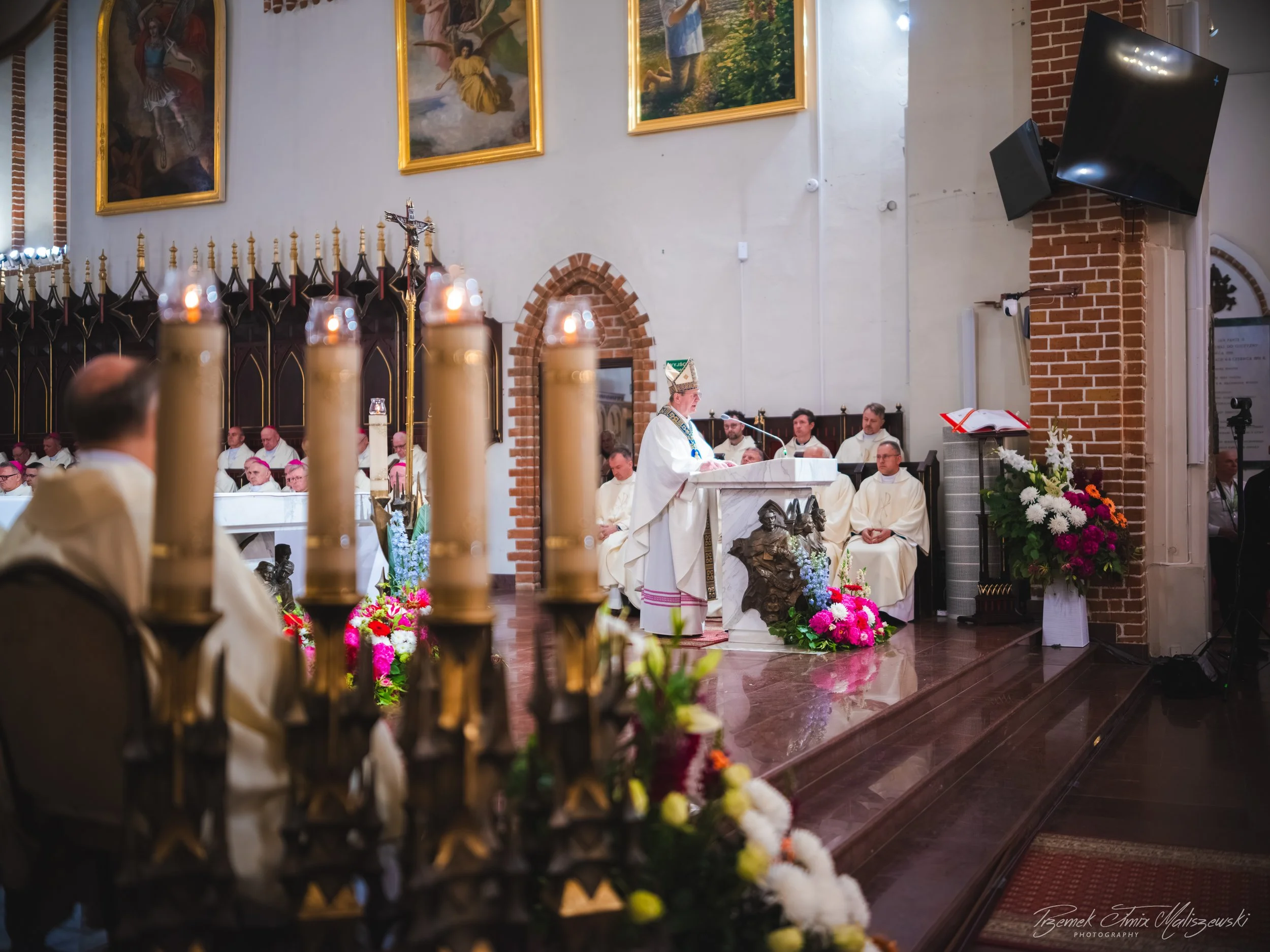
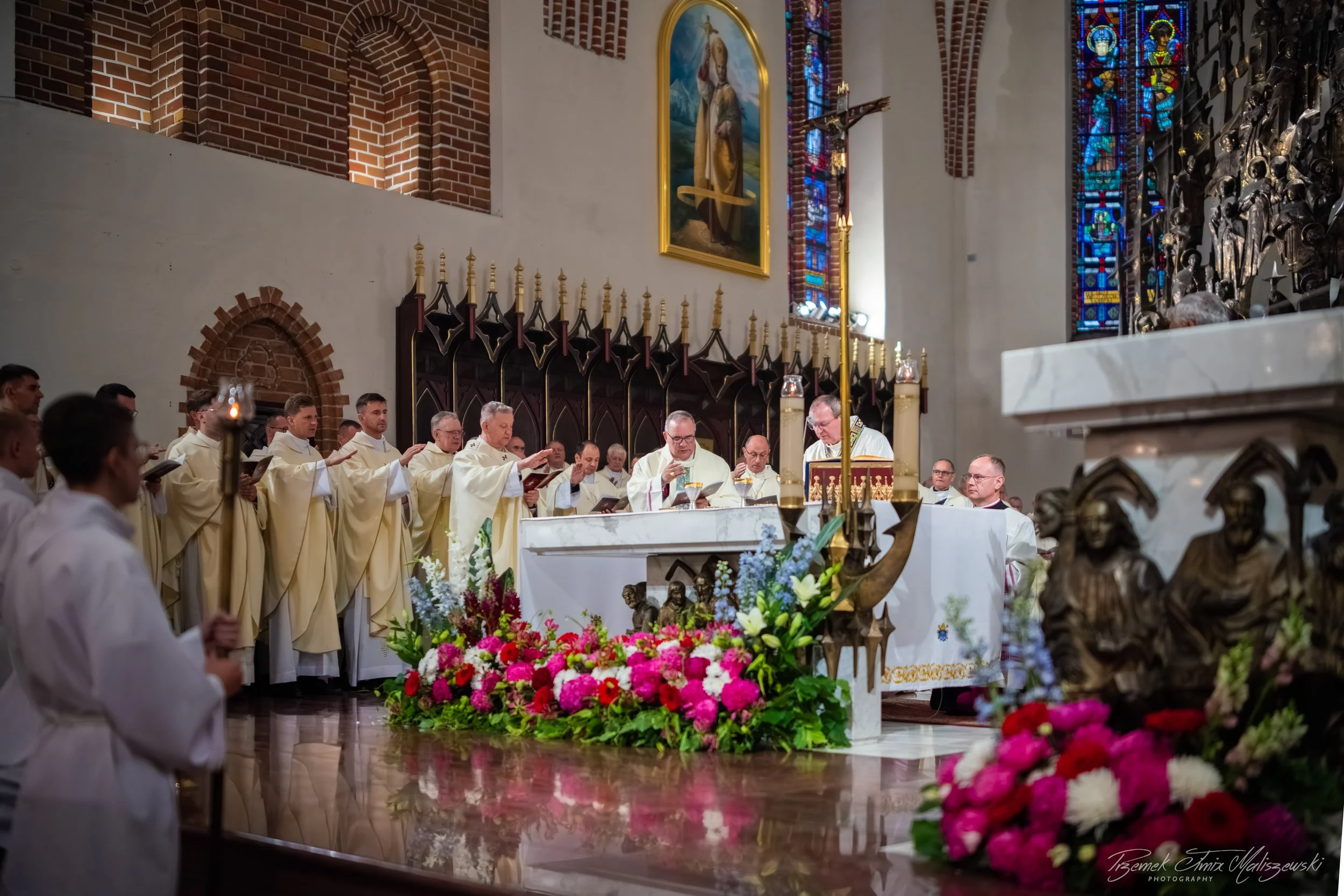
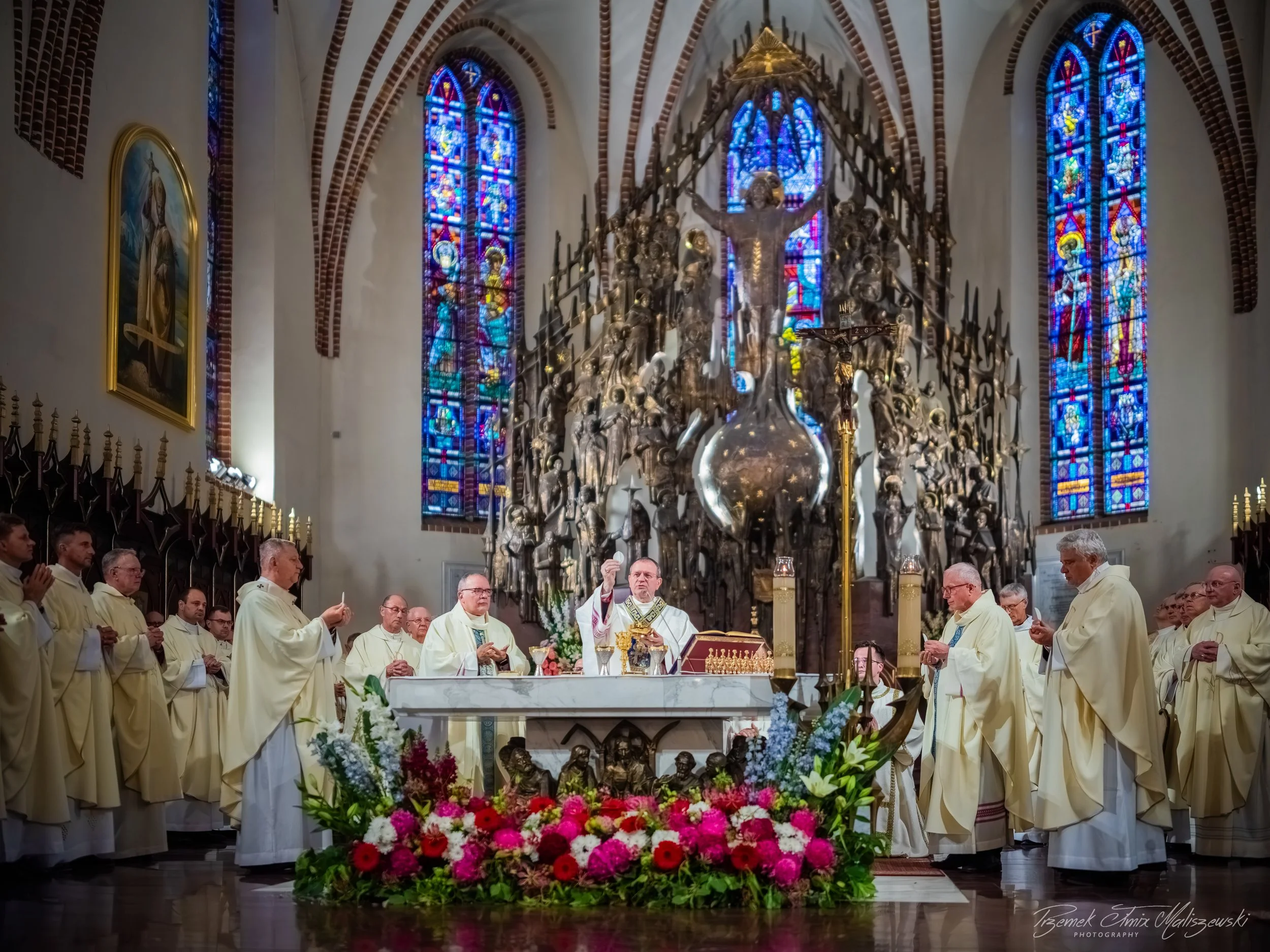
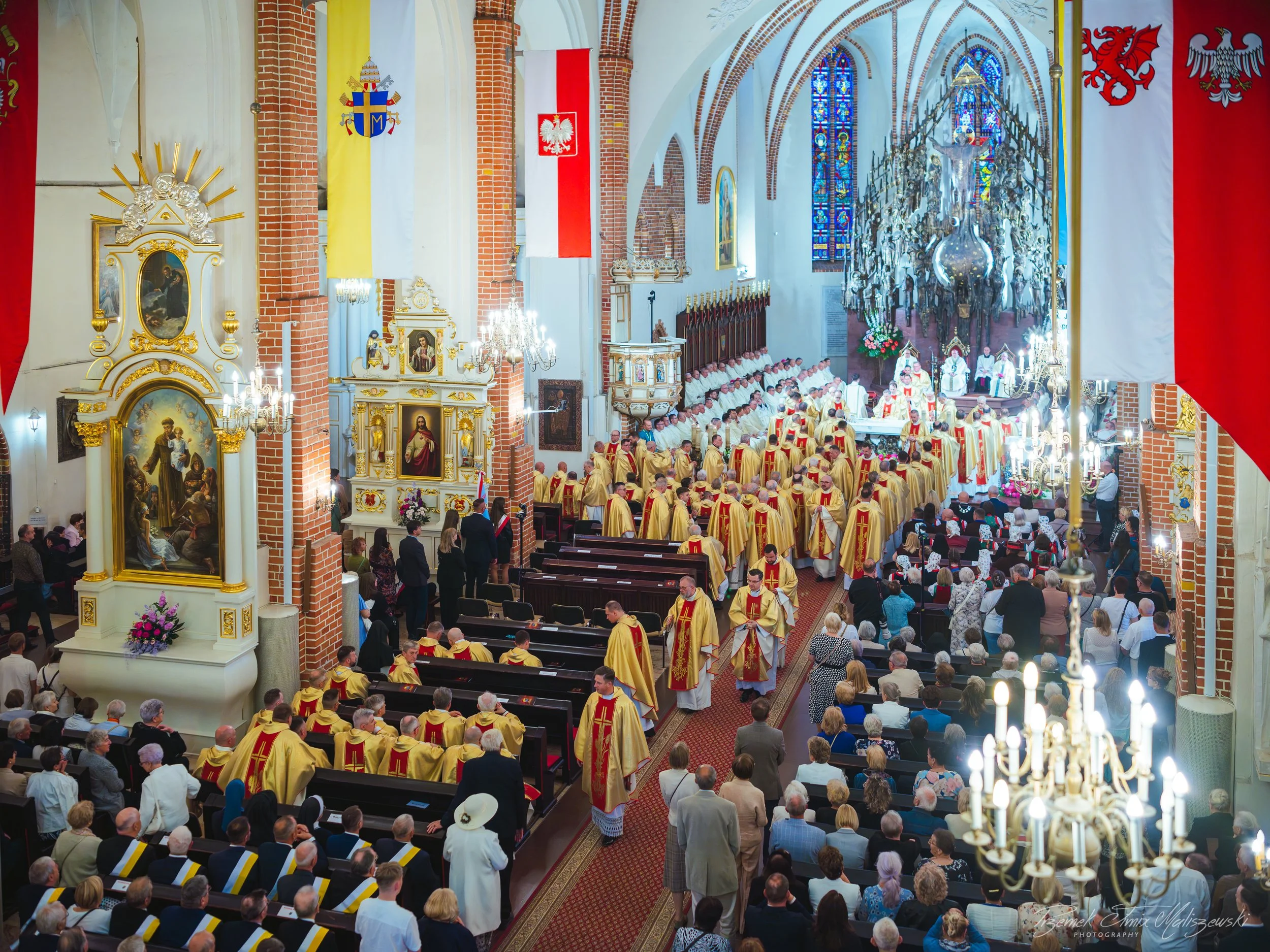
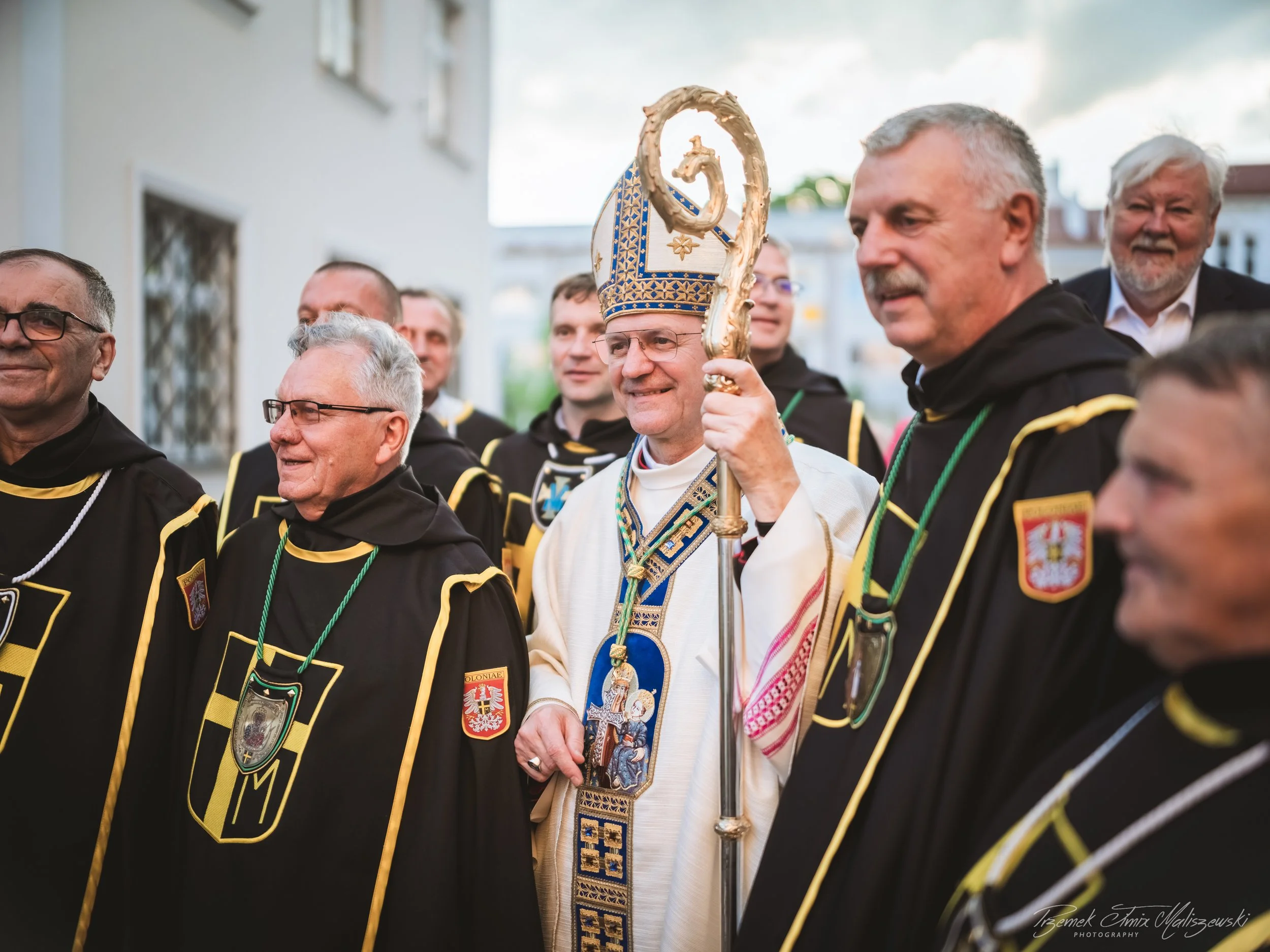
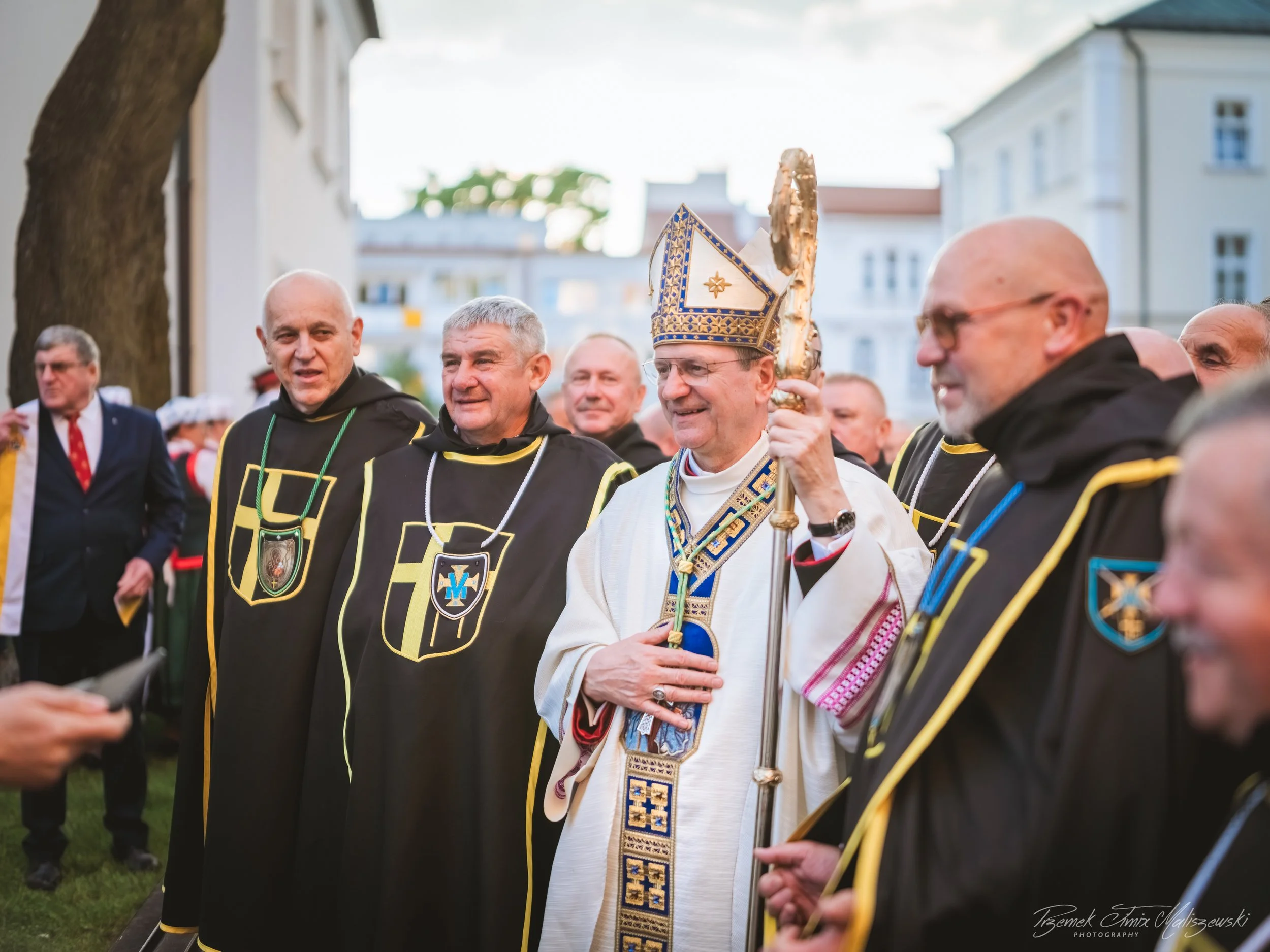
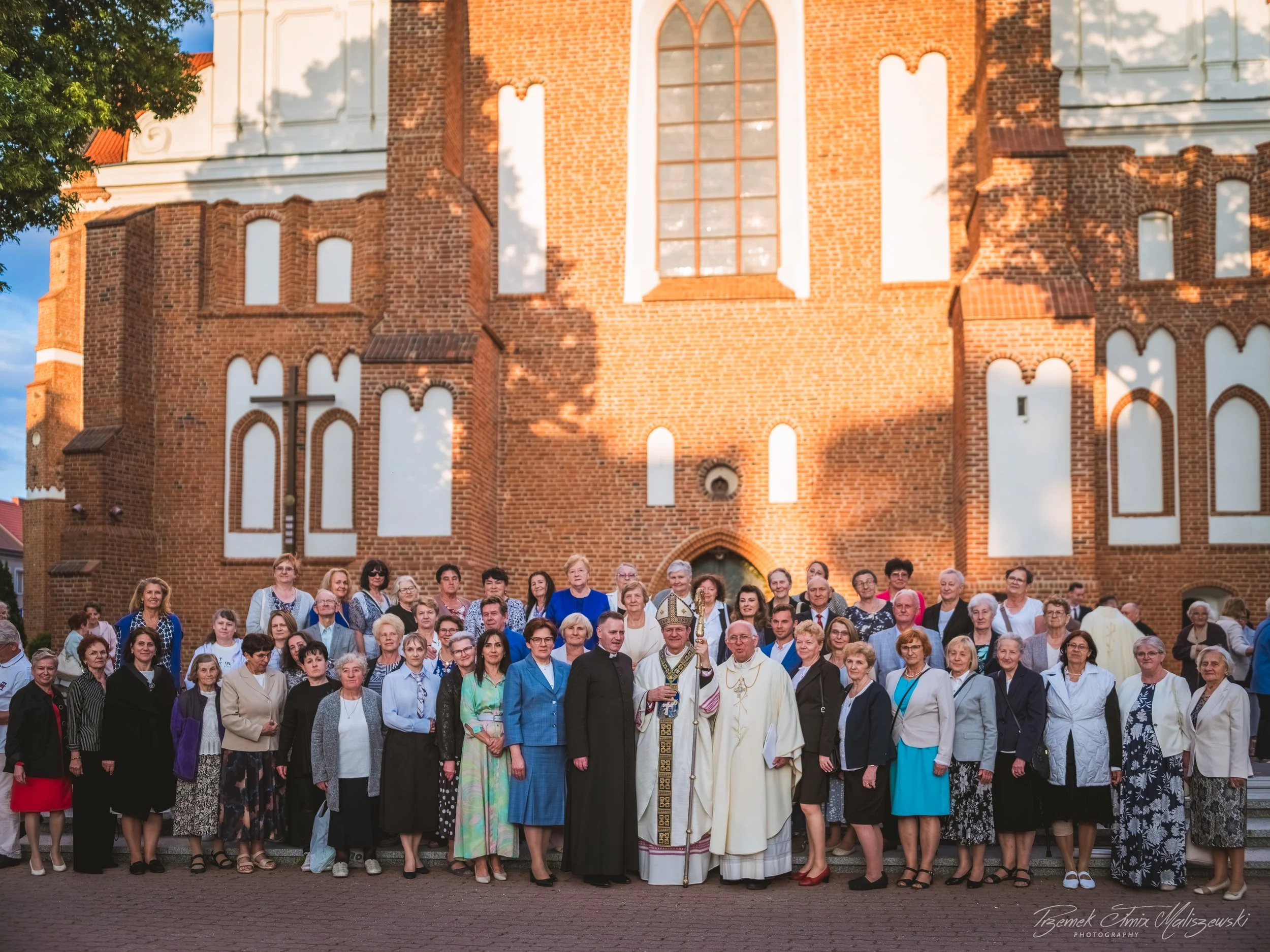
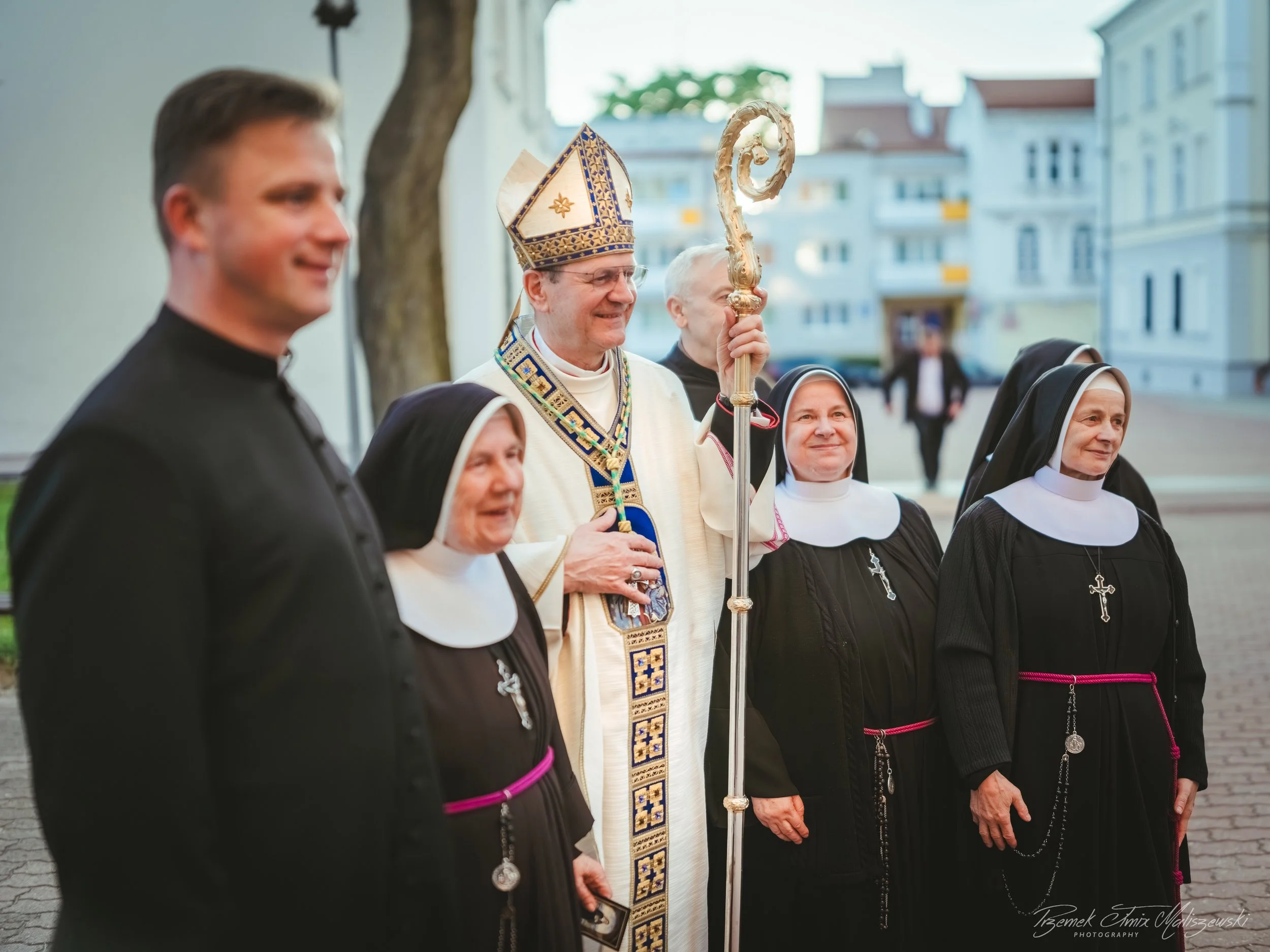
Archbishop Tadeusz Wojda, Metropolitan of Gdańsk and President of the Polish Episcopal Conference, surrounded by bishops and clergy. In the foreground, from the left: Cardinal Konrad Krajewski, Metropolitan Archbishop of Łódź, Apostolic Nuncio Archbishop Antonio Guido Filipazzi, and (first on the right) Bishop of Łomża Janusz Stepnowski.
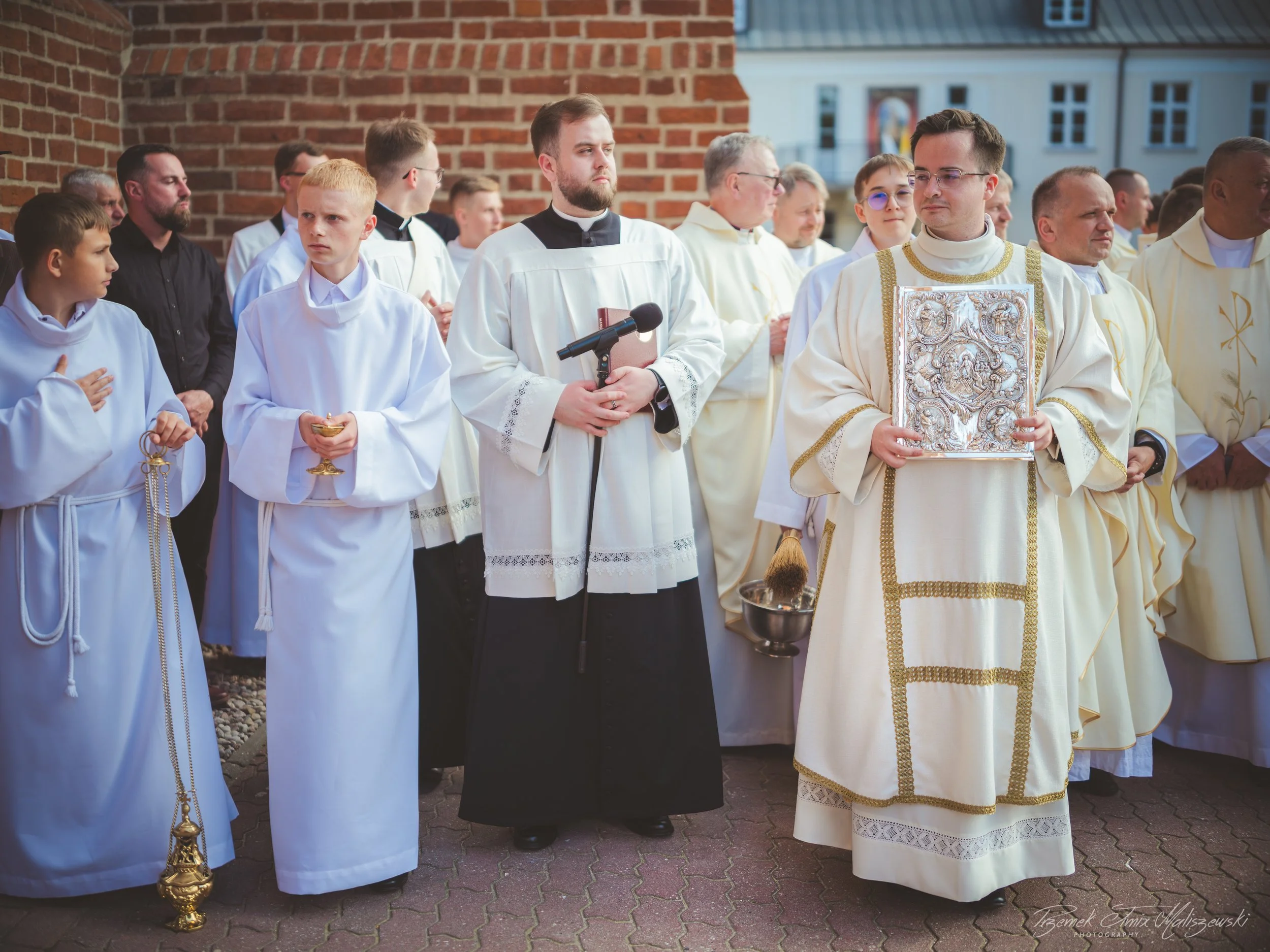
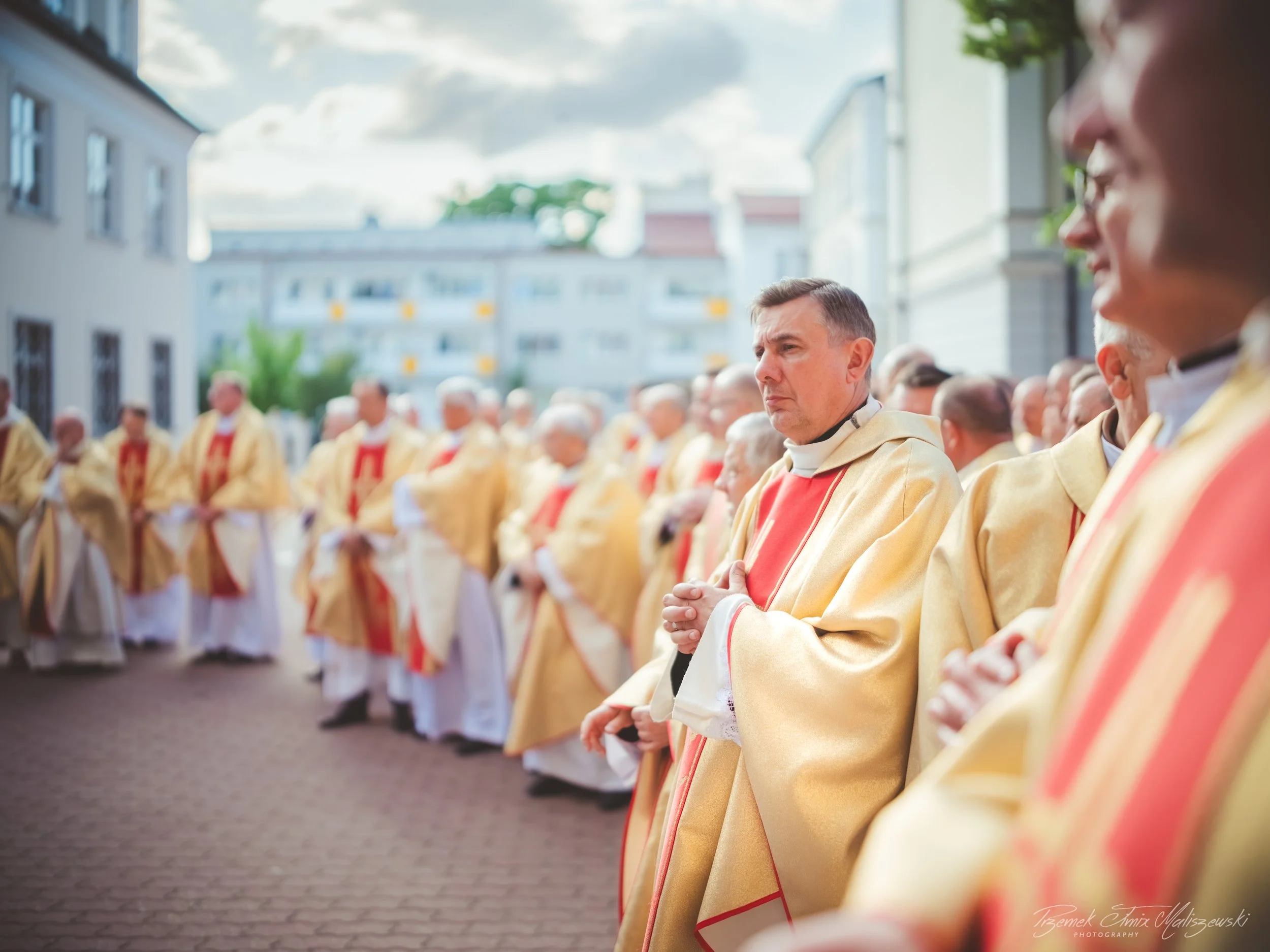
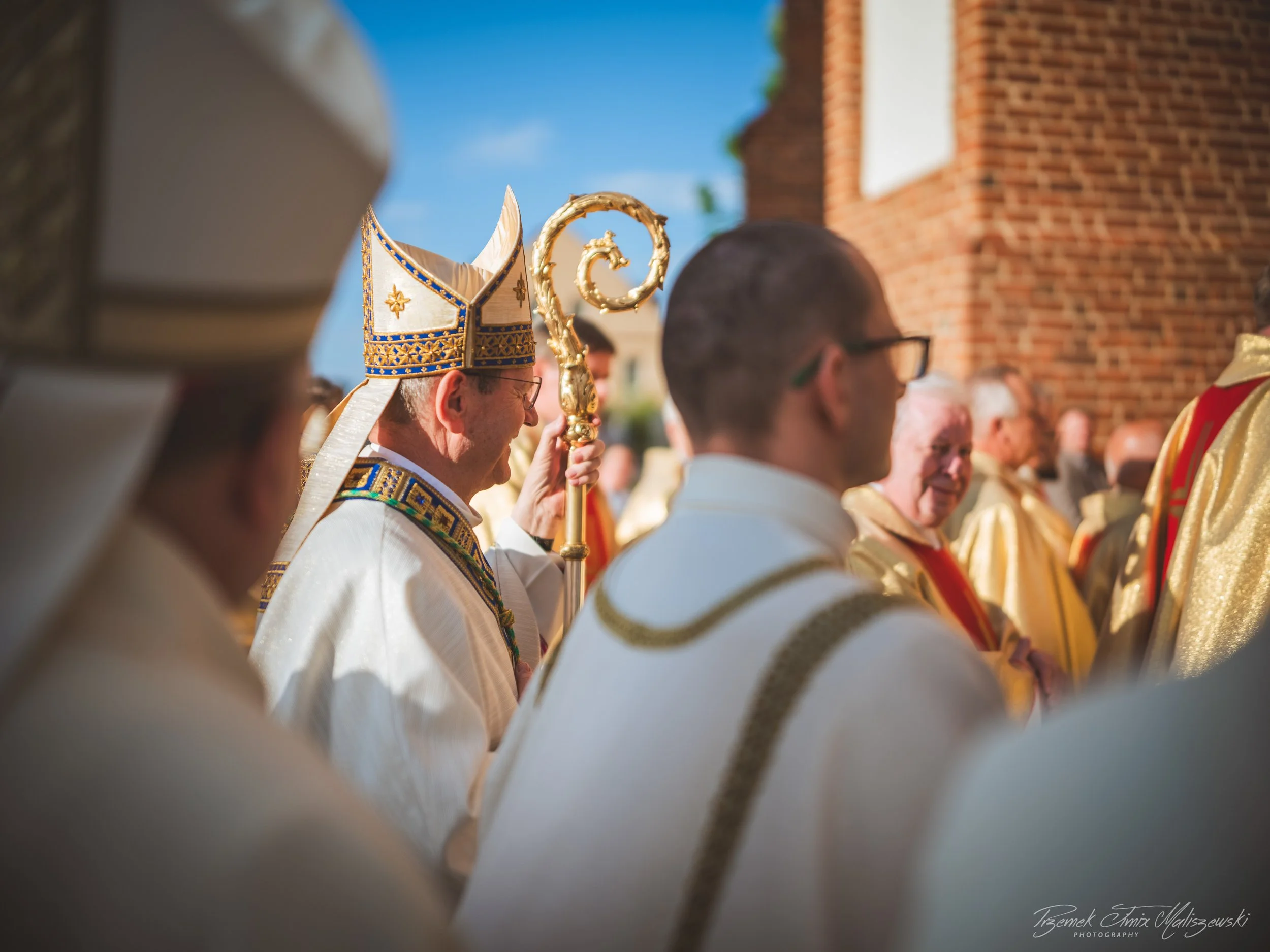
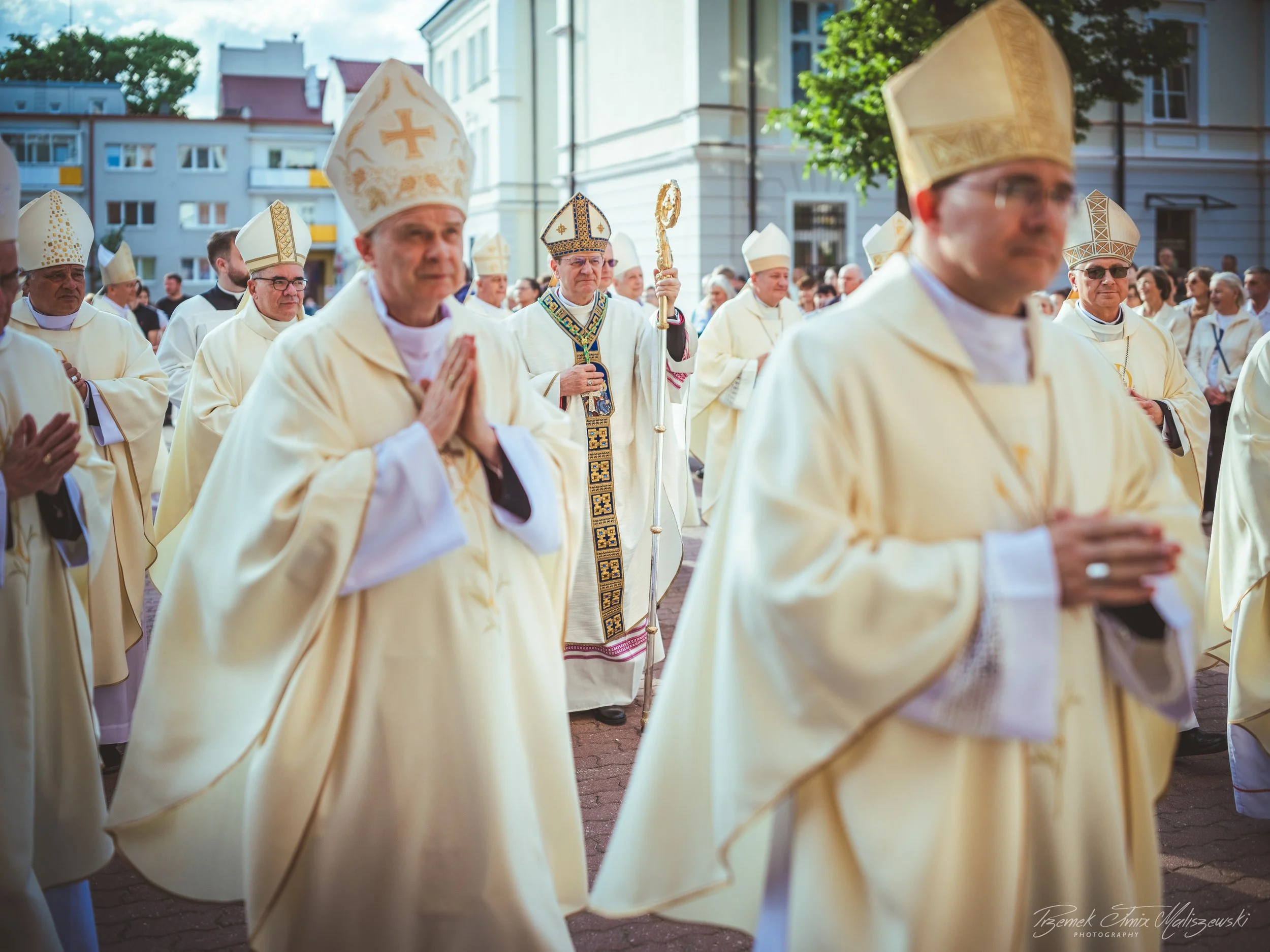
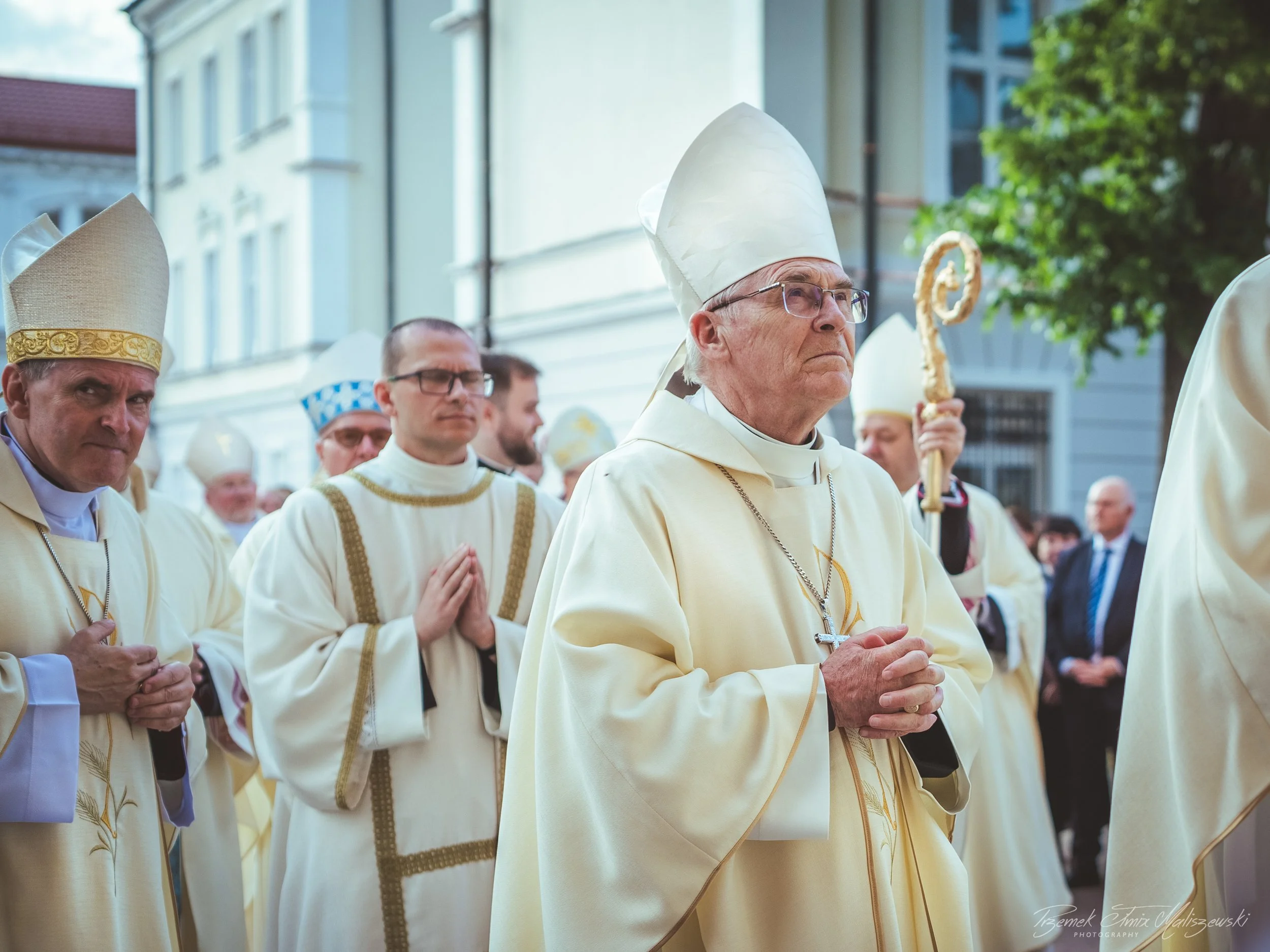
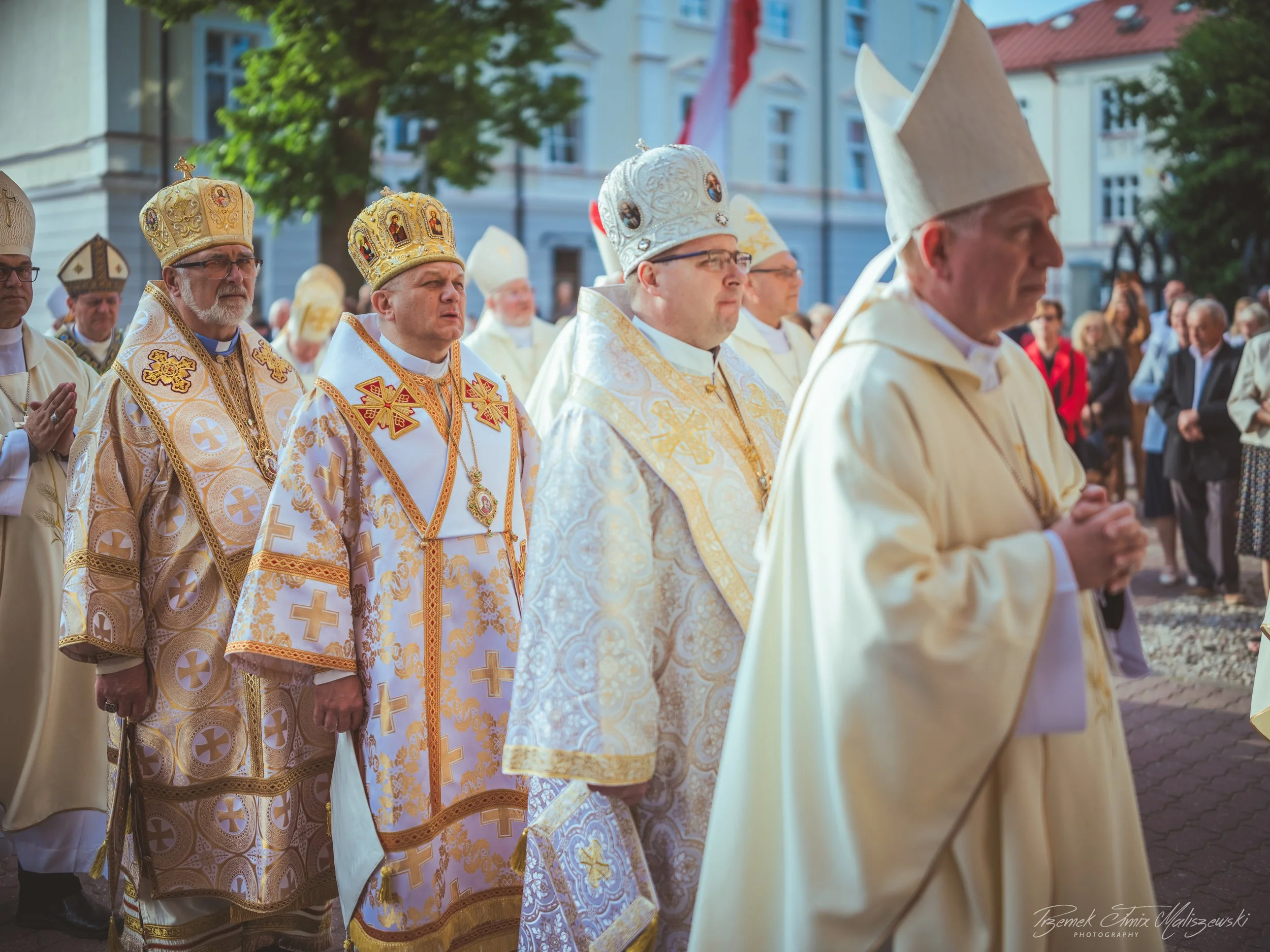
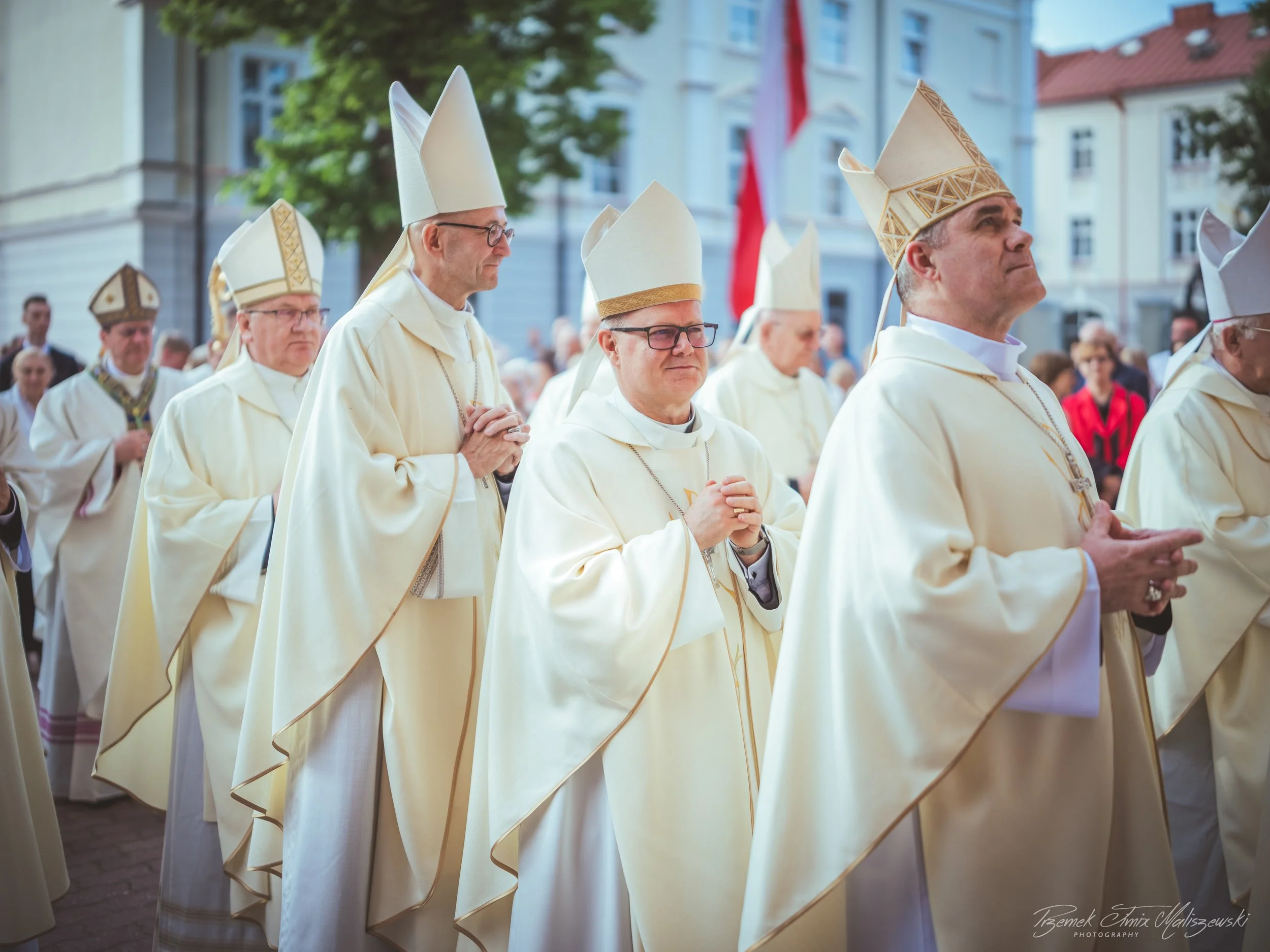
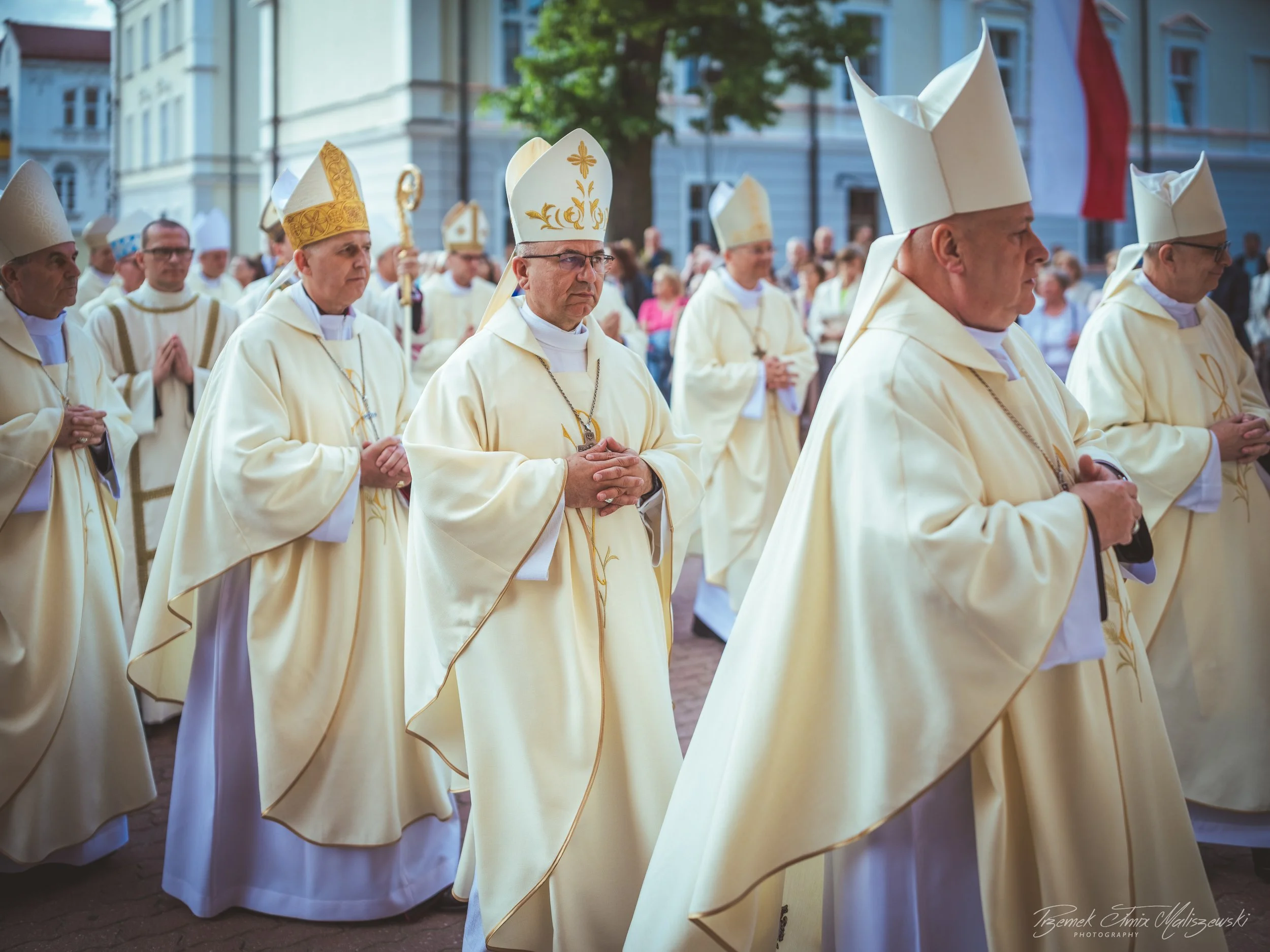
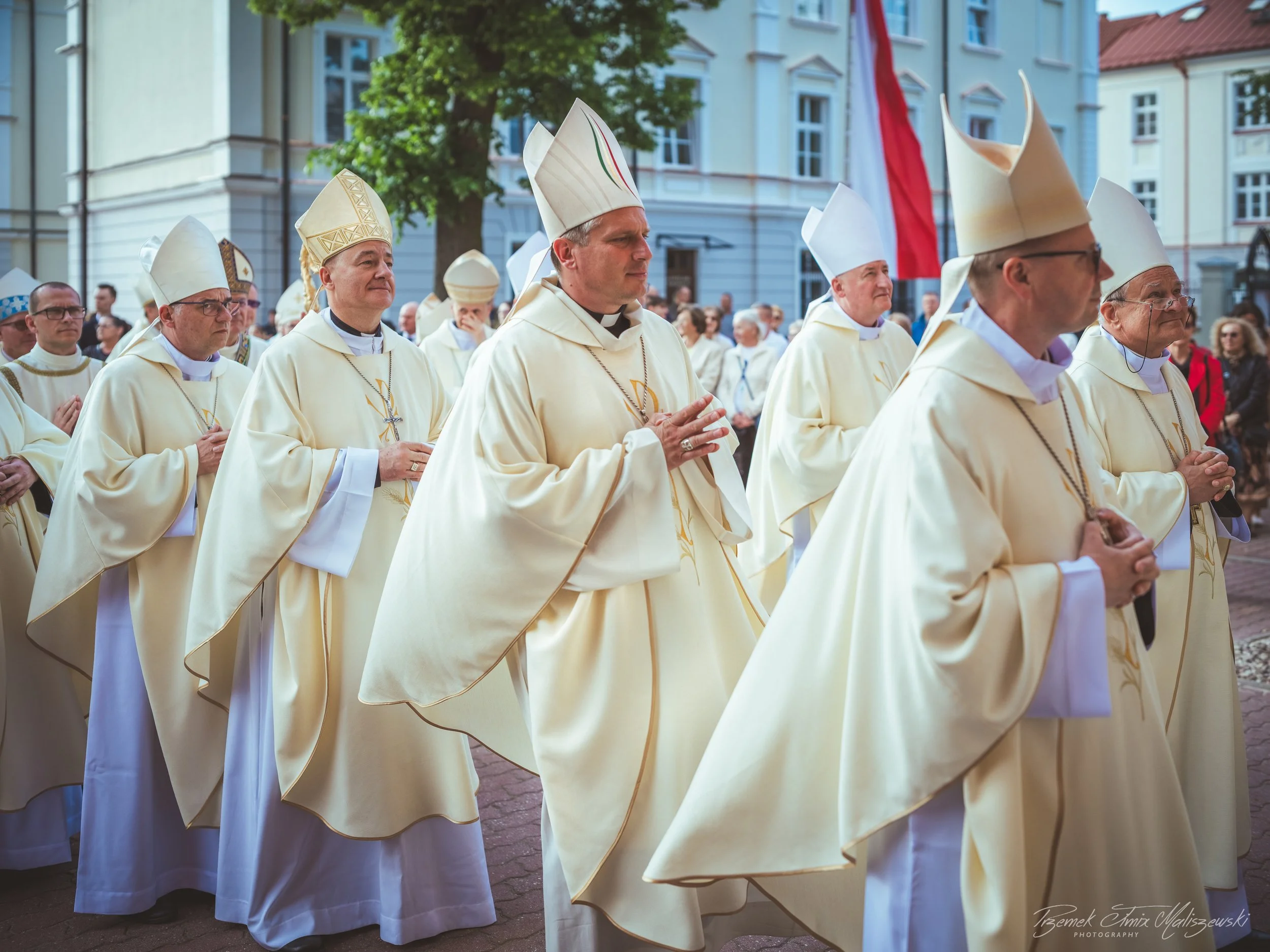
I couldn't pass up such an opportunity for a simple reason: this is one of those moments in history that we call "anchors." It is a moment from which something begins, which marks something, changes something. I believe that whenever there is an opportunity, it is worth participating in such events. Because it is not a fleeting thing. The event itself is, of course, fleeting, but its temporal emanation stretches hundreds of years into the future.
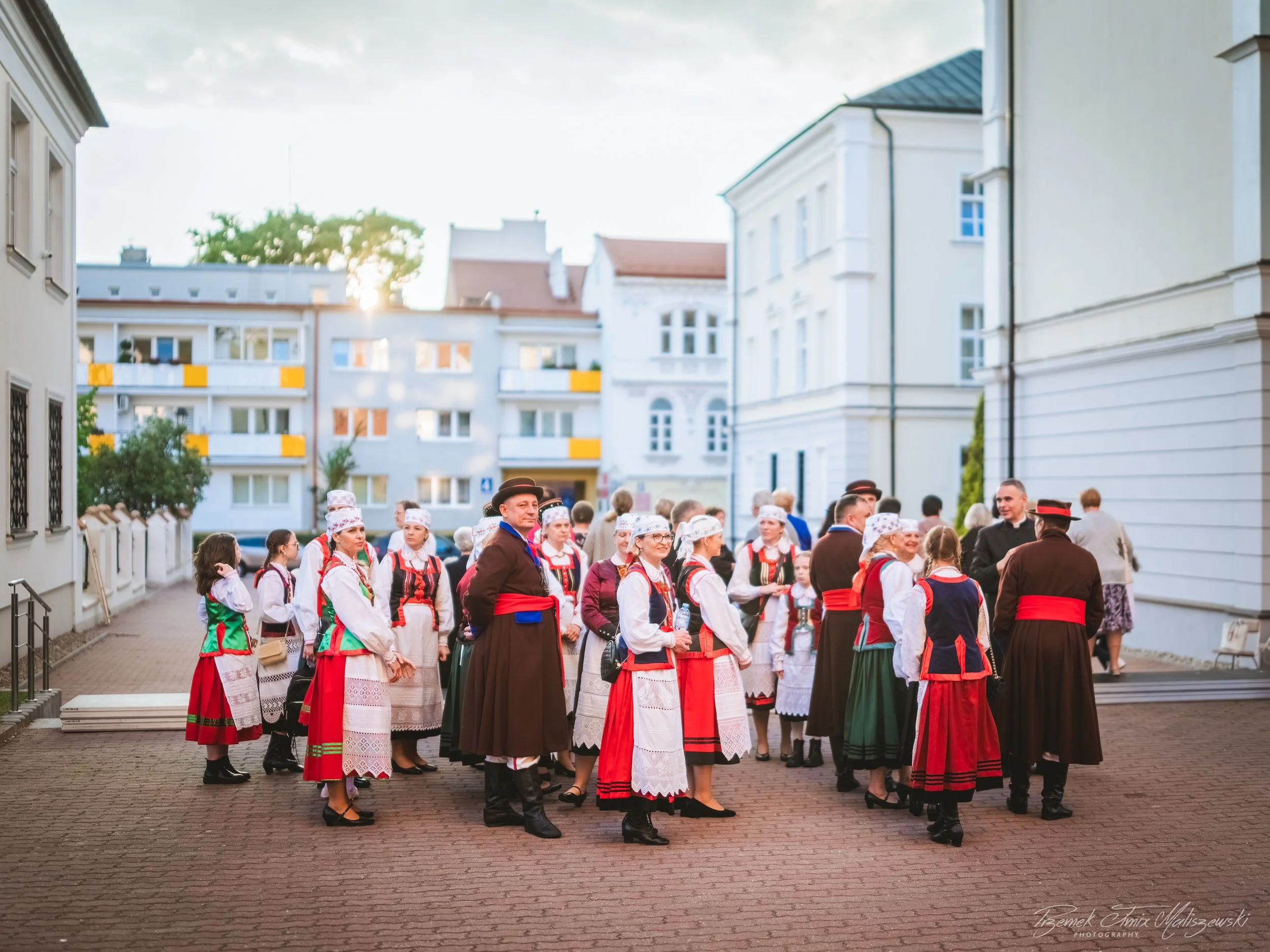
Doors like these newly installed in the Łomża Cathedral last for several hundred years, and, surrounded by proper conservation care and protection, perhaps even thousands of years. To be a part of such nascent history, to be present during their assembly (I was; I saw a large part of the process), and then at the solemn consecration, opening, and handover for use, is a true honor. From the perspective of the aforementioned duration and time, it is a wonderful thing. Additionally, I had the pleasure of being present there as a photographer for the Curia of the Łomża Diocese, so, willy-nilly, I became both an official participant in the event and also, or perhaps primarily, a kind of chronicler. That is what is priceless in such moments: being a witness to important things from up close and documenting them for future generations. It is precisely these photographs that will remain after me. Ha! Maybe after many, many years, someone will remember me as one of the "chroniclers." Who knows?
The Deep Symbolism of Temple Doors.
In every sacred building, regardless of the denomination it is connected to and the religion it serves, the main entrance always holds immense power and symbolism. In the Roman Catholic religion, the doors to a temple are much more than just an architectural and technical element. They are a multi-layered, profound theological, liturgical, and mystical symbol. The Gate to Salvation: By passing through the gate, the faithful pass, as it were, through Christ Himself, who says in the Gospel of St. John: "I am the gate. Whoever enters through me will be saved" (John 10:9). Passing through the gate is a path to God and to salvation.
The temple doors constitute a kind of boundary, a partition, between the sacrum and the profanum. The world outside the temple has no entry into its interior. It is not without reason that stoups with holy water are placed right behind the doors. This is also a symbol: the faithful, dipping their hand in the water and then making the sign of the cross, are meant to recall their own baptism and washing with water, to cleanse themselves, and to arrive free from sin. It is a ticket of admission not merely to the church building, but to the Church (with a capital "C"). The doors ultimately symbolize the Gate of Heaven. They remind us that human life on earth is merely a temporary journey, the goal of which is entering a new life in another dimension. It reminds us of ephemerality, of transience, and of the fact that the temporal form of life is merely an introduction, a stopover, not an end in itself.
In liturgical tradition, the doors, the threshold, and the vestibule play very important roles during many ceremonies. For example, during baptism, it is at the doors, in the vestibule, that the priest asks the parents what they ask of God's Church for their child. Similarly, before the sacrament of marriage, the doors and vestibule are where the priest greets the couple, and during a funeral, the coffin or urn also stops for a moment to be solemnly welcomed by the priest, symbolizing the final passage of a person from this world to the Father's house.
These hold special symbolism and are located in the four papal basilicas in Rome: St. John Lateran, St. Peter's, St. Mary Major, and St. Paul Outside the Walls, as well as in designated cathedral churches worldwide during Jubilee Years (e.g., 2025/2026). For most of the time, they remain bricked up or firmly closed. Their solemn opening by the Pope or a bishop at the beginning of the Jubilee symbolizes the opening of the treasury of God's Mercy for humanity. Passing through such doors in a state of sanctifying grace is a condition for obtaining a plenary indulgence.
The New Jubilee Doors of the Łomża Cathedral.
Thus, this single element of the temple carries an enormous weight of symbolism for faith itself, as well as for liturgy and spirituality. What, then, are the new doors of the Łomża fara (parish church) like, and what do they depict?
Conceived as a historical votive offering, the new doors to the Cathedral of St. Michael the Archangel in Łomża are a monumental and relatively new work of sacred art.
The Occasion and Initiators The main reason for creating the new representative entrance portal was a great double jubilee falling in the years 2025–2026: the 100th anniversary of the establishment of the Łomża Diocese and the 500th anniversary of the Cathedral itself (the construction of this magnificent late-Gothic temple concluded in the 1520s, with solemn consecration in 1531). The new doors serve as a lasting material trace and a thanksgiving for centuries of spiritual and material heritage. The initiators of this work (often called the Jubilee Doors) were the hosts of the site—Prelate Marian Mieczkowski, working in close cooperation with and with the blessing of the Bishop of Łomża, Janusz Stepnowski. They initiated the fundraising, asking the faithful from across the diocese to support the project.
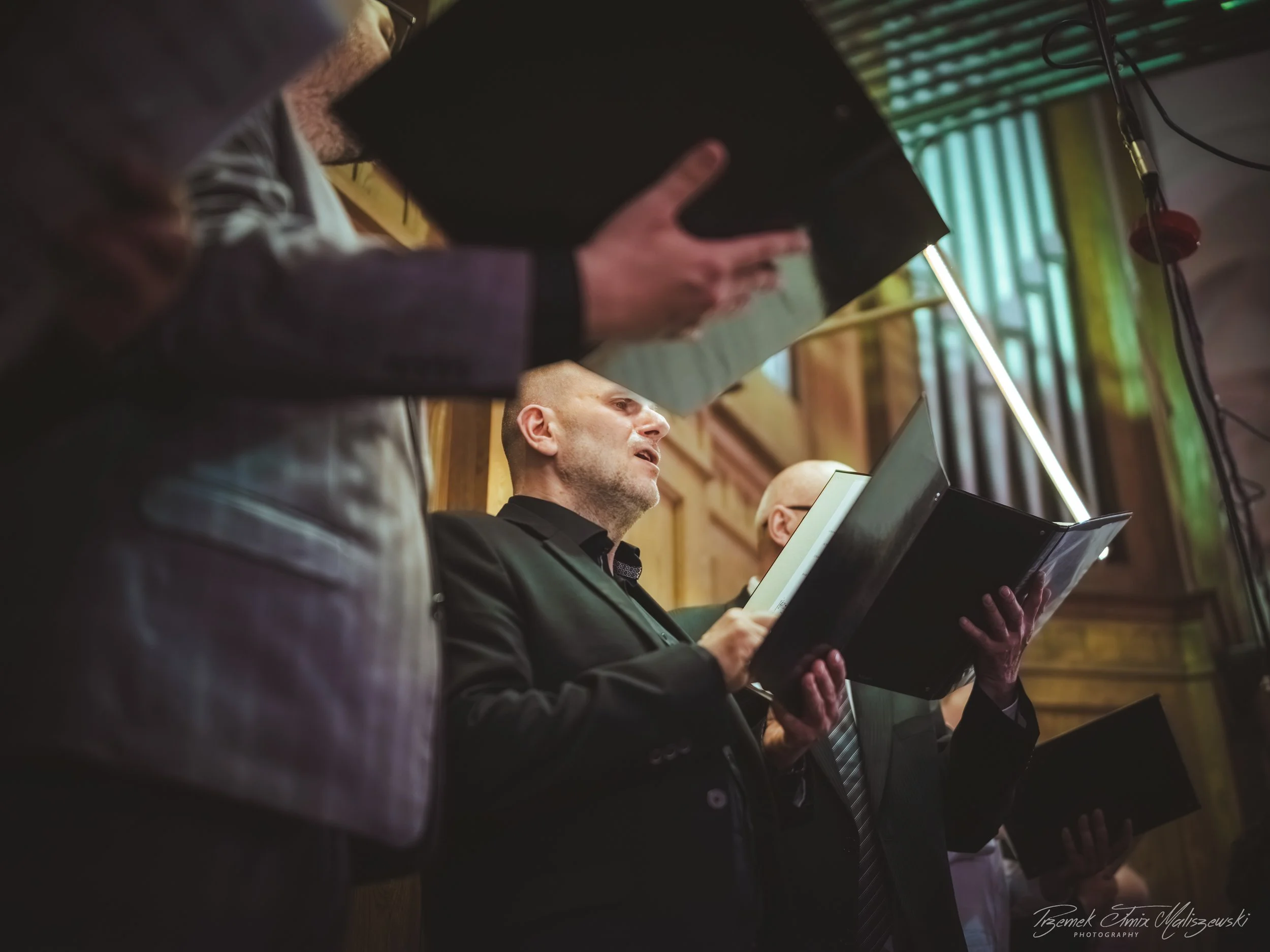
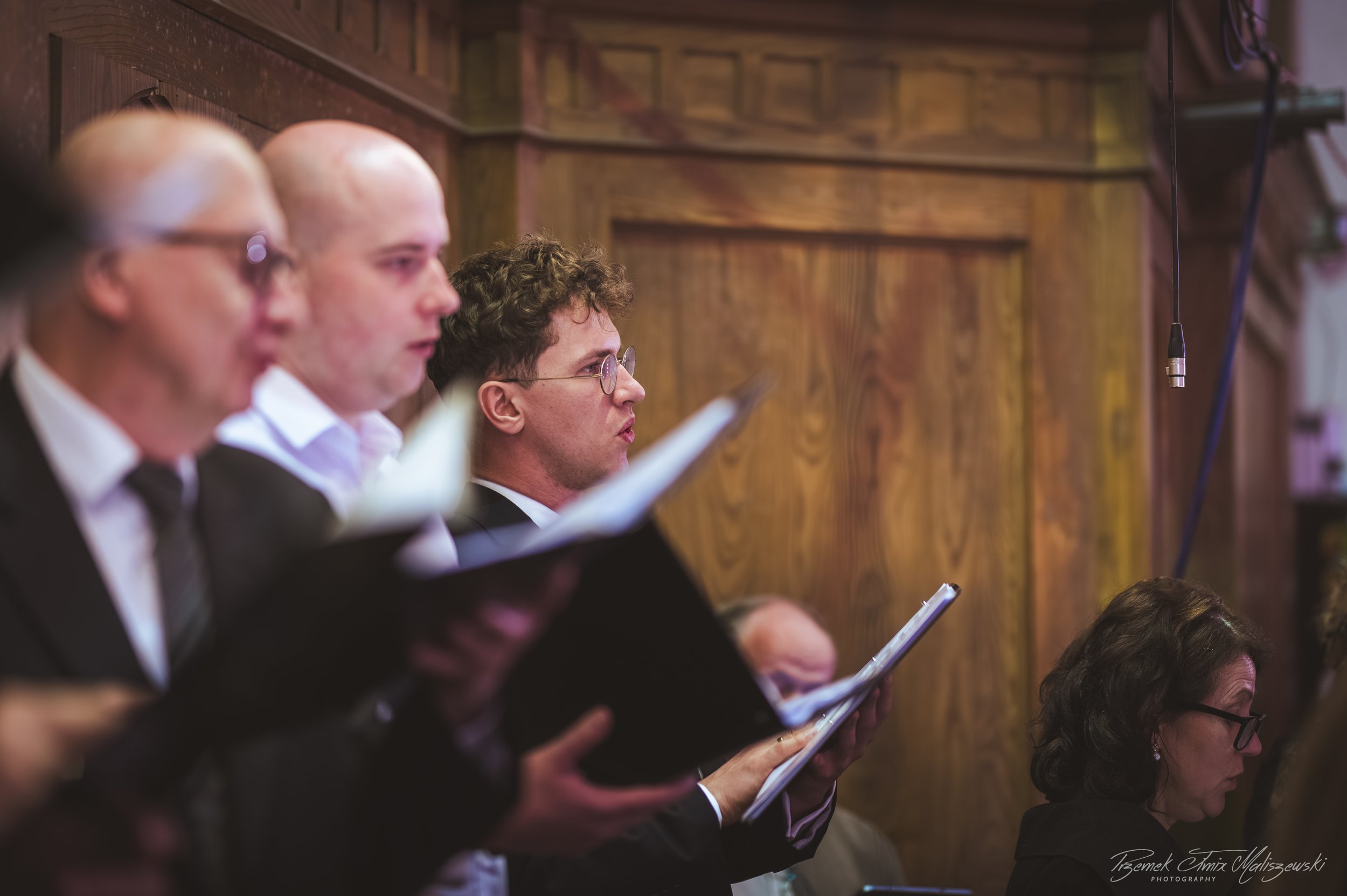
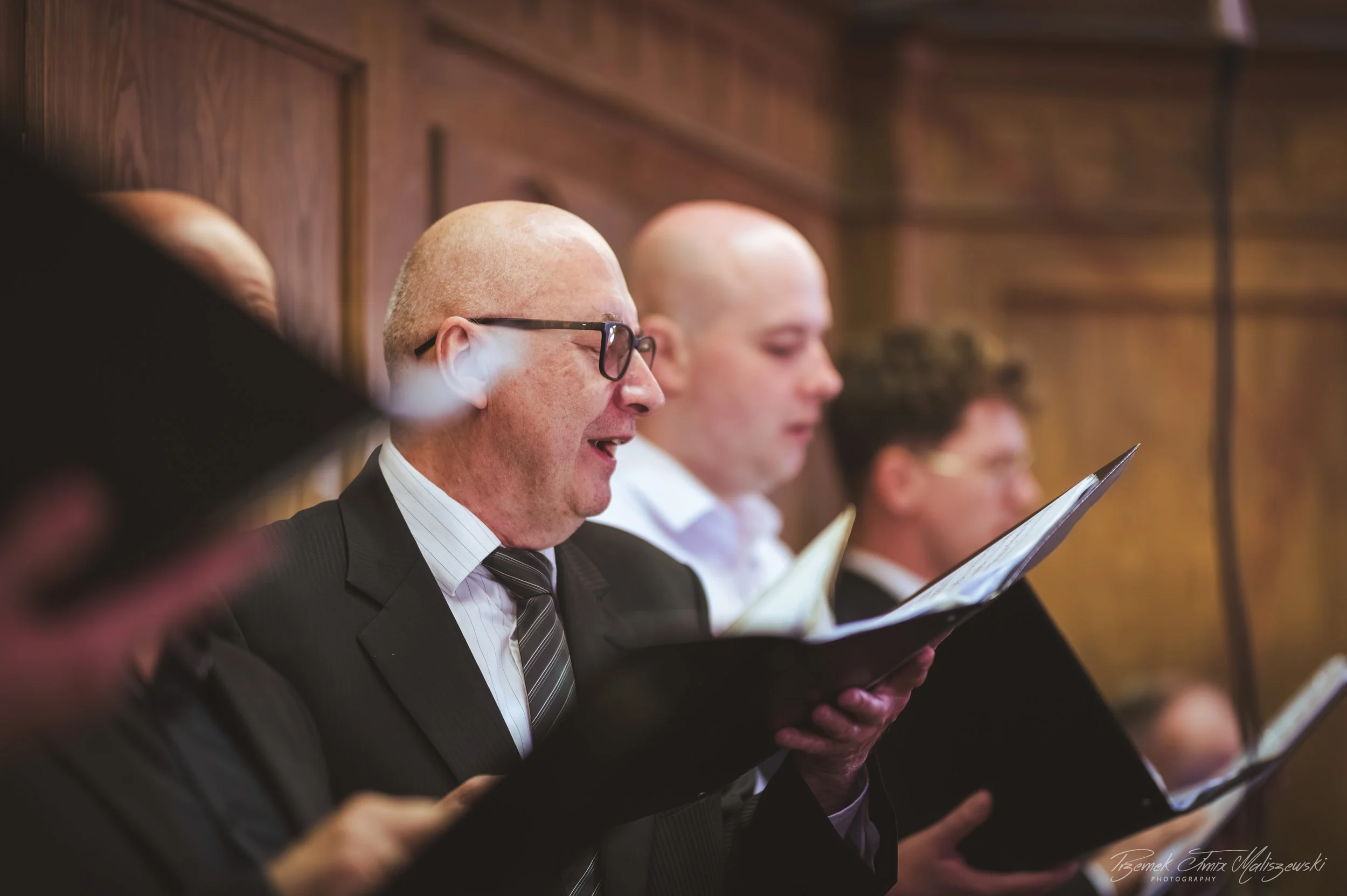
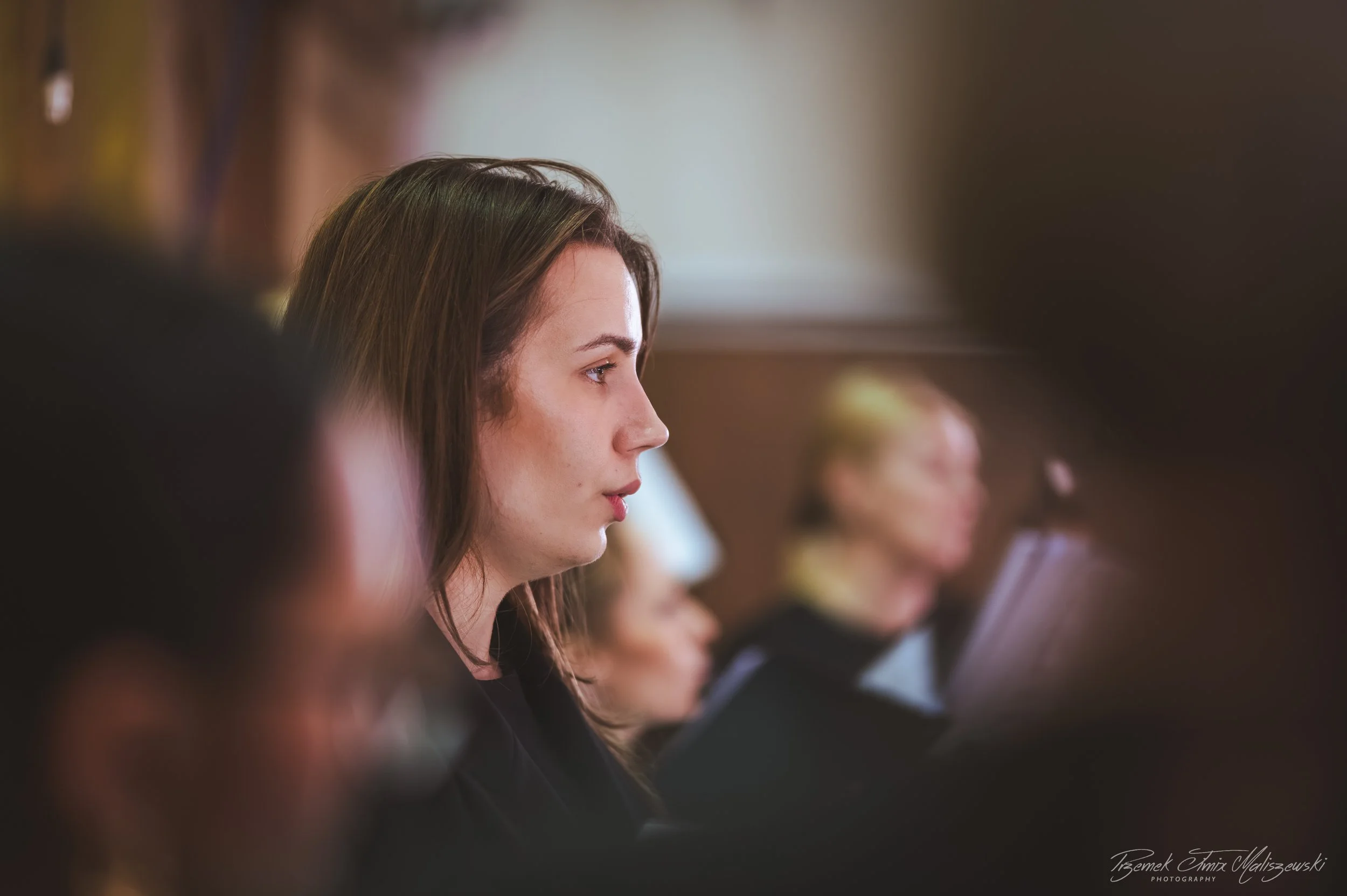
Such cathedral gates (from Latin Porta Fidei – Gate of Faith) always feature a deep theological and historical program. On the panels (bas-reliefs) of such portals, figures crucial to the region are immortalized:
St. Michael the Archangel: The main patron of the cathedral, often depicted fighting evil, represented as a dragon.
St. Bruno of Querfurt: Associated with the evangelization of these lands.
St. John Paul II: A crucial motif tied to the identity of the Łomża cathedral is his memorable pilgrimage. He visited Łomża and prayed in this temple in June 1991. The Pope is depicted crowning the image of Our Lady of Beautiful Love during the mass on June 4, 1991.
Princess Anna of Masovia: The founder of the Łomża Cathedral, daughter of Masovian Duke Konrad III the Red and Anna Radziwiłł.
St. John the Baptist.
Artistic Details and Inscriptions
Left Panel: Inscriptions include "A.D. 2025" and the initials of the designers. Above, a lamb is depicted with the inscription "Agnus Dei" (Lamb of God). Beside it reads "porta Ecclesiae" (gate of the church), inscribed on a ribbon stretching from St. John Paul II and hanging on the right hand of John the Baptist, from whose hand the water of the Jordan flows. Between them, the ribbon reads "Baptismus" (baptism).
Center: Both wings are connected by a radiating circle containing a christogram—the letters "JHS". The bronze here is wiped and polished so its warm color forms rays over the cold surrounding patina. This enhances the three-dimensionality of the bas-relief, symbolizing Christ's light spilling into the surroundings. Conversely, the dragon (evil) defeated by Archangel Michael is entirely drowned in the cold patina, devoid of divine light.
Right Panel: Features St. Bruno, Princess Anna (holding a model of the cathedral, symbolizing its foundation), and Archangel Michael holding a sword plunged into the dragon. A shield with a cross leans against the archangel, topped with the inscription "Quis ut Deus" ("Who, if not God?"). This triumphant battle cry is a direct Latin translation of the Hebrew name Mika-el (Mi – who, ka – if not (like), el – God).
Technical Specifications
Materials: Bronze, oak wood, and steel.
Weight: Over a ton in total. The left wing weighs 566.5 kg (1248.92 lb.), and the right wing weighs 585 kg (1289.70 lb.).
Creators: The design was authored by Salesian brothers, Fr. Leszek Kruczek and Fr. Robert Kruczek. The casting was executed by Piotr Piszczkiewicz*. Woodwork by Zdzisław Gal; blacksmithing by Witold and Marek Kiebzak.
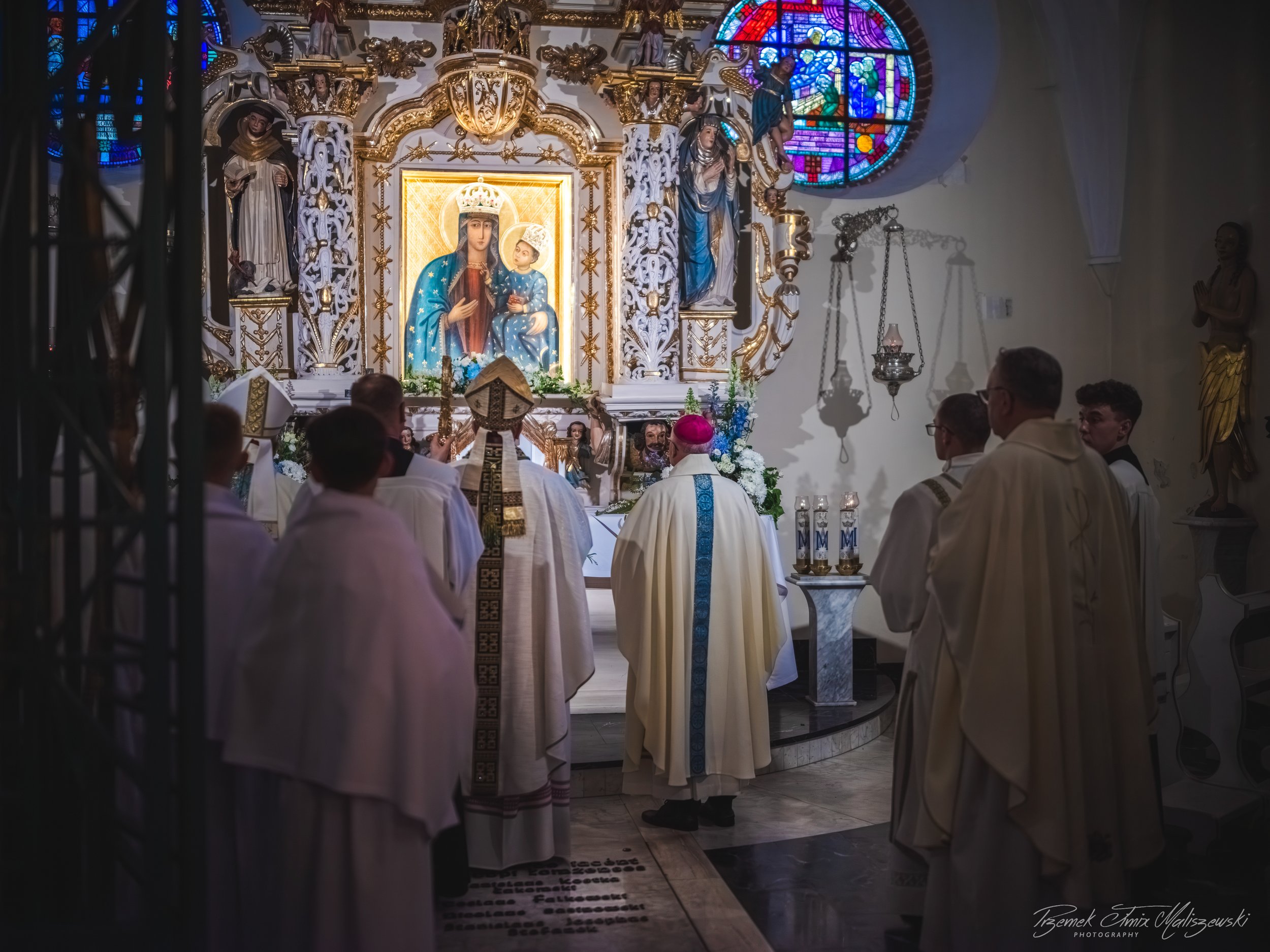
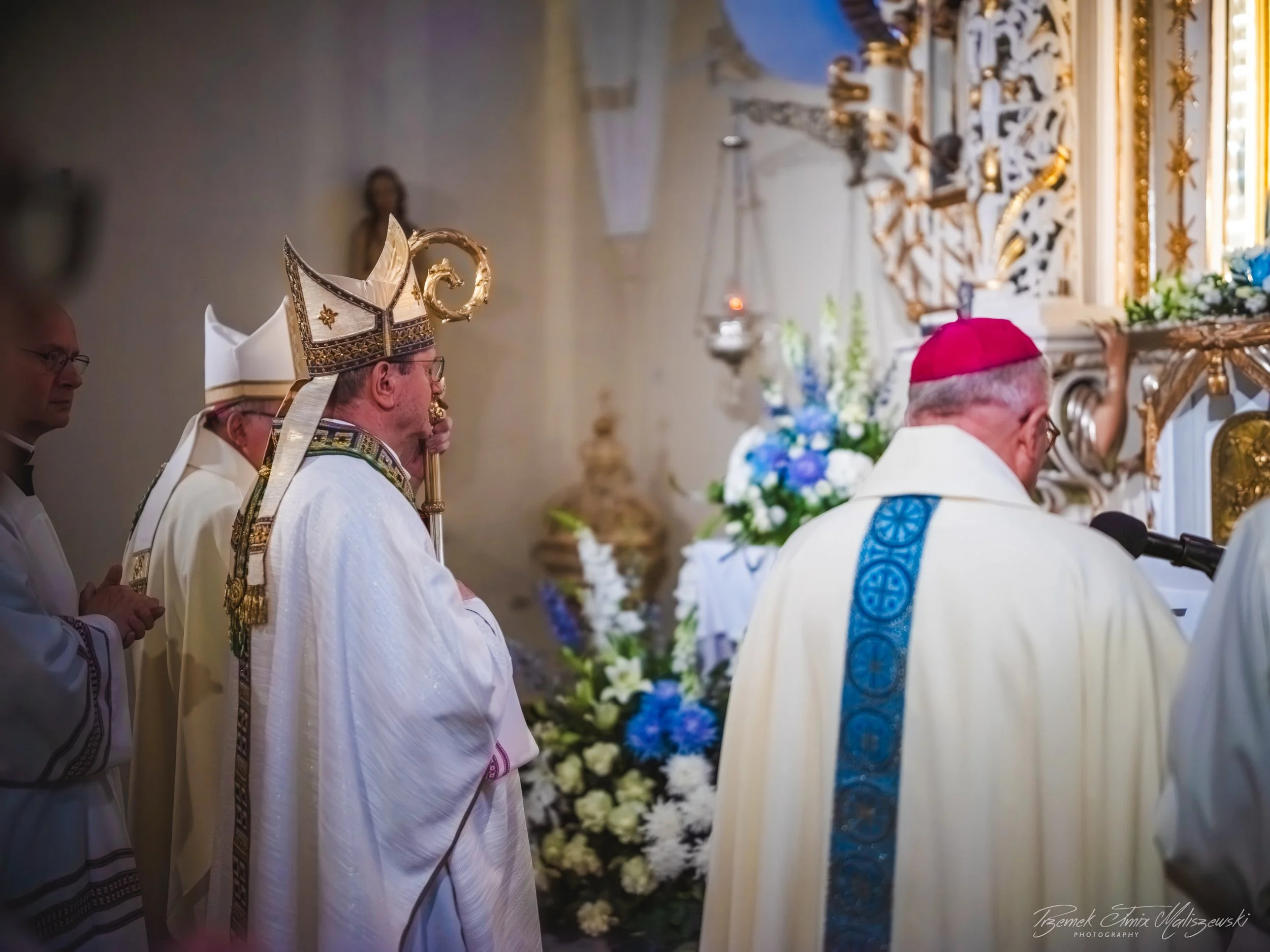
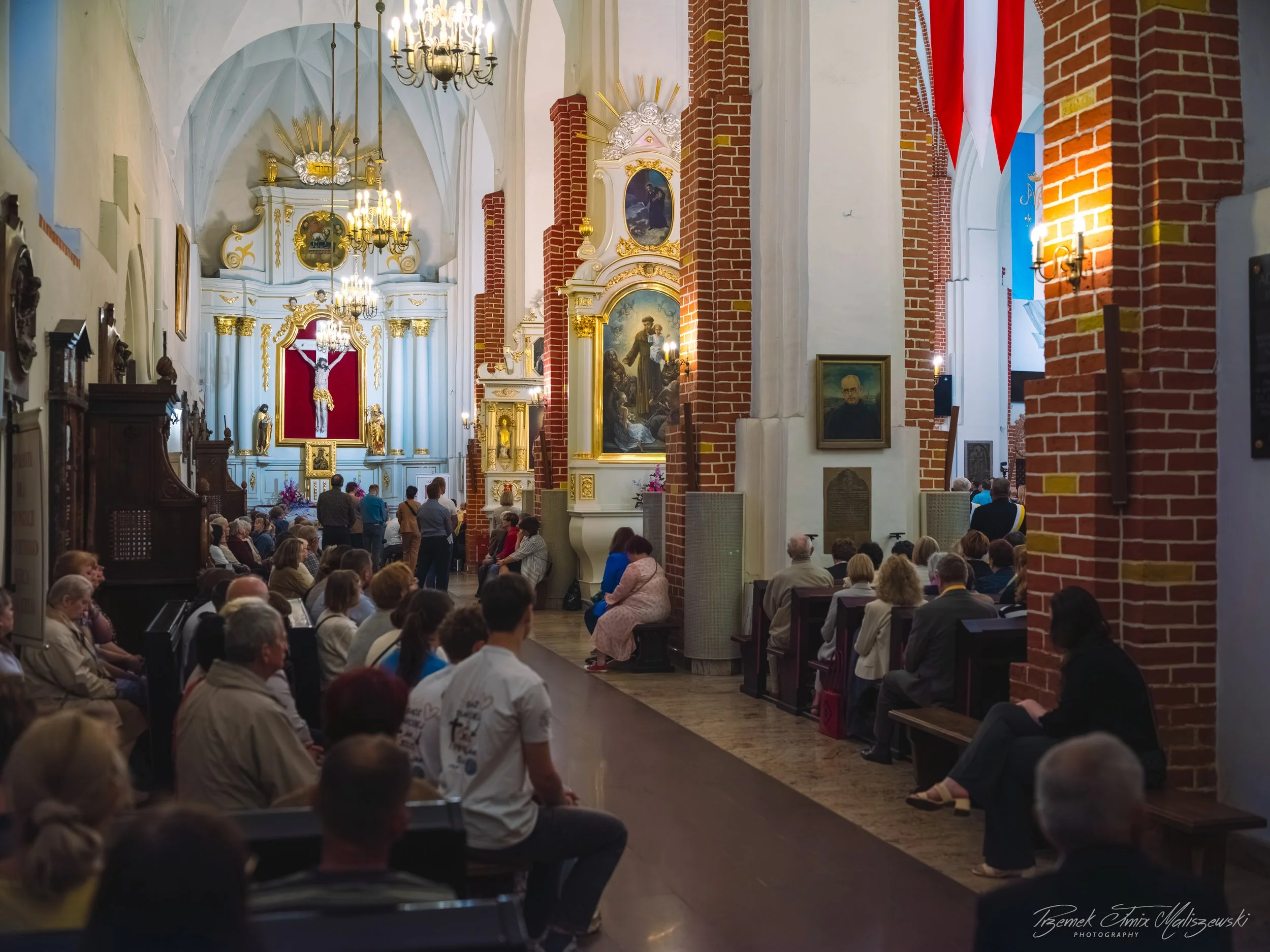
The bishops in the Chapel of Our Lady of Łomża, also known as Our Lady of Beautiful Love. In the background is the image of Our Lady, crowned on June 4, 1991, by Saint John Paul II during his fourth pilgrimage to Poland.
A Brief History of the Łomża Diocese
The Łomża Diocese was established on October 28, 1925, formally created by virtue of the circumscription bull Vixdum Poloniae Unitas. It was erected by Pope Pius XI to reorganize the structures of the Church in Poland after regaining independence, adjusting diocesan borders to the new political realities of the Polish Republic.
It replaced the former Sejny (Augustów) Diocese, whose capital found itself on the Polish-Lithuanian border after WWI. Several deaneries from the Płock Diocese were also added. The first ordinary (diocesan bishop) was Bishop Romuald Jałbrzykowski, commemorated by a plaque in the left aisle of the cathedral.
The territorial shape and reach of the diocese changed in later years due to border shifts, the brutal confrontation with the communist system, and a major reorganization at the end of the 20th century:
Post-WWII Border Shifts: The westward shift of Poland's border along the Curzon Line meant the diocese lost the Teolin deanery to the USSR (except for three parishes). Parishes like Adamowicze and Hołynka were absorbed by the USSR, and the church administration in Łomża had no control over them for decades. After the fall of the USSR, these officially became part of the newly established Grodno Diocese in Belarus.
1992 Reorganization: Pope John Paul II's bull Totus Tuus Poloniae Populus created the Ełk Diocese out of the northern territories of the Łomża Diocese (Augustów, Suwałki, and Sejny areas). Concurrently, new deaneries from the Płock Diocese (including Wyszków) were annexed to Łomża. This shape, shifted southwest towards Masovia, remains today.
The 405th Plenary Meeting of the Polish Episcopal Conference
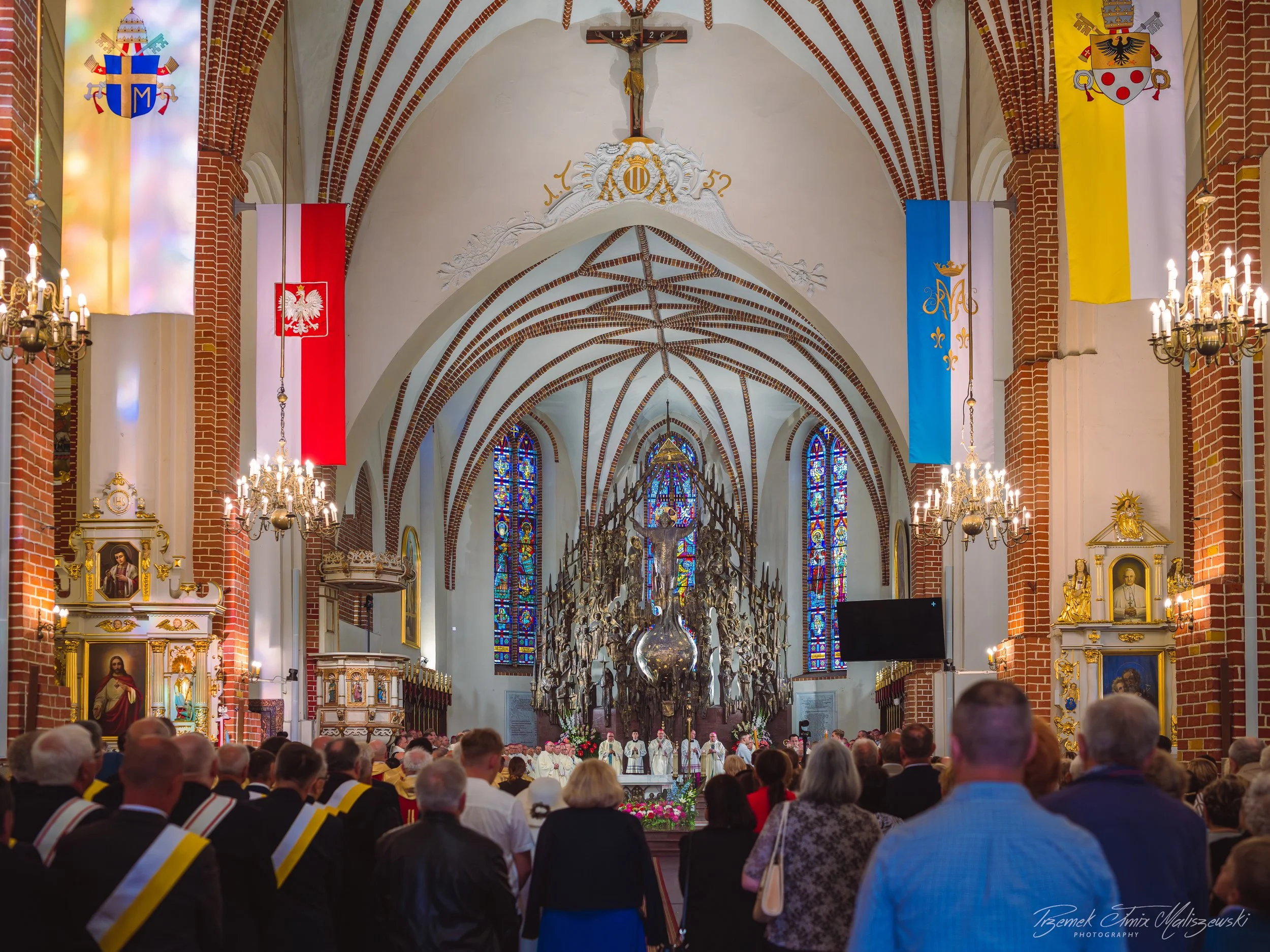
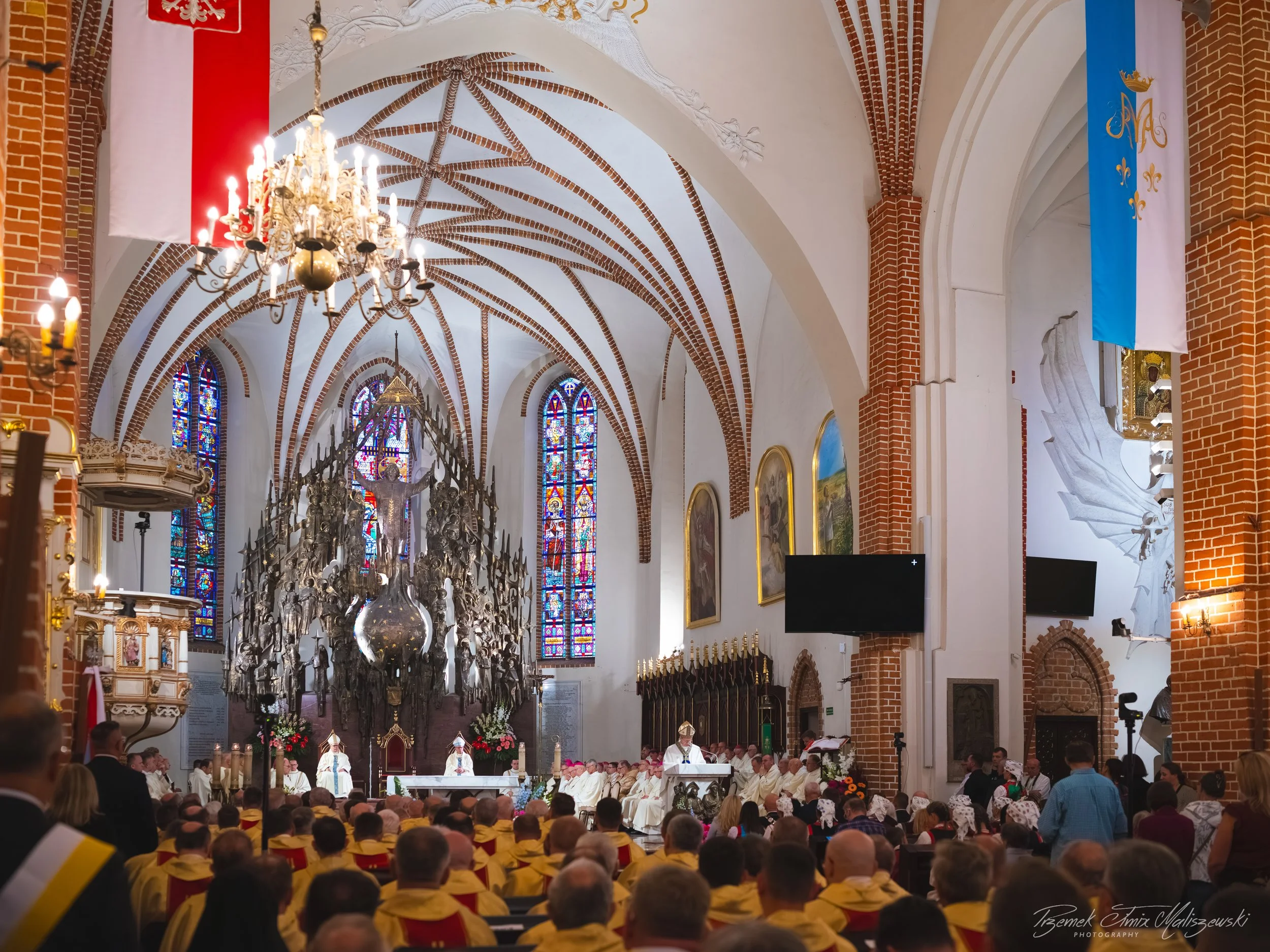
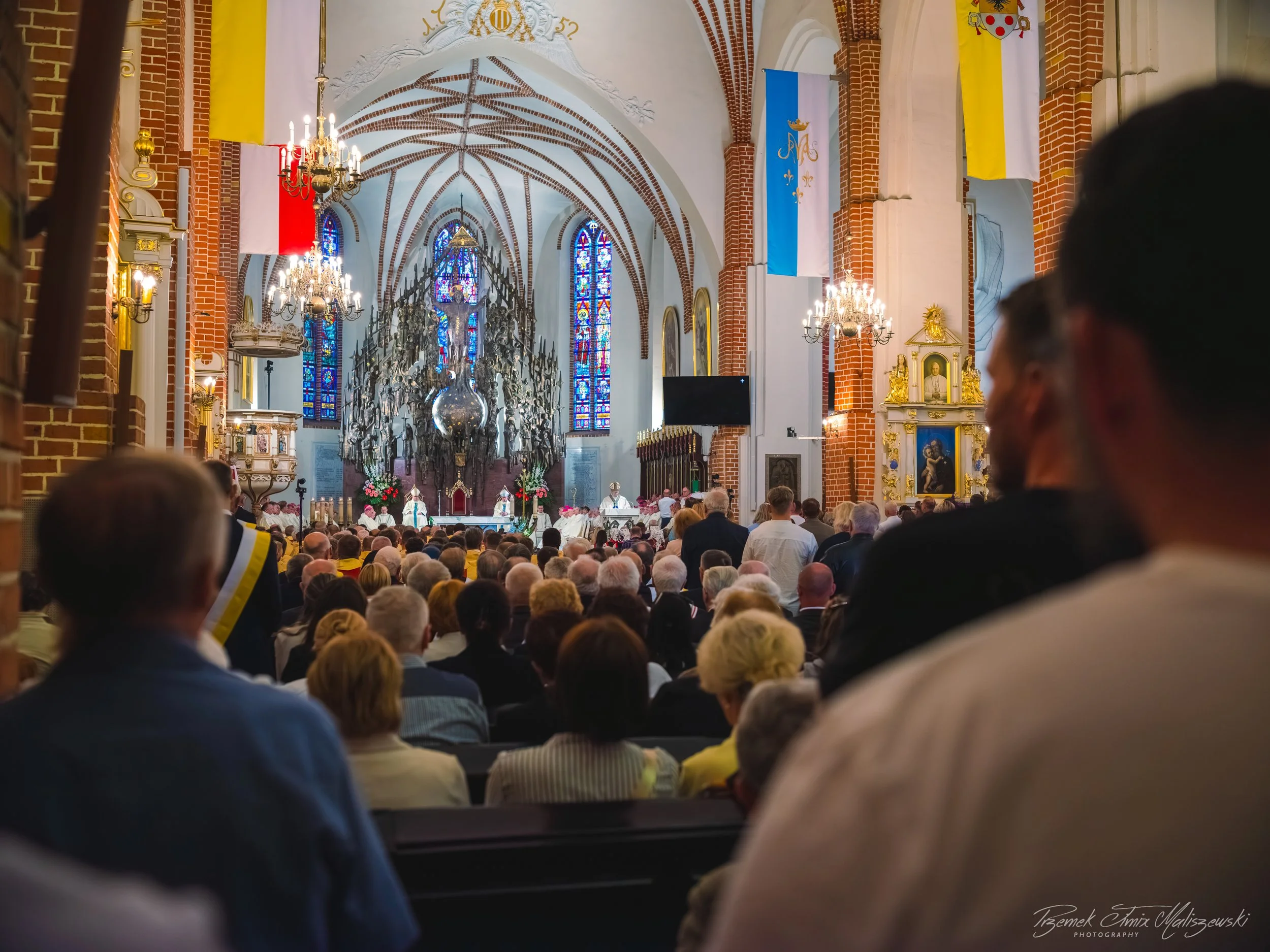
The confluence of the 100th anniversary of the Diocese, the 500th anniversary of the Cathedral's completion (1525-1526), the 35th anniversary of Pope John Paul II's visit, and the installation of the new cathedral doors became an occasion to organize the 405th Plenary Meeting of the Polish Episcopal Conference (KEP) in Łomża.
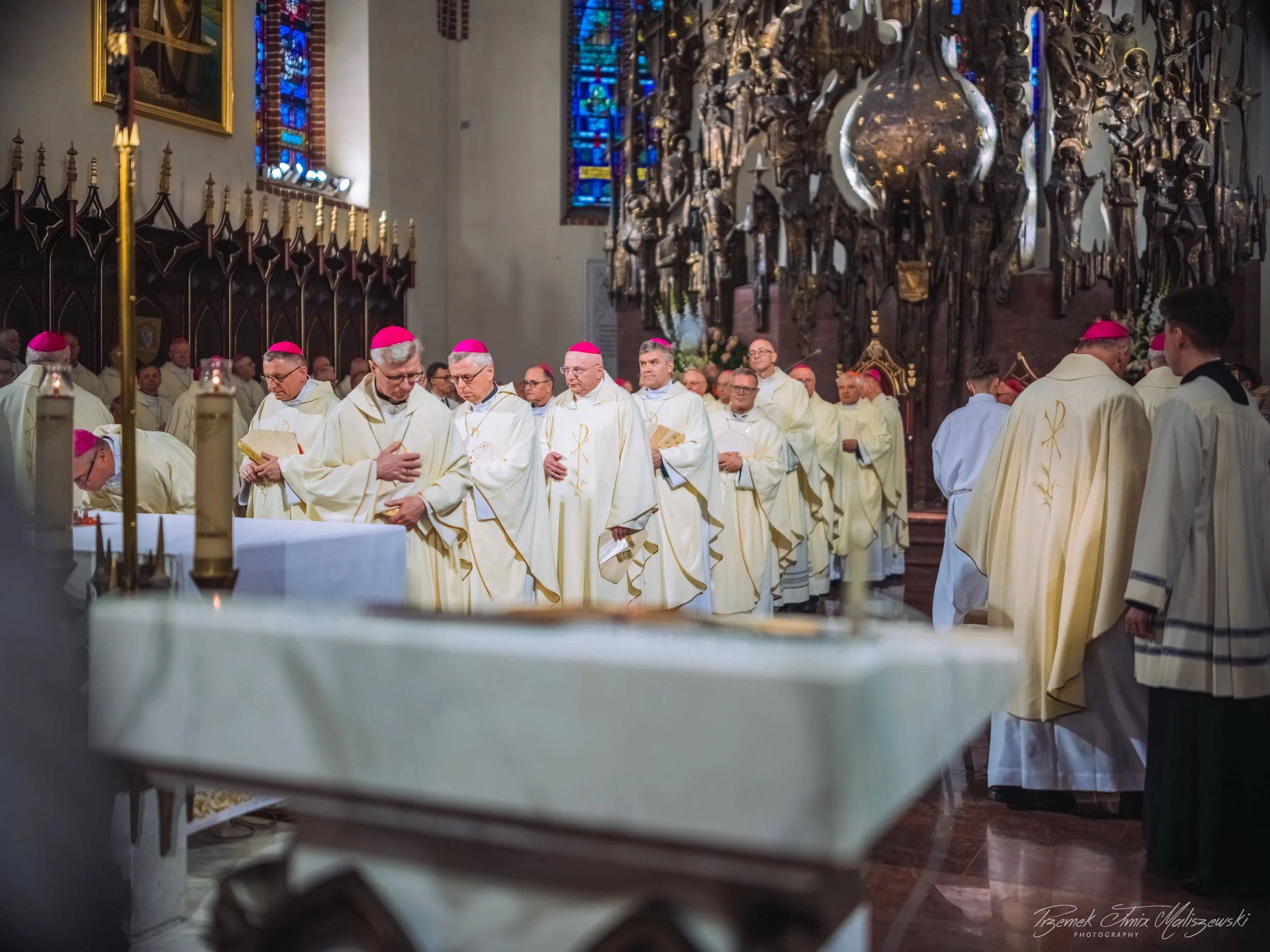
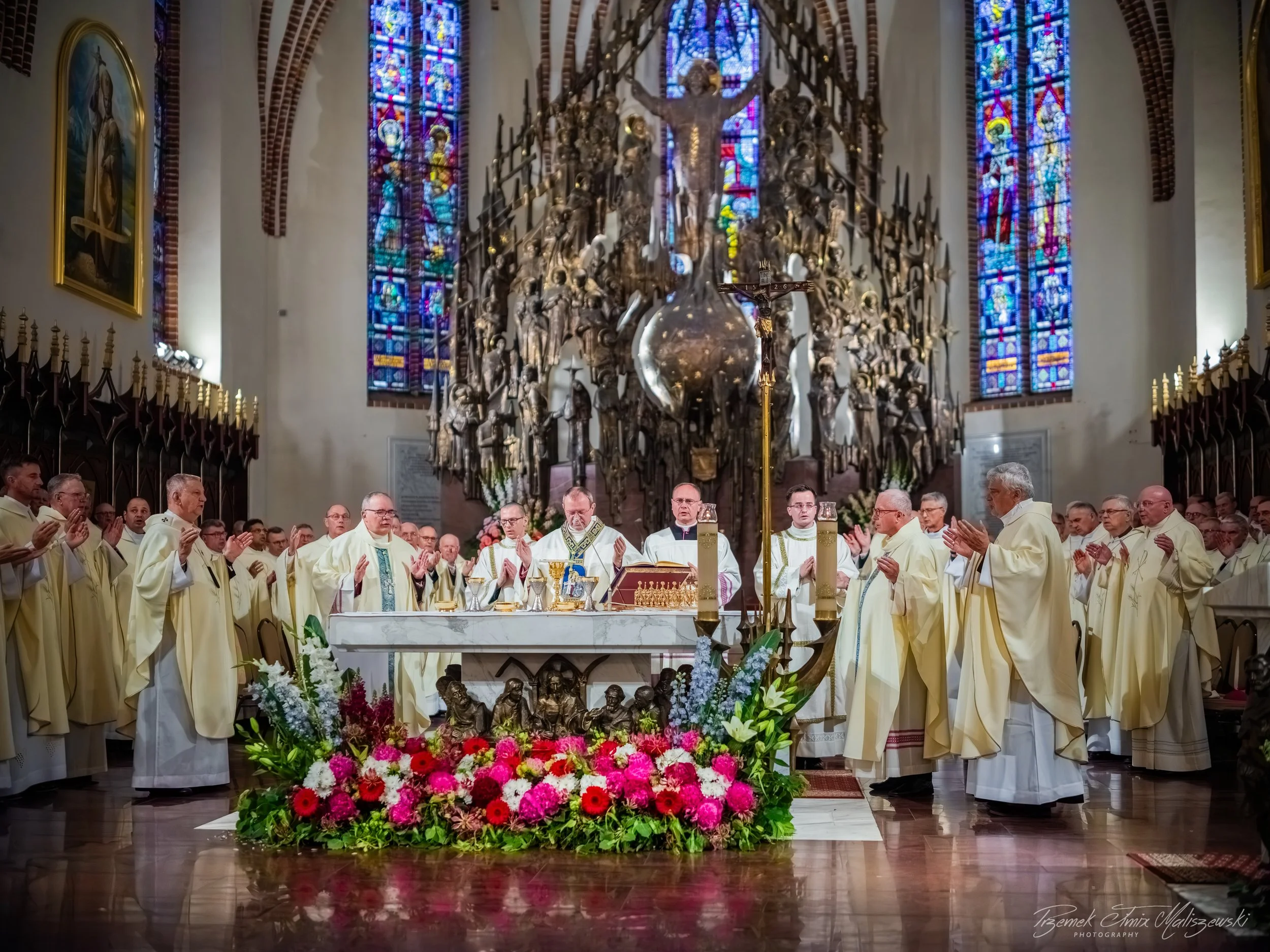
A group photo of the bishops, who are also members of the Polish Episcopal Conference, following the Holy Mass. June 8, 2026, Łomża.
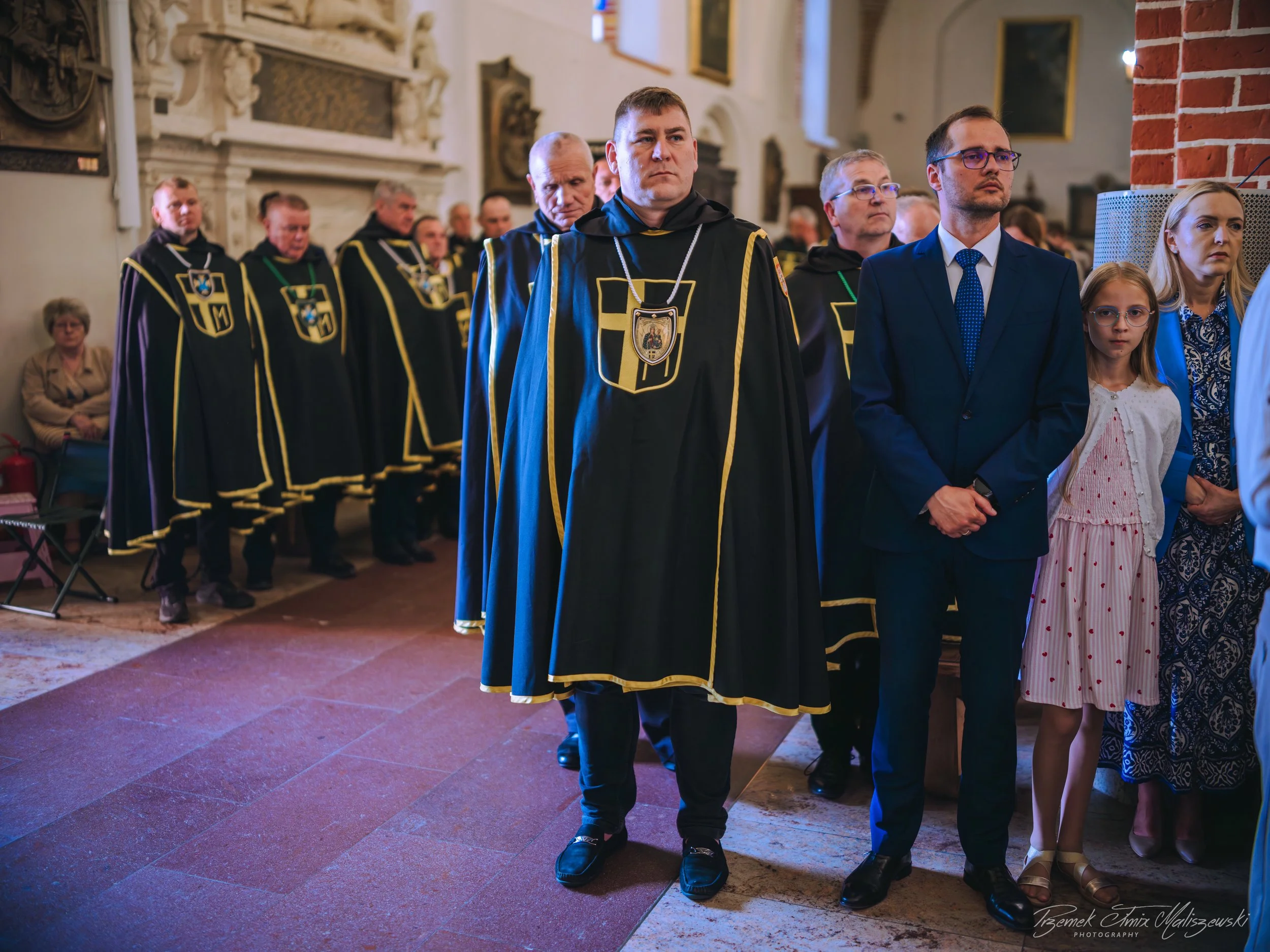
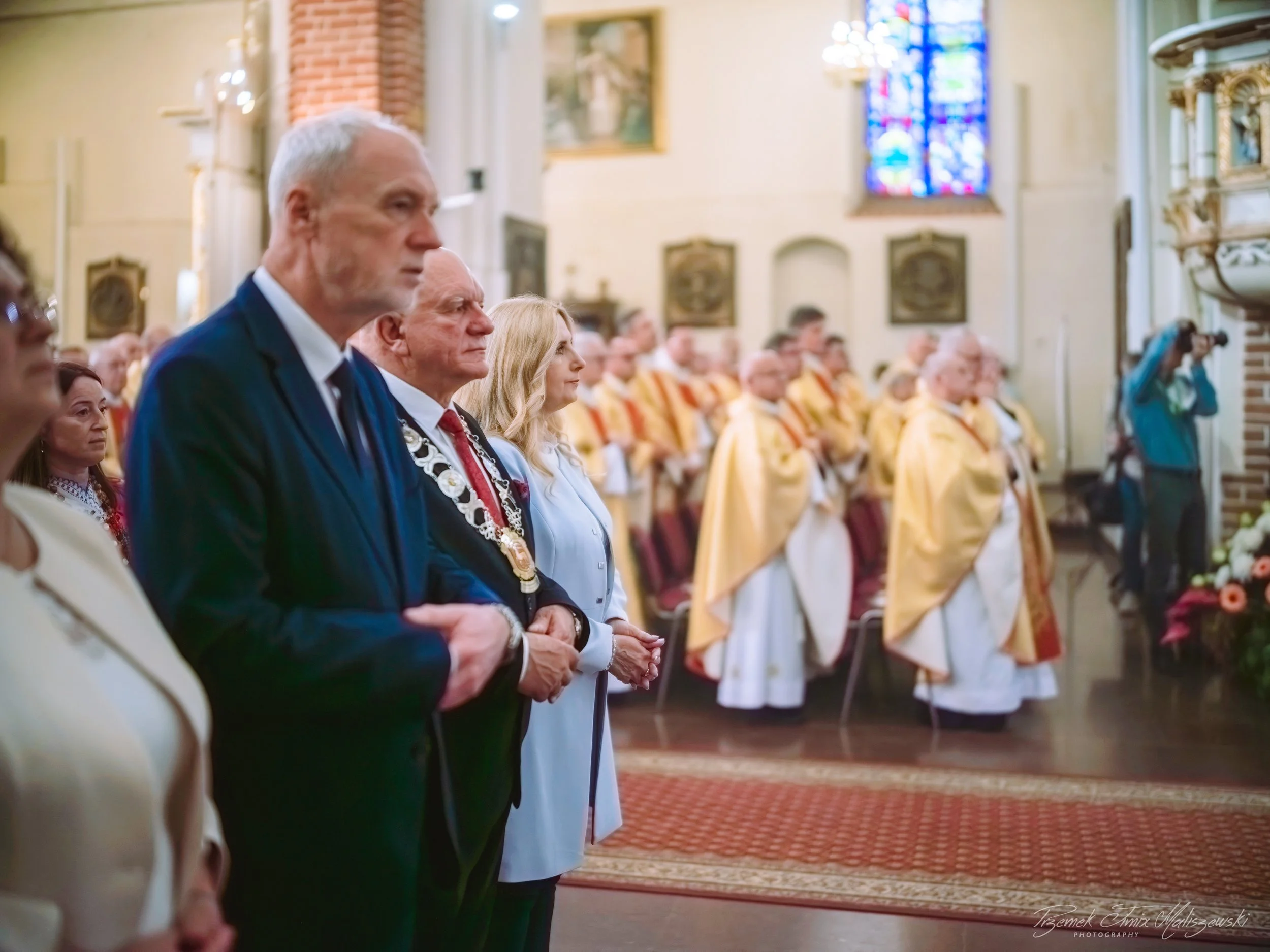
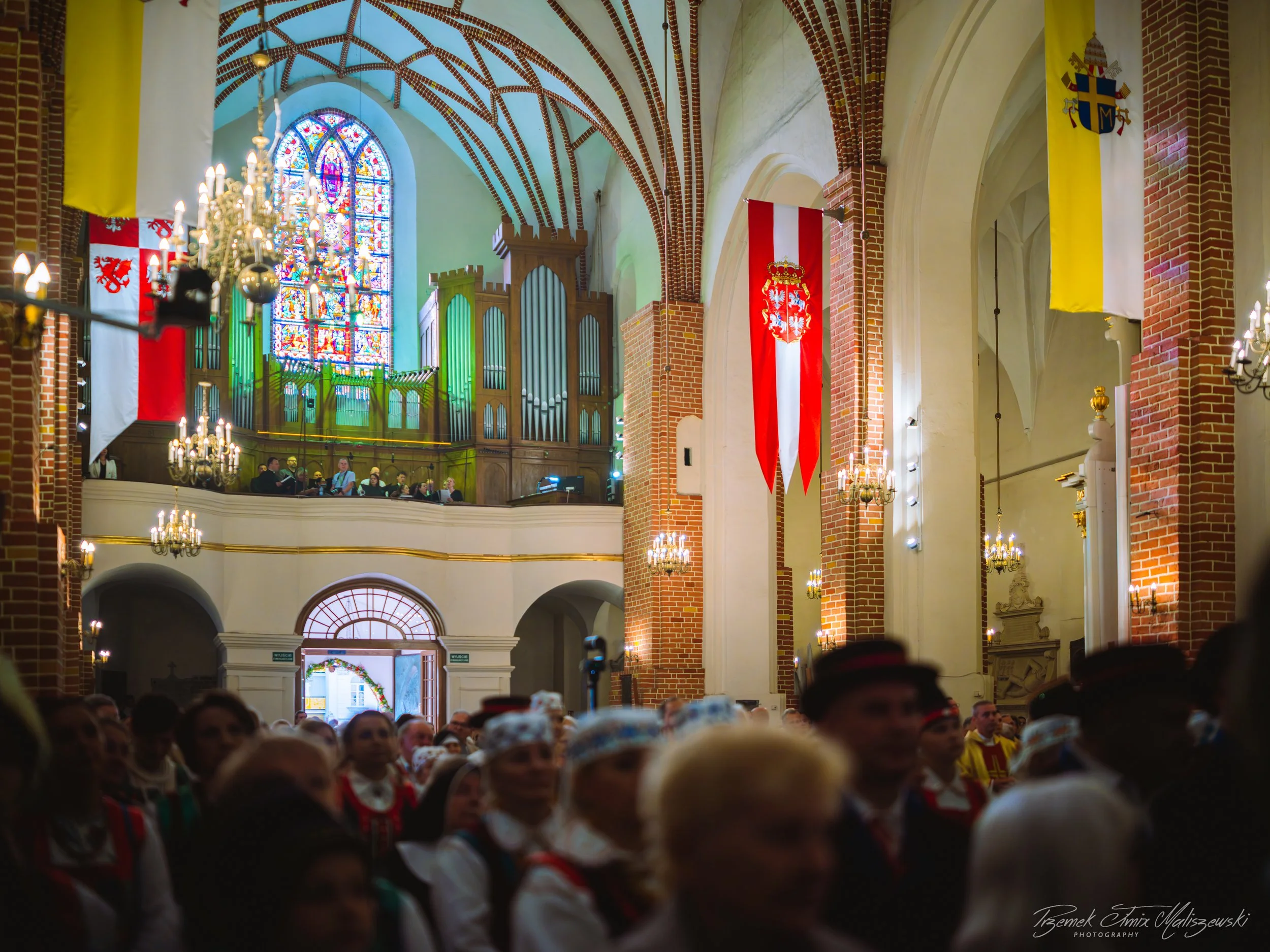
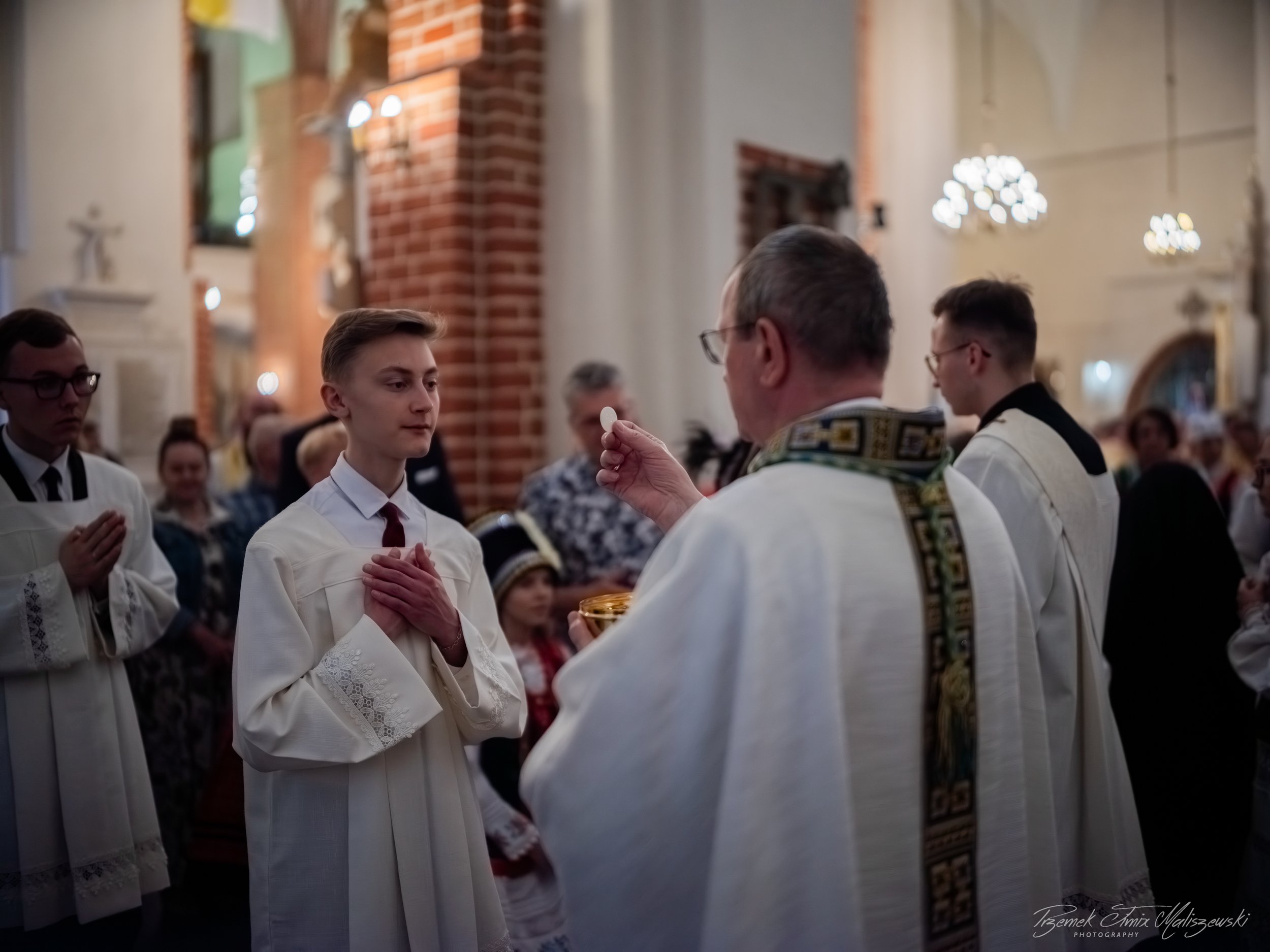
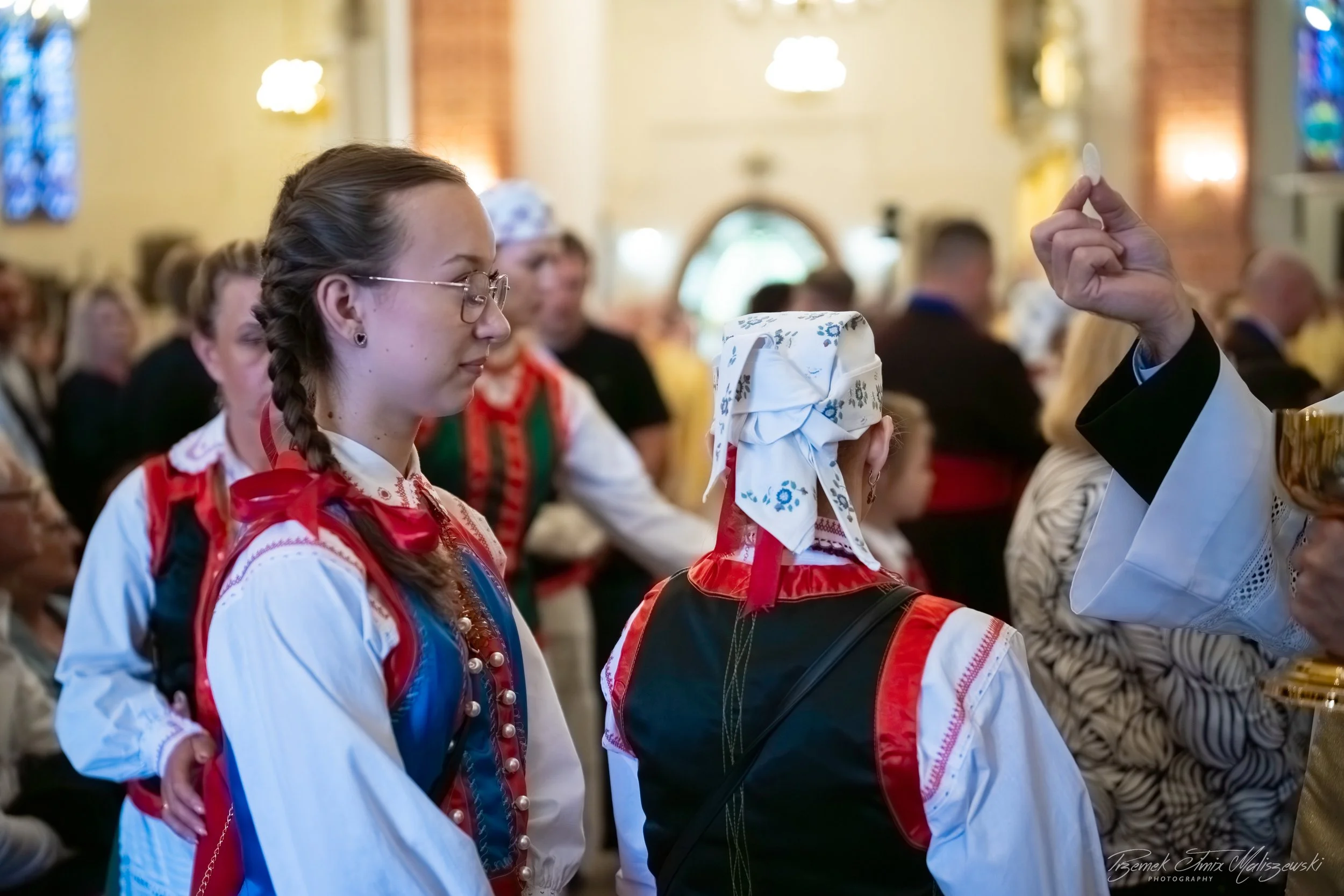
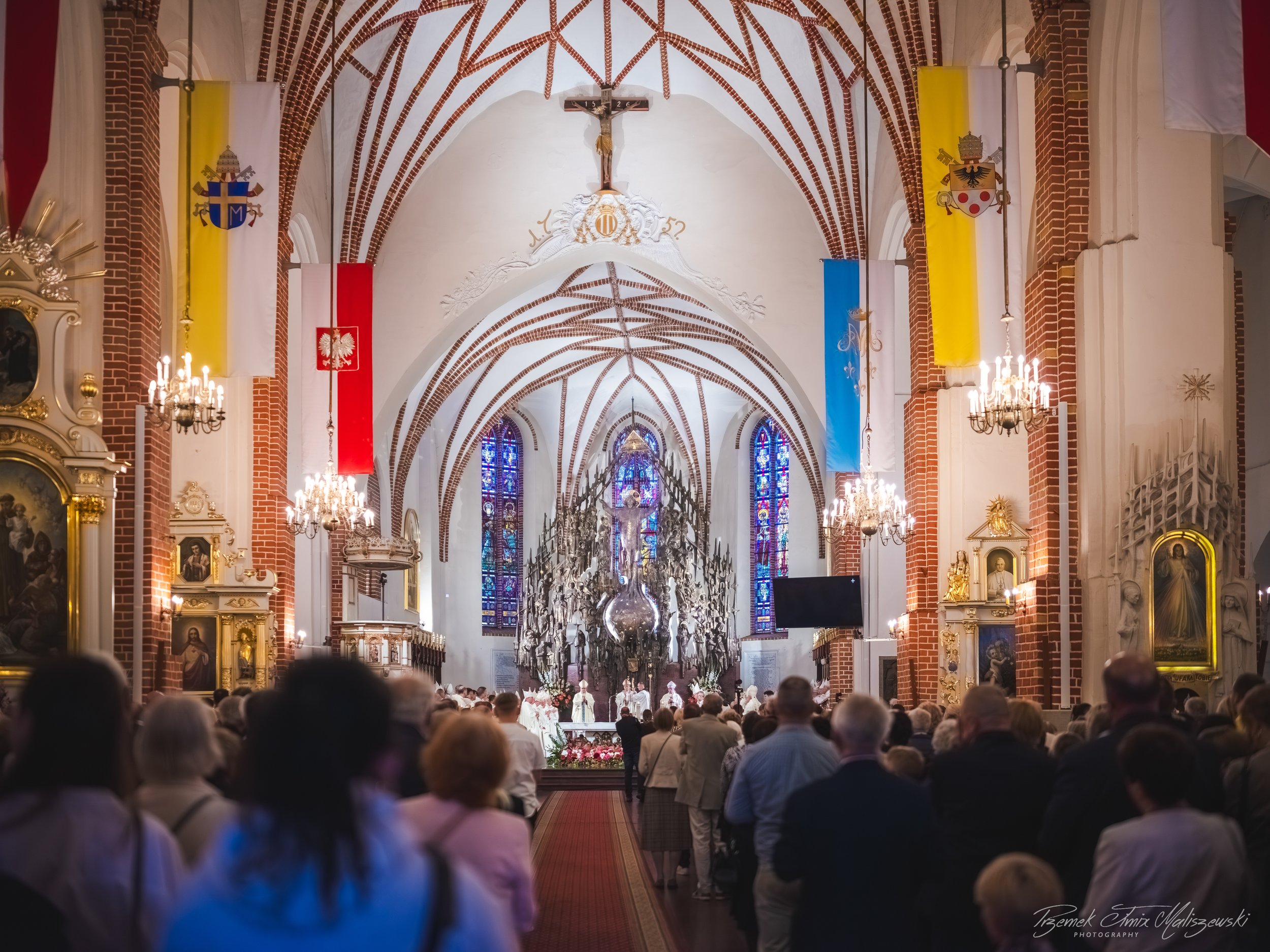
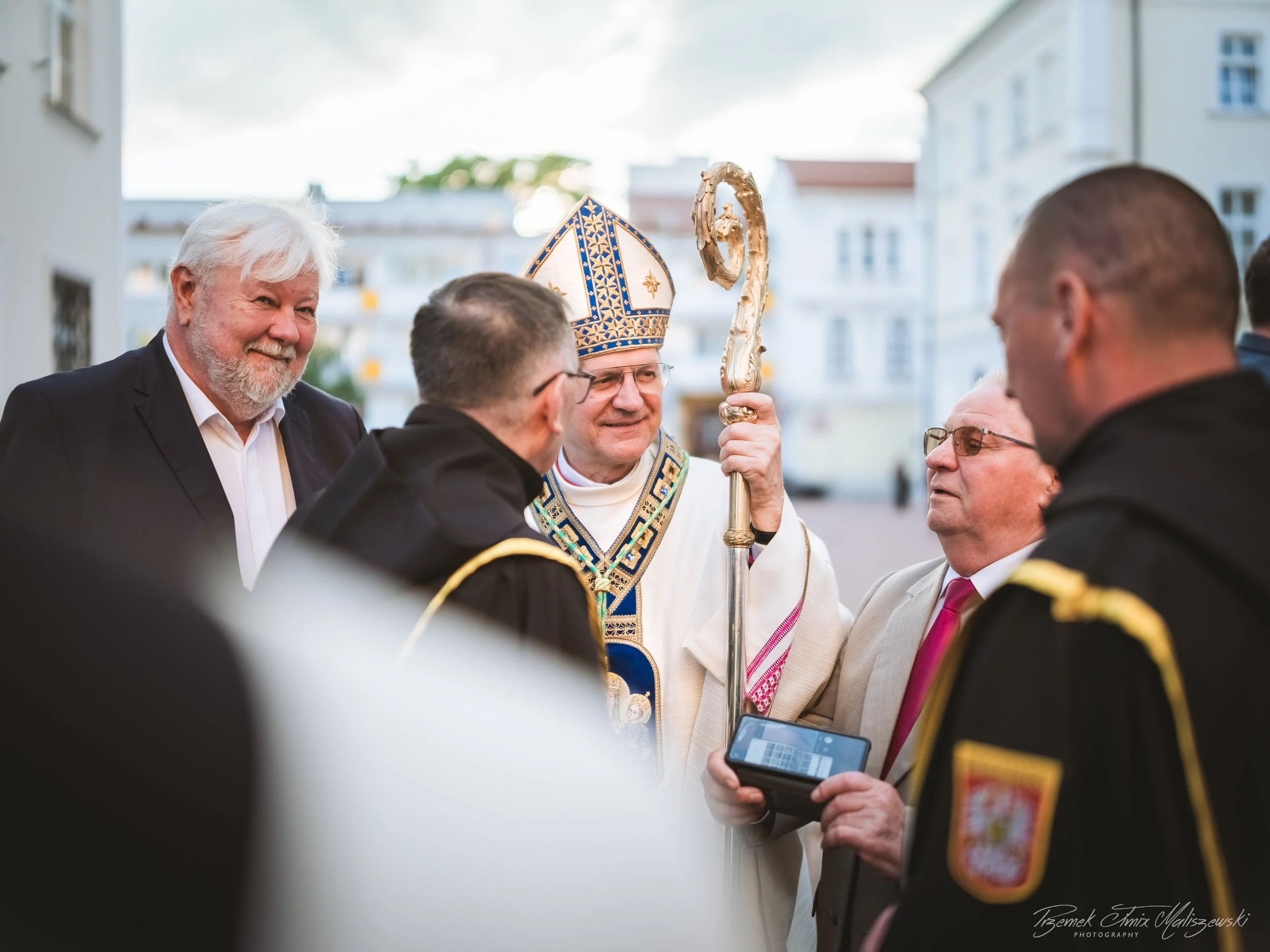
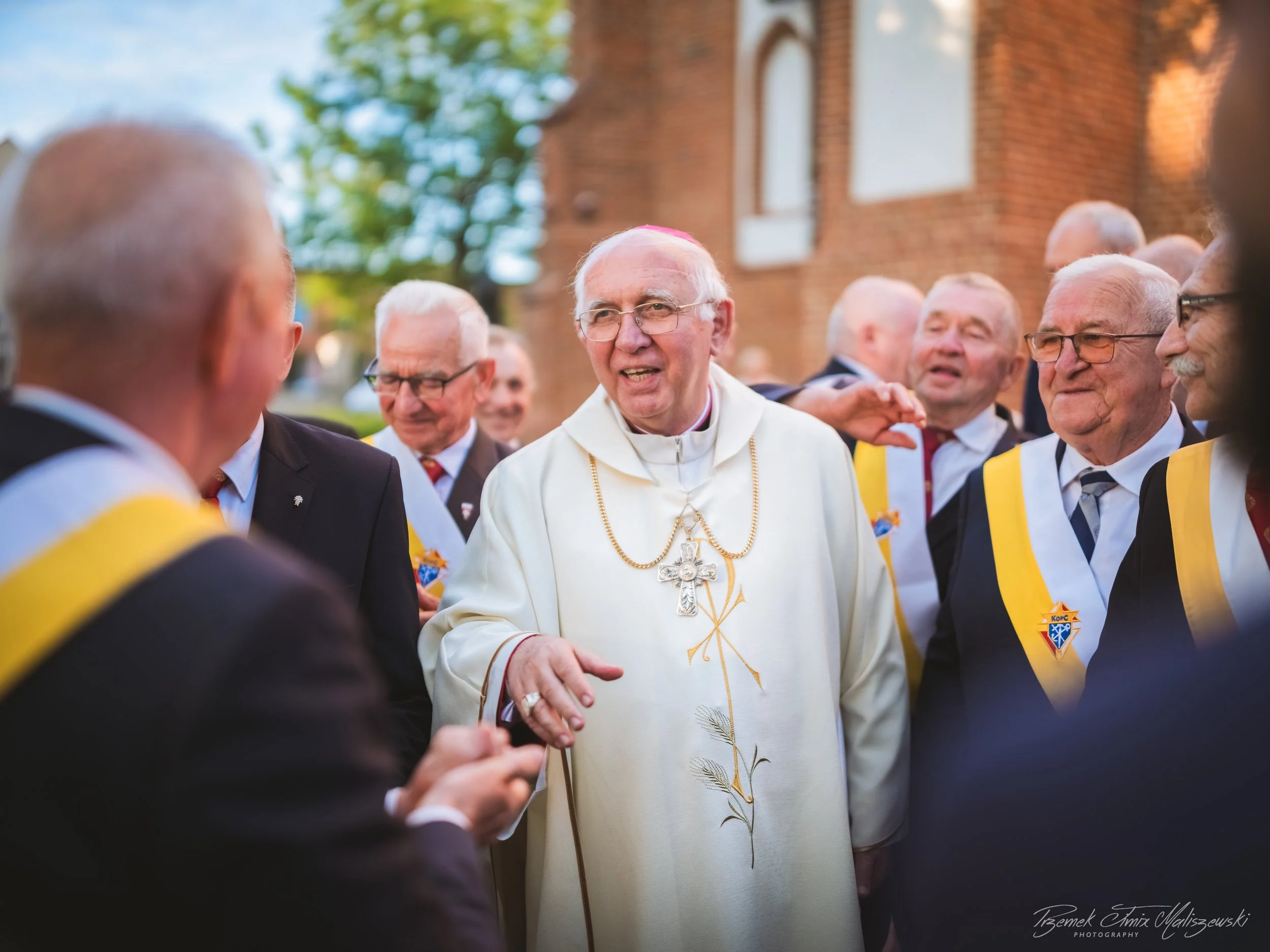
On June 8, 2026, at 6:00 PM, a solemn mass was held in the Łomża fara, presided over by Archbishop Tadeusz Wojda SAC, Metropolitan of Gdańsk and President of the KEP. He was accompanied at the altar by Bishop of Łomża Janusz Stepnowski, Apostolic Nuncio Archbishop Antonio Guido Filipazzi, Cardinal Konrad Krajewski, the Archbishop Metropolitan of Łódź, and Brig. Gen. Archbishop Józef Gózdek, Metropolitan of Białystok. The Primate of Poland, Archbishop Wojciech Polak, Metropolitan of Gniezno, was also present.
** Circumscription bull (Latin: bulla circumscriptionis) – a papal document serving as a tool of church "cartography" or "geography," which comprehensively reorganizes the territorial structure of the Church in a given region (from Latin circumscriptio, meaning the drawing of boundaries or describing an area – circum: around, scriptum: to write, describe).
