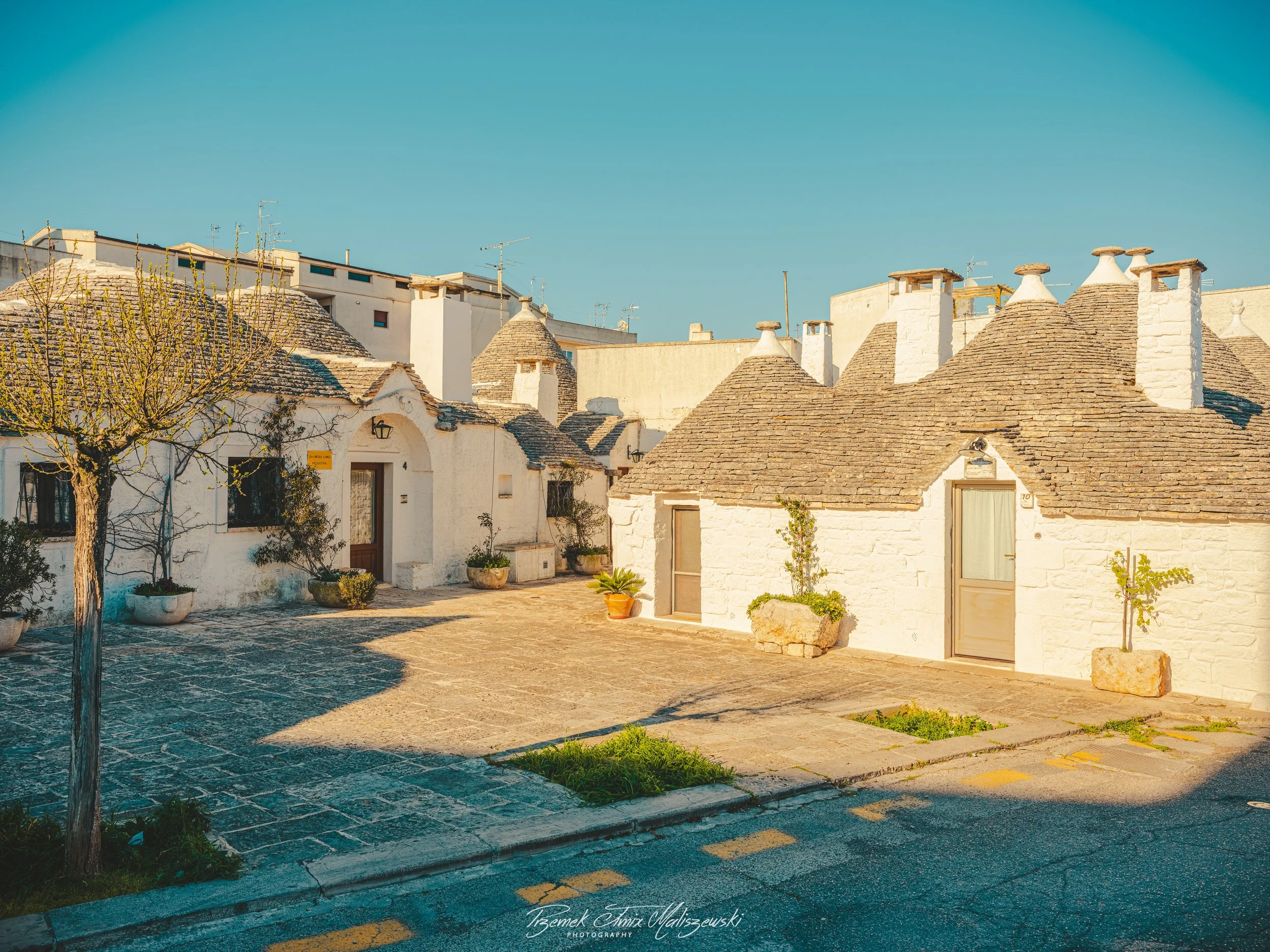
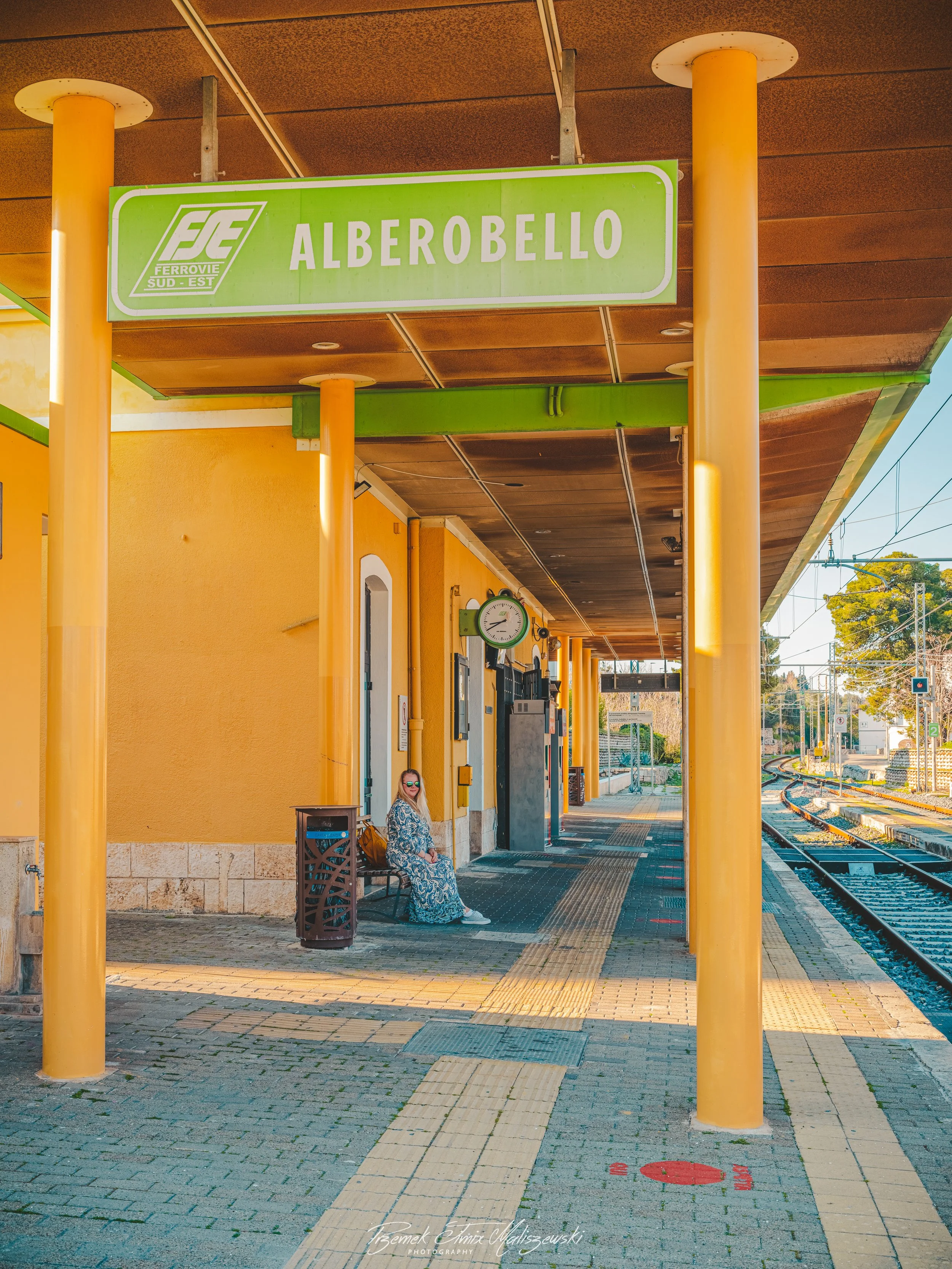
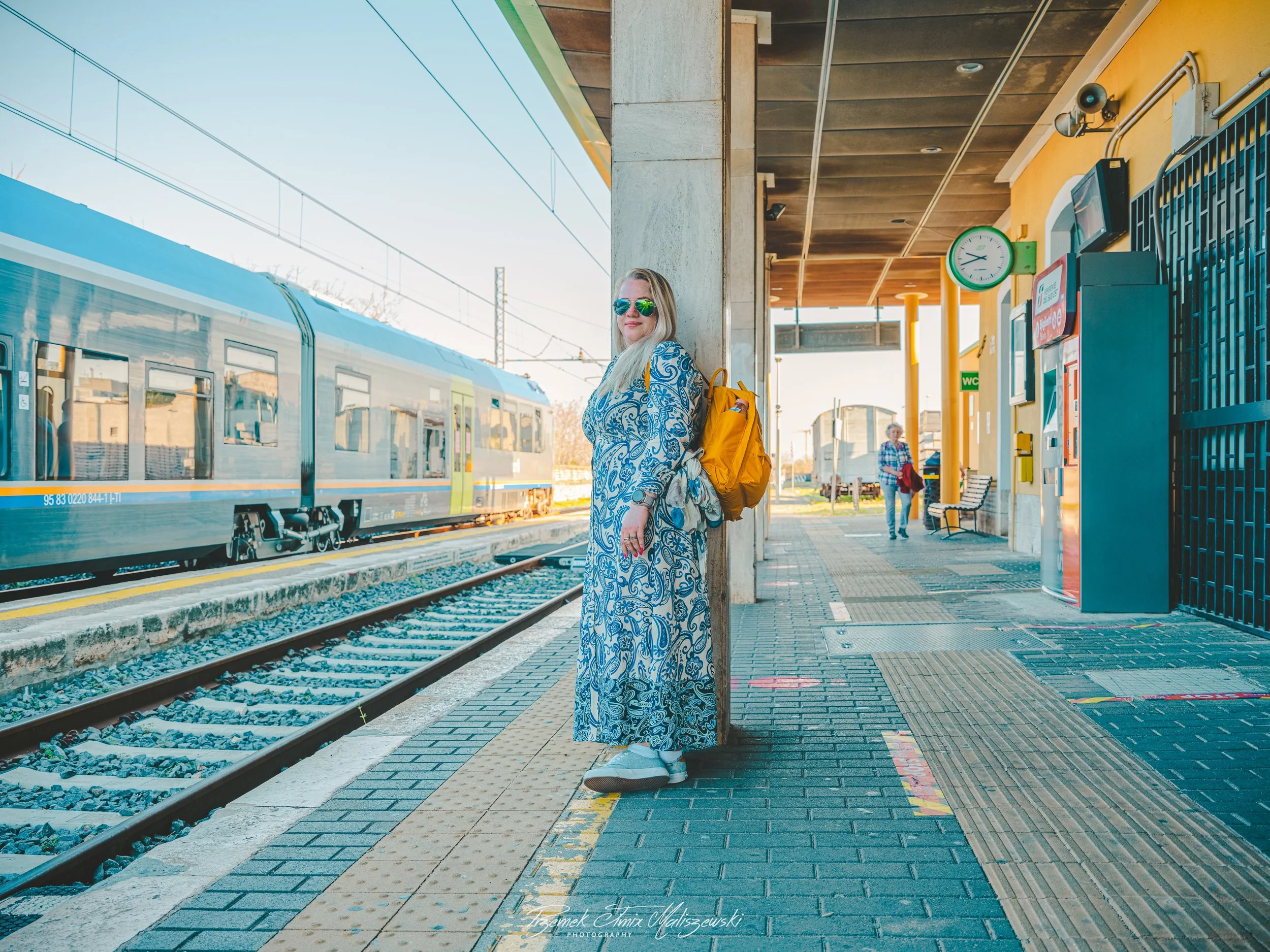
The view on the old part of Alberobello.
While visiting Puglia, particularly Bari or its surroundings, it is also worth dropping by the town of Alberobello. This town is situated in an agricultural region dominated by olive cultivation. However, this locality is not famous for olives, and neither the olives nor the olive oil produced from them have been inscribed on the UNESCO World Heritage list. It is something else — something seen here and there in the surrounding area, scattered across fields and olive groves, which becomes fully apparent when you arrive in Alberobello and wander through its streets.
Having gotten off the bus that we took to come here from Bari, we’re slowly entering the world of trulli.
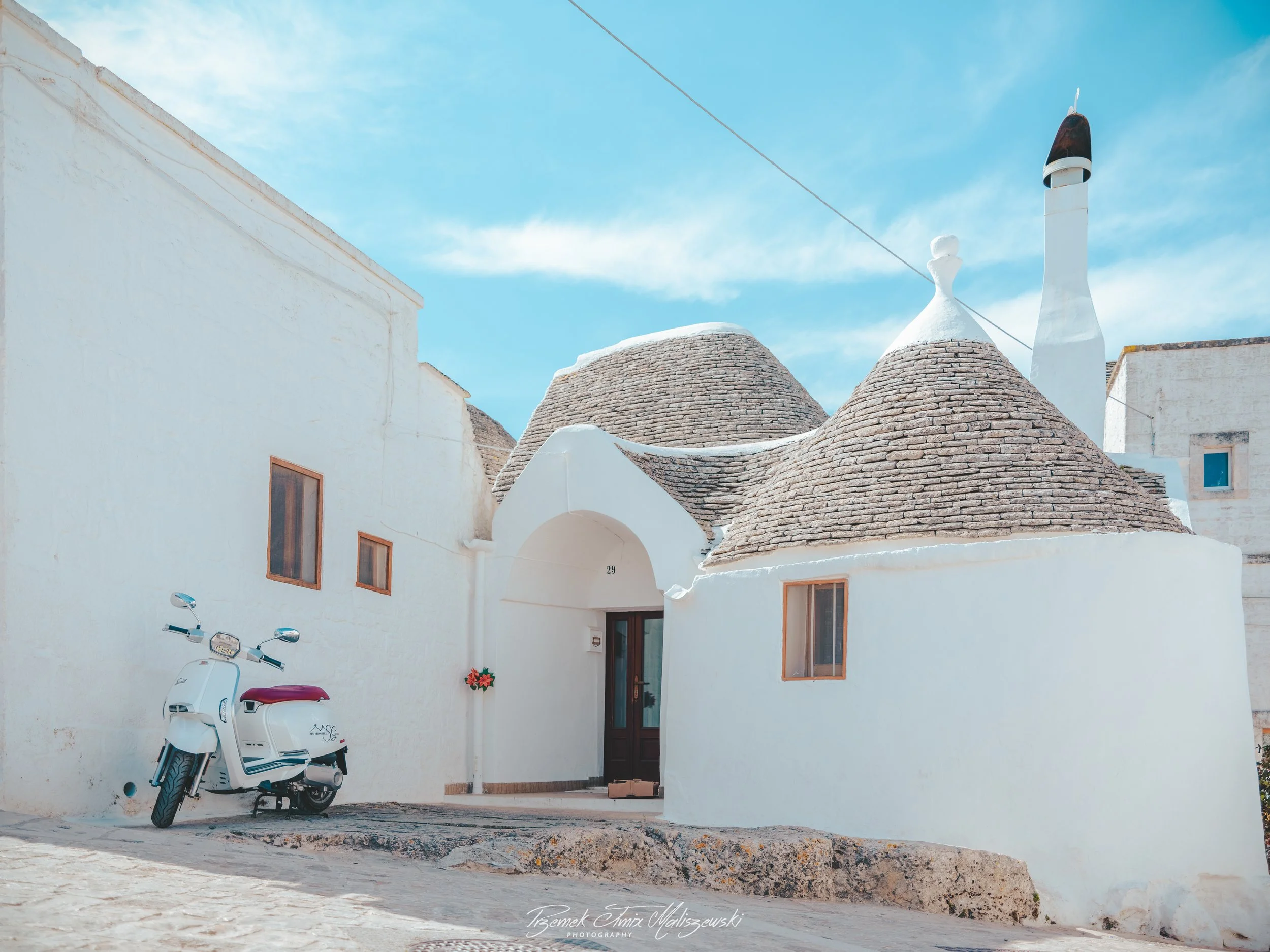
We are talking, of course, about trulli, which are the region's characteristic houses, mostly round, sometimes rectangular in plan, featuring typically conical stone roofs and white walls. Debates over the origins of this type of architecture continue to this day. Where does this shape come from? What is the reason for building structures of this kind? Is there any practical or technical reason behind it? One theory suggests it was purely for tax reasons, as a tax was once levied on permanent buildings that could not simply be taken apart and moved elsewhere. Was the property tax the reason, then? Because if these structures could be dismantled relatively quickly and reassembled elsewhere, they were essentially considered movable property, and no tribute was paid on such assets. Additionally, in the 15th century, Ferdinand I of Aragon forbade Apulian peasants from building permanent homes, as this made it easier to relocate them wherever the nobility desired. Therefore, the ability to dismantle a building could have been quite useful under such circumstances.
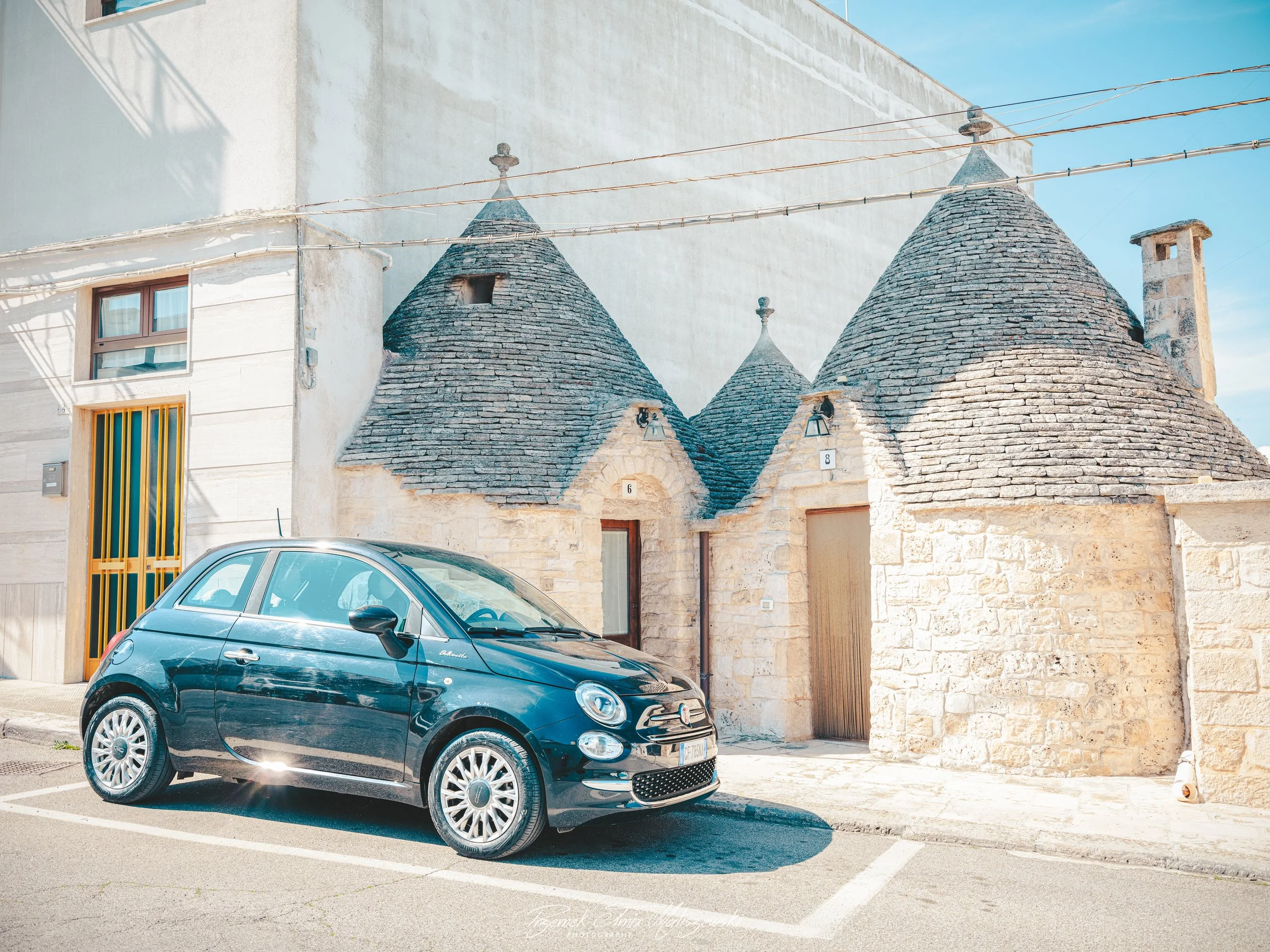
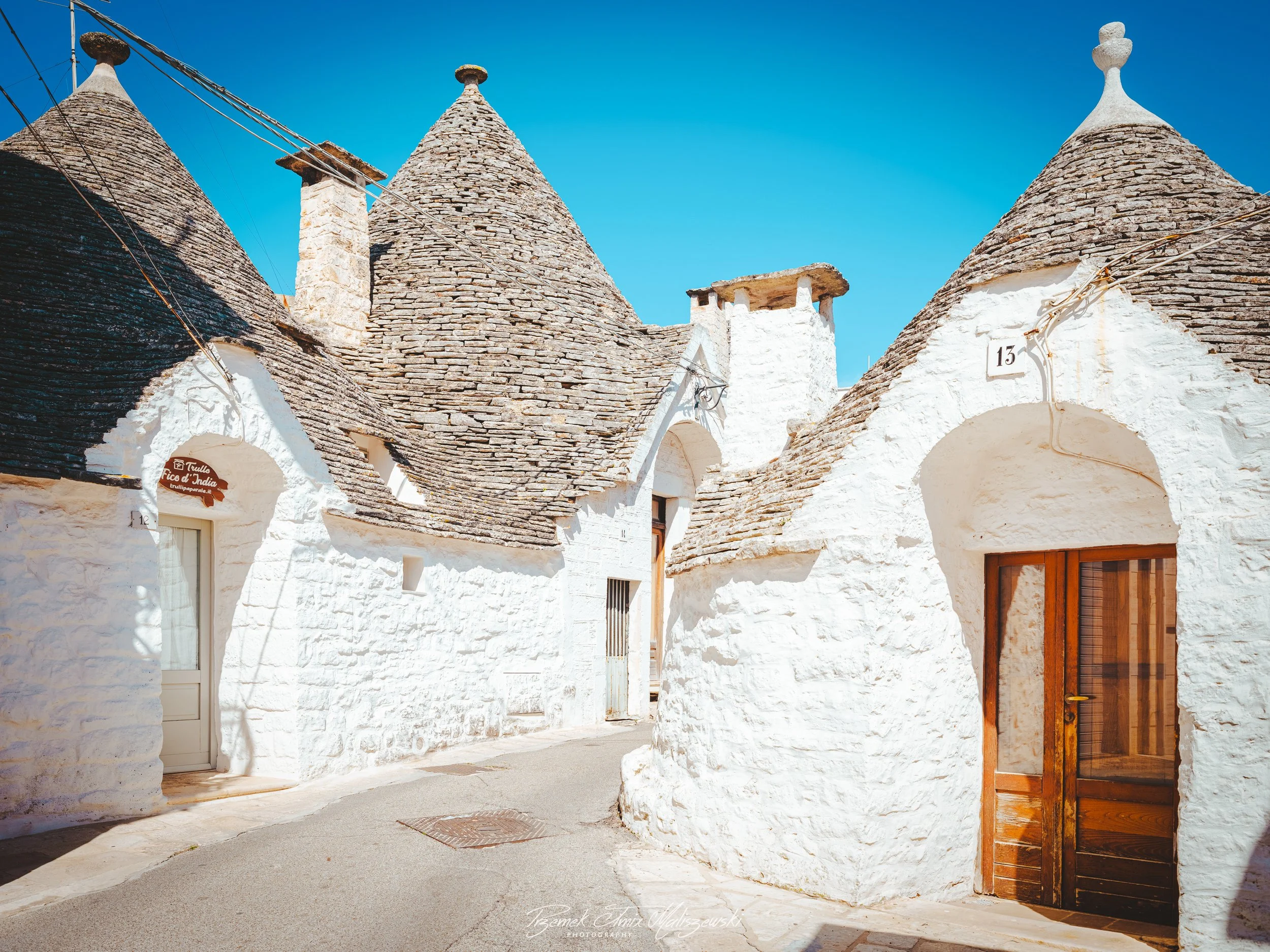
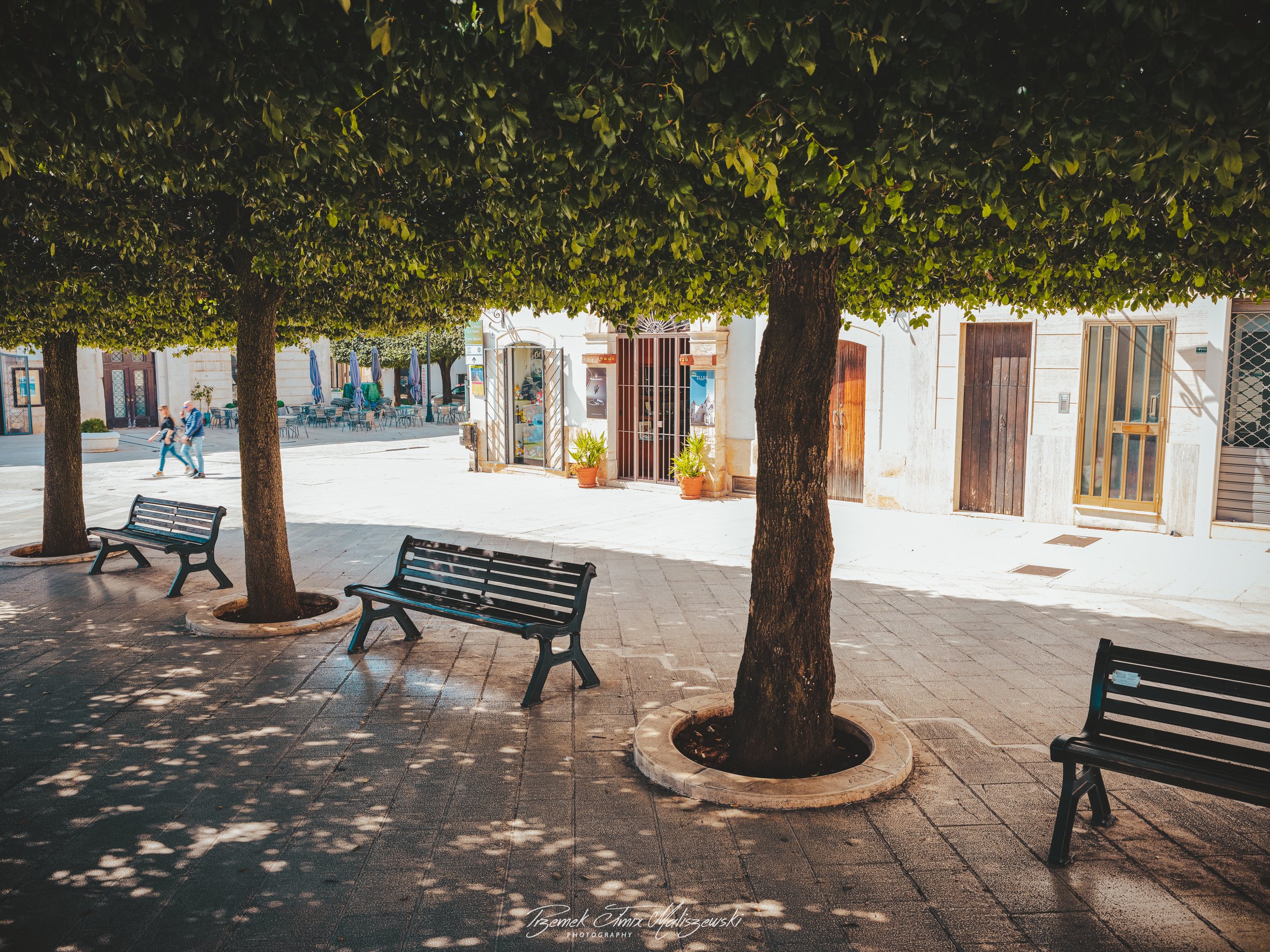
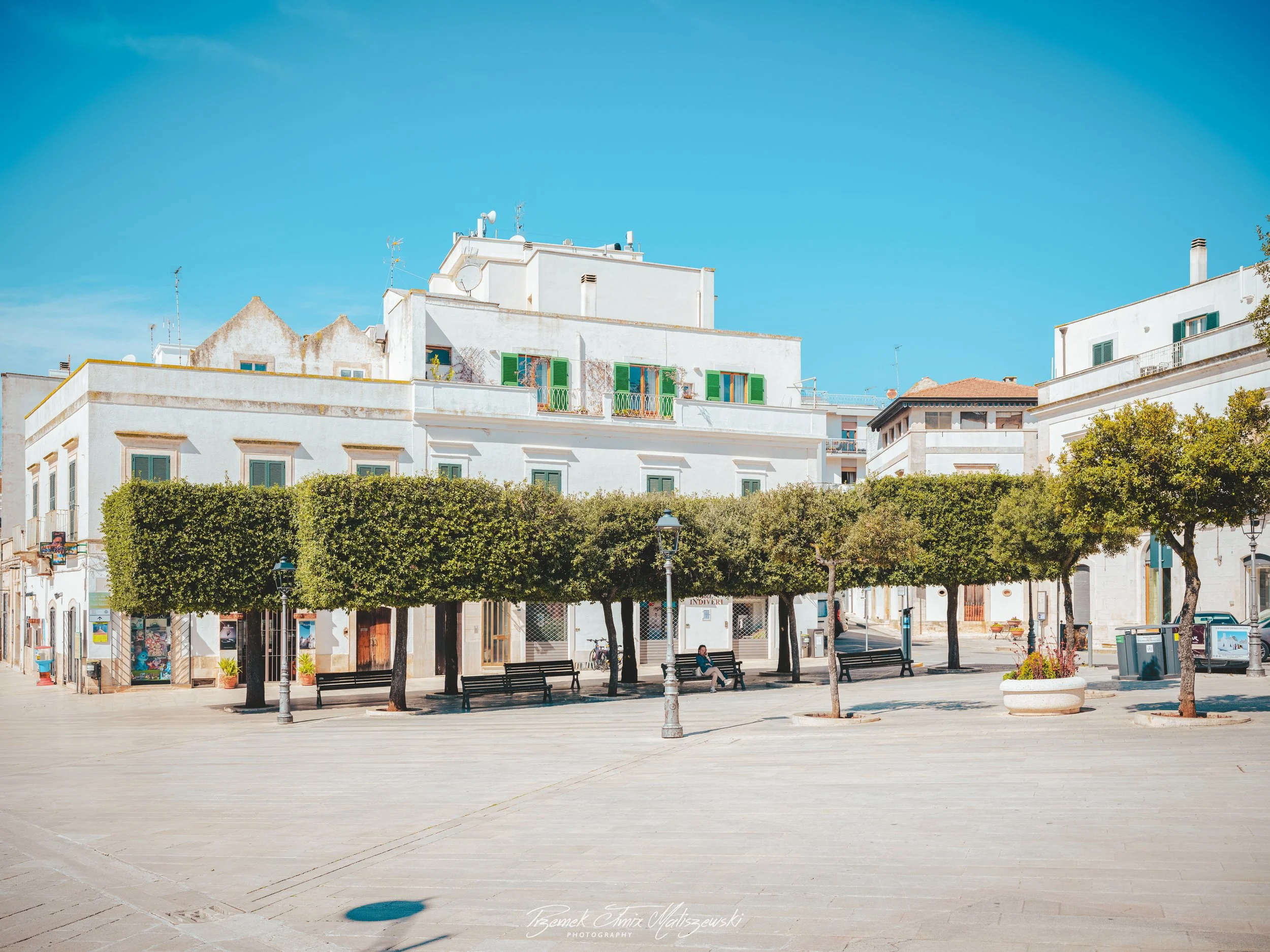
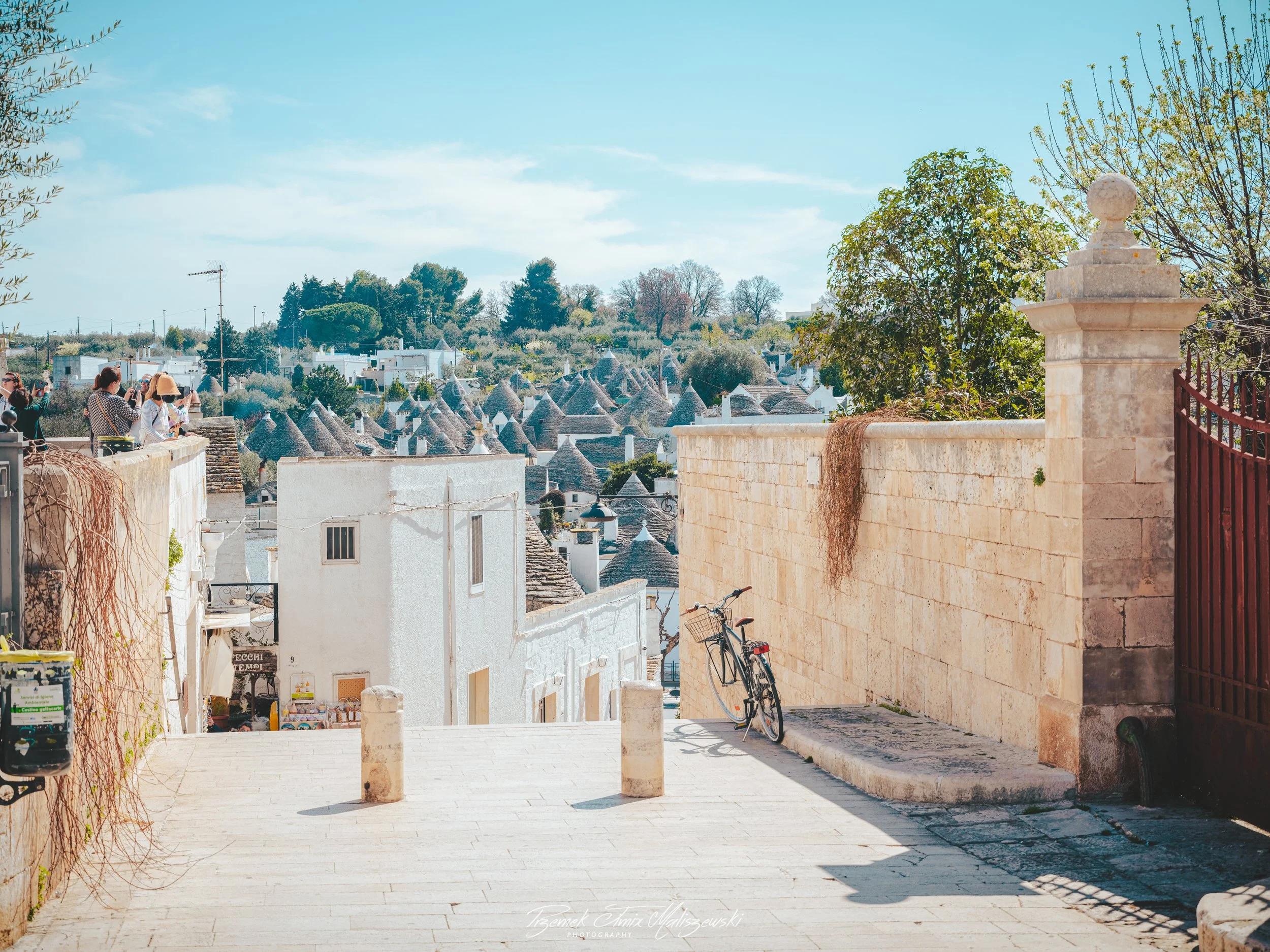
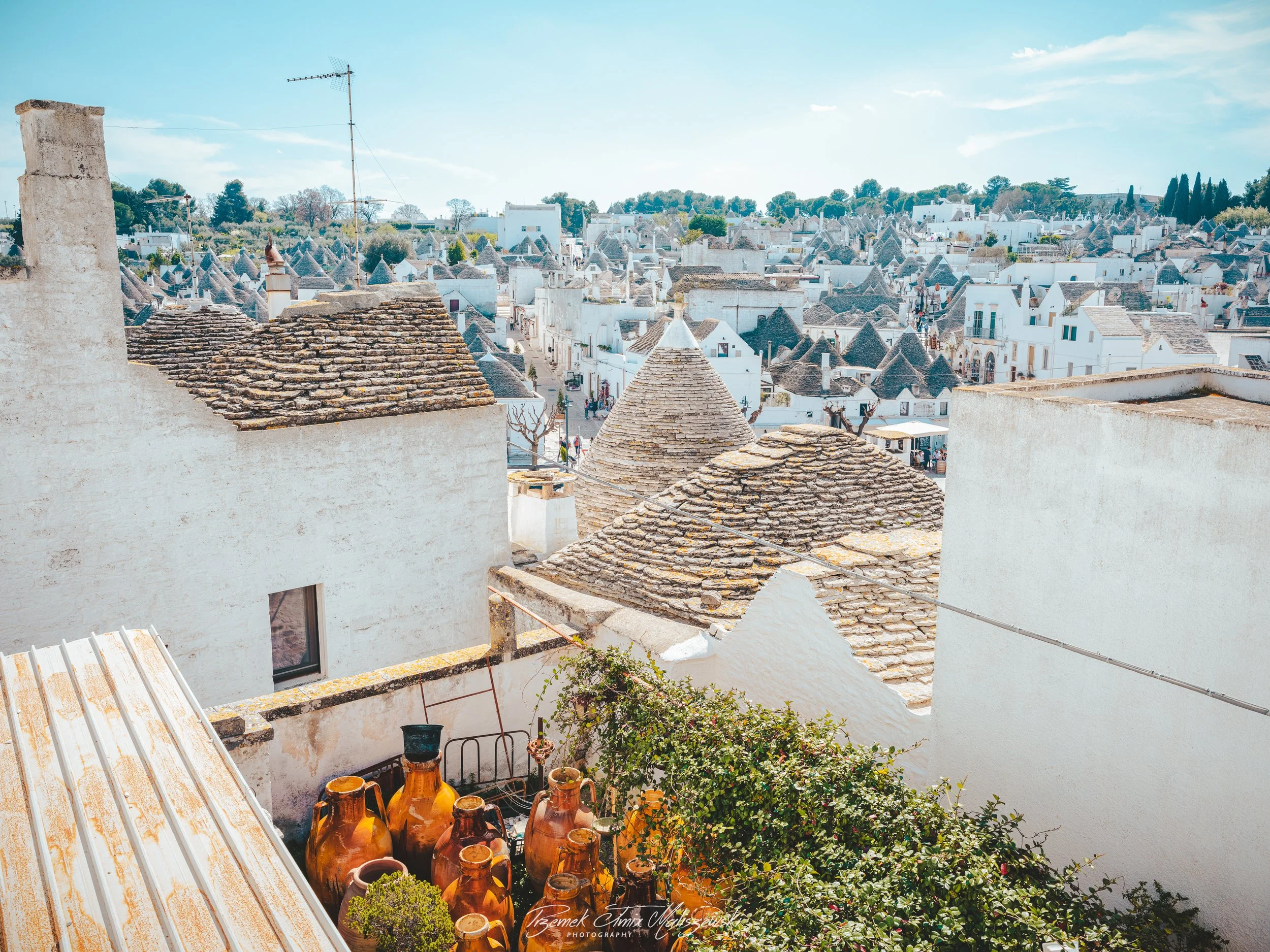
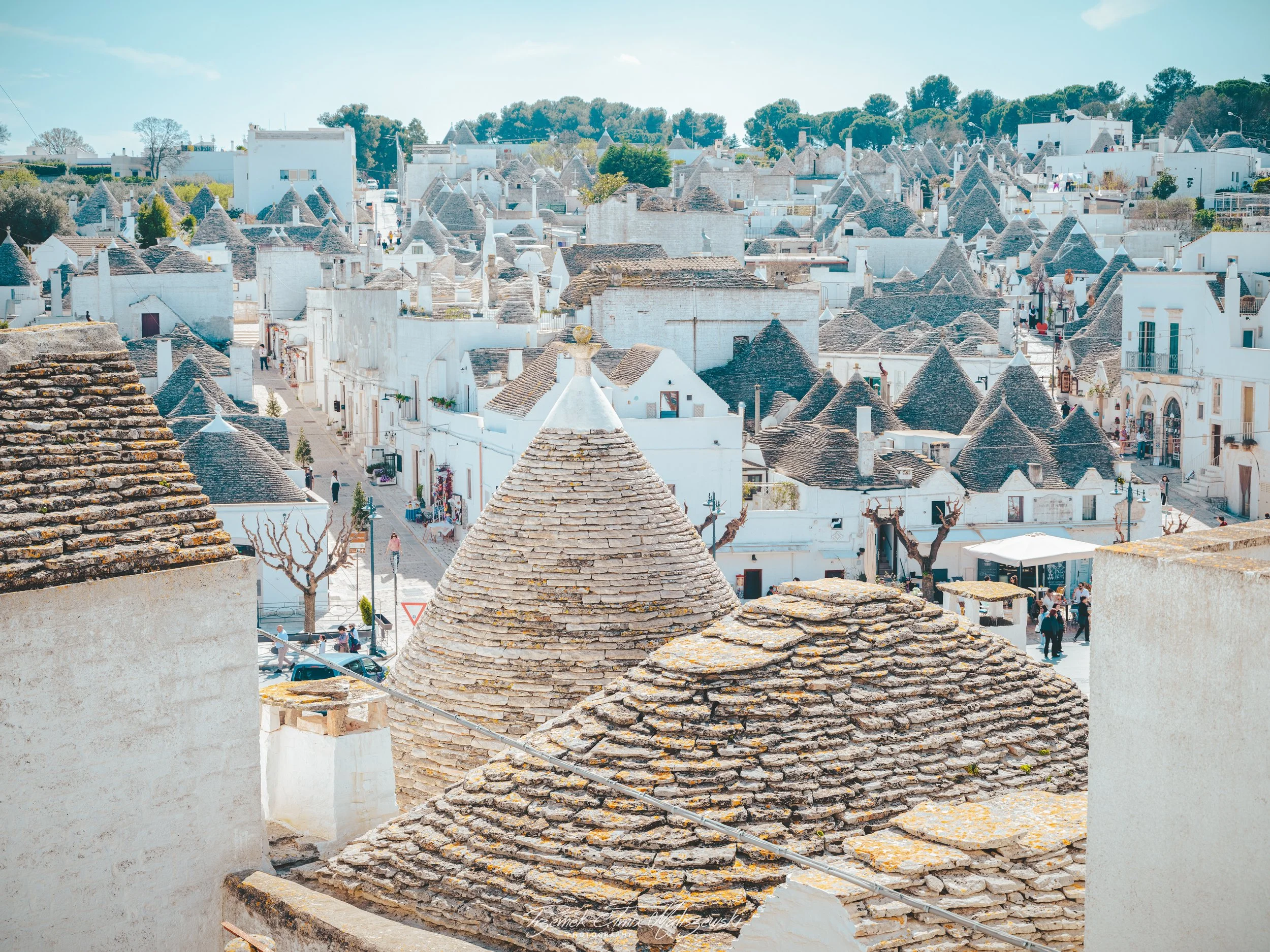
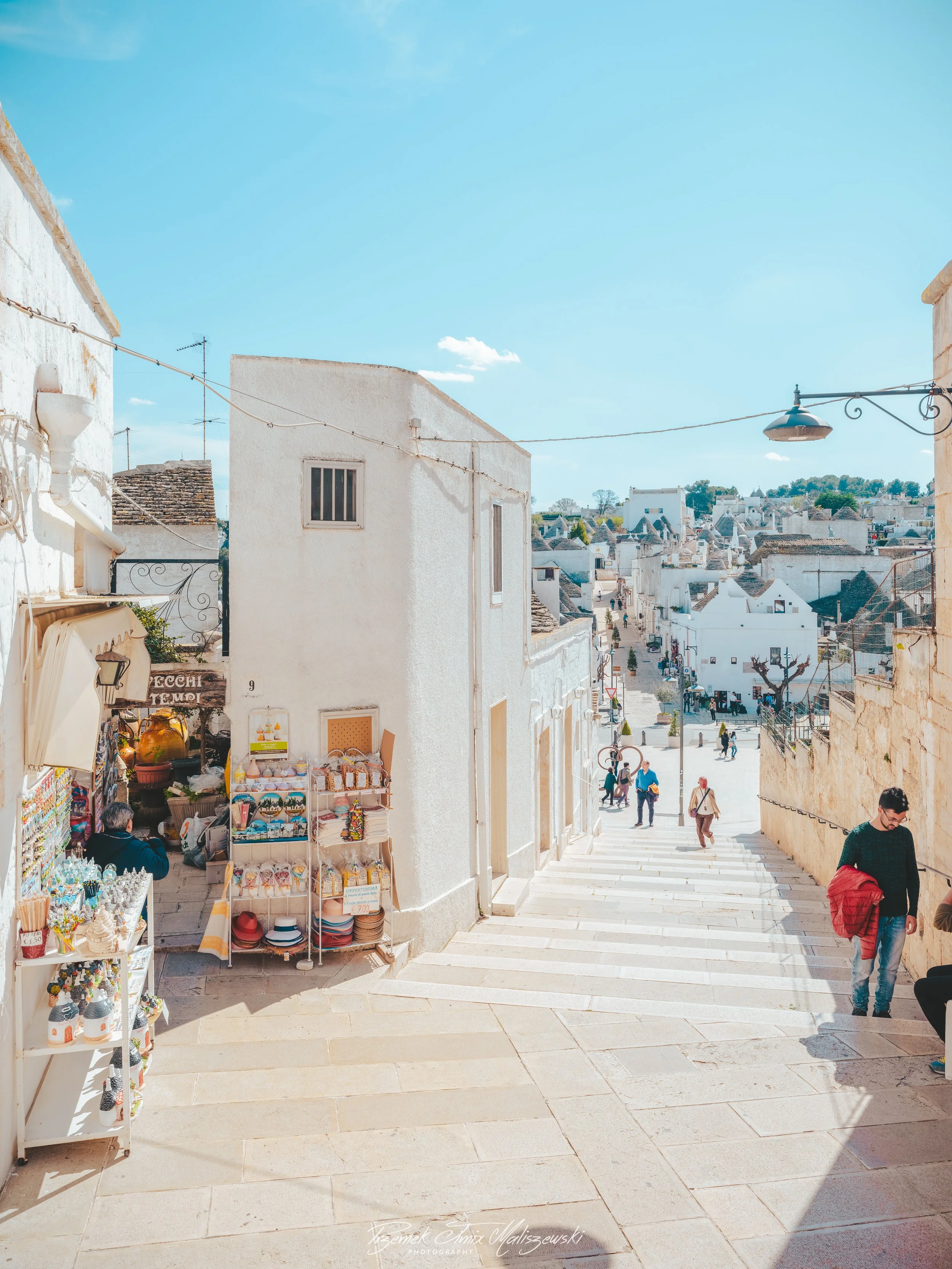
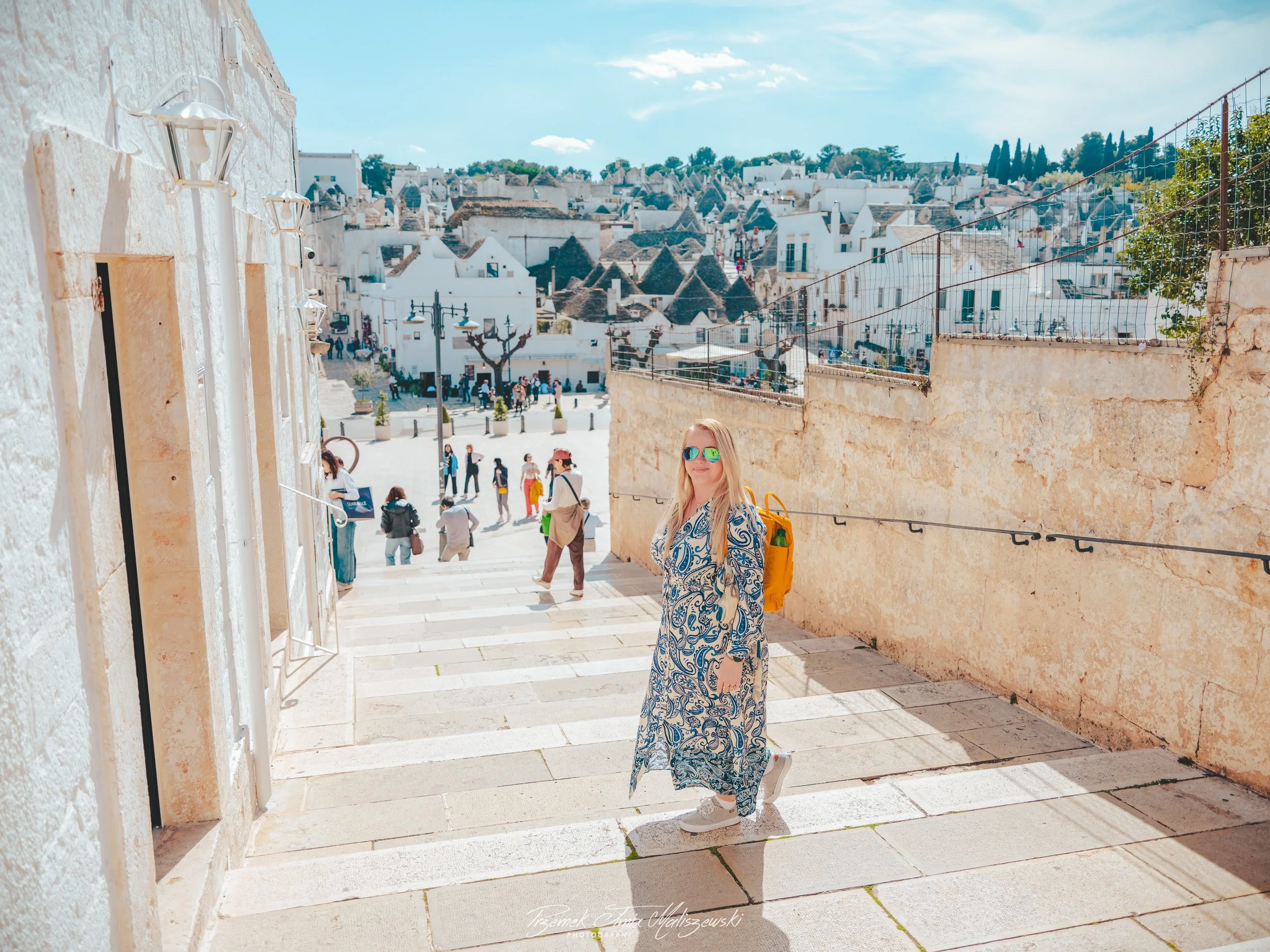
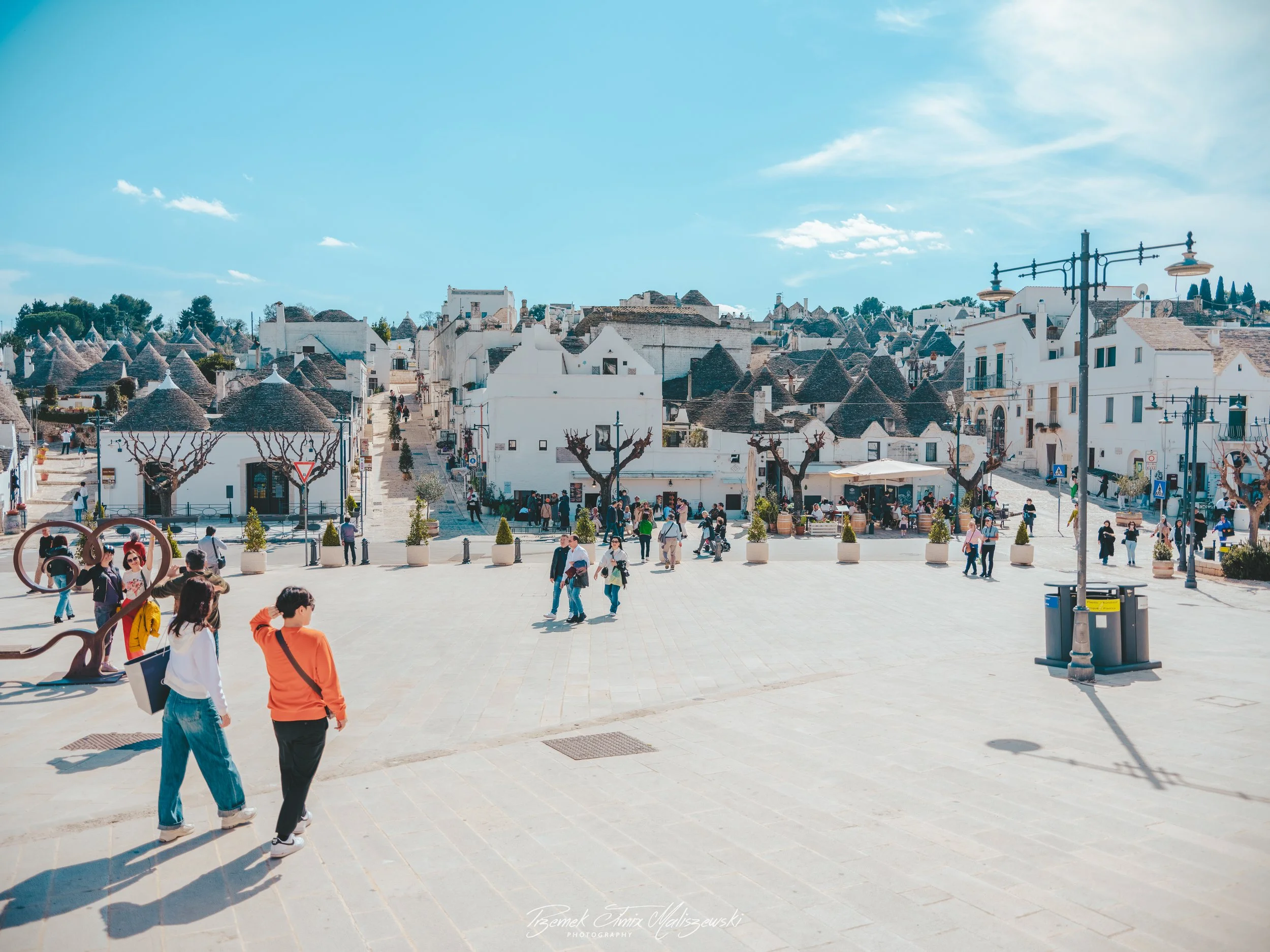
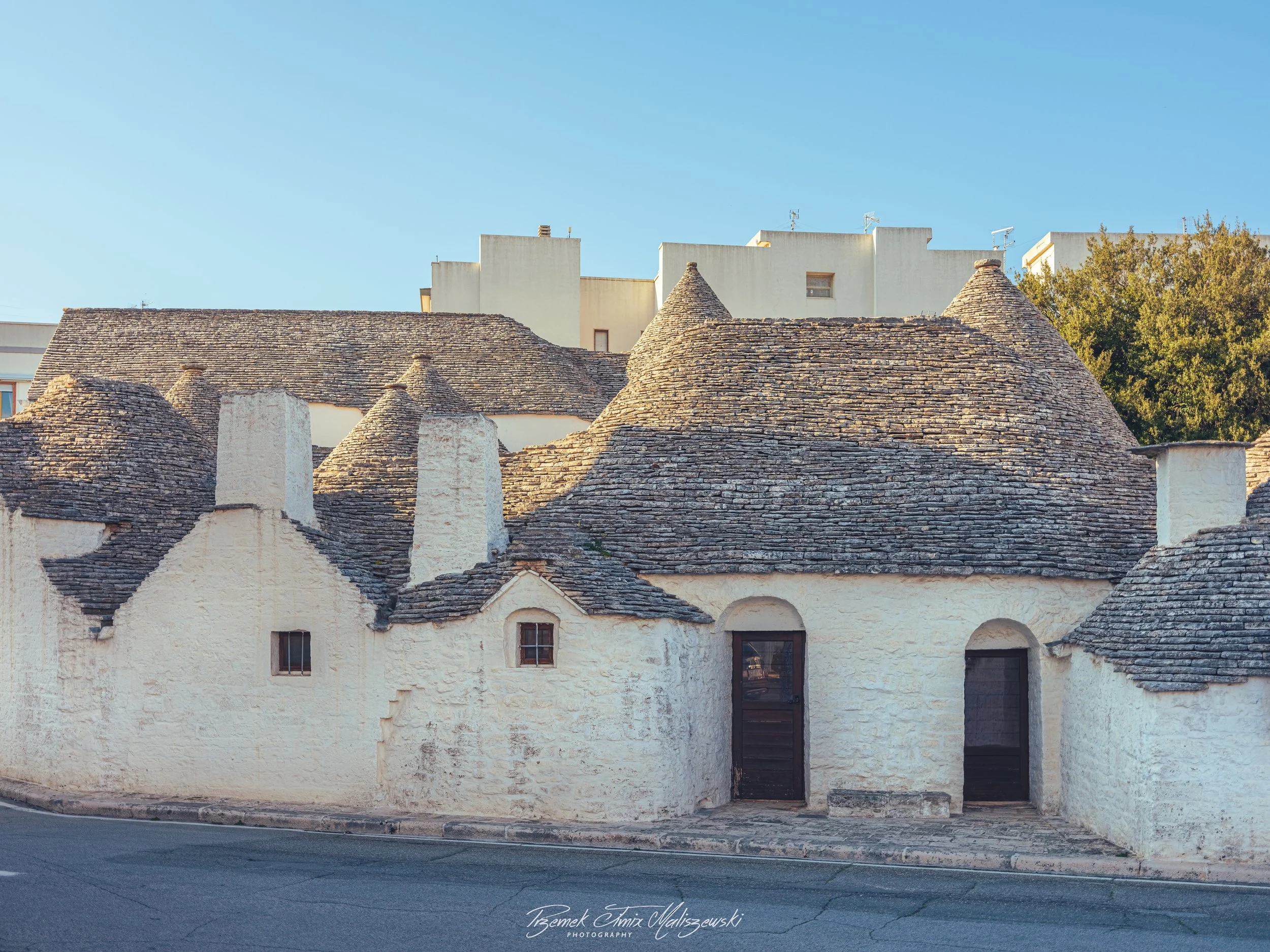
Typical landscape of Alberobello: white walls and roof cones of grey stone.
When traveling through the region, one can occasionally encounter trulli that are more "original" and perhaps closer to the prototype than those admired in Alberobello today. Those standing alone in the fields genuinely resemble stone huts, hideaways, shelters, or storage spaces for tools needed when working with olives. It is clearly visible that they are "working" structures — maximally utilitarian, built from loosely laid stones without mortar, with roofs in a true conical shape.
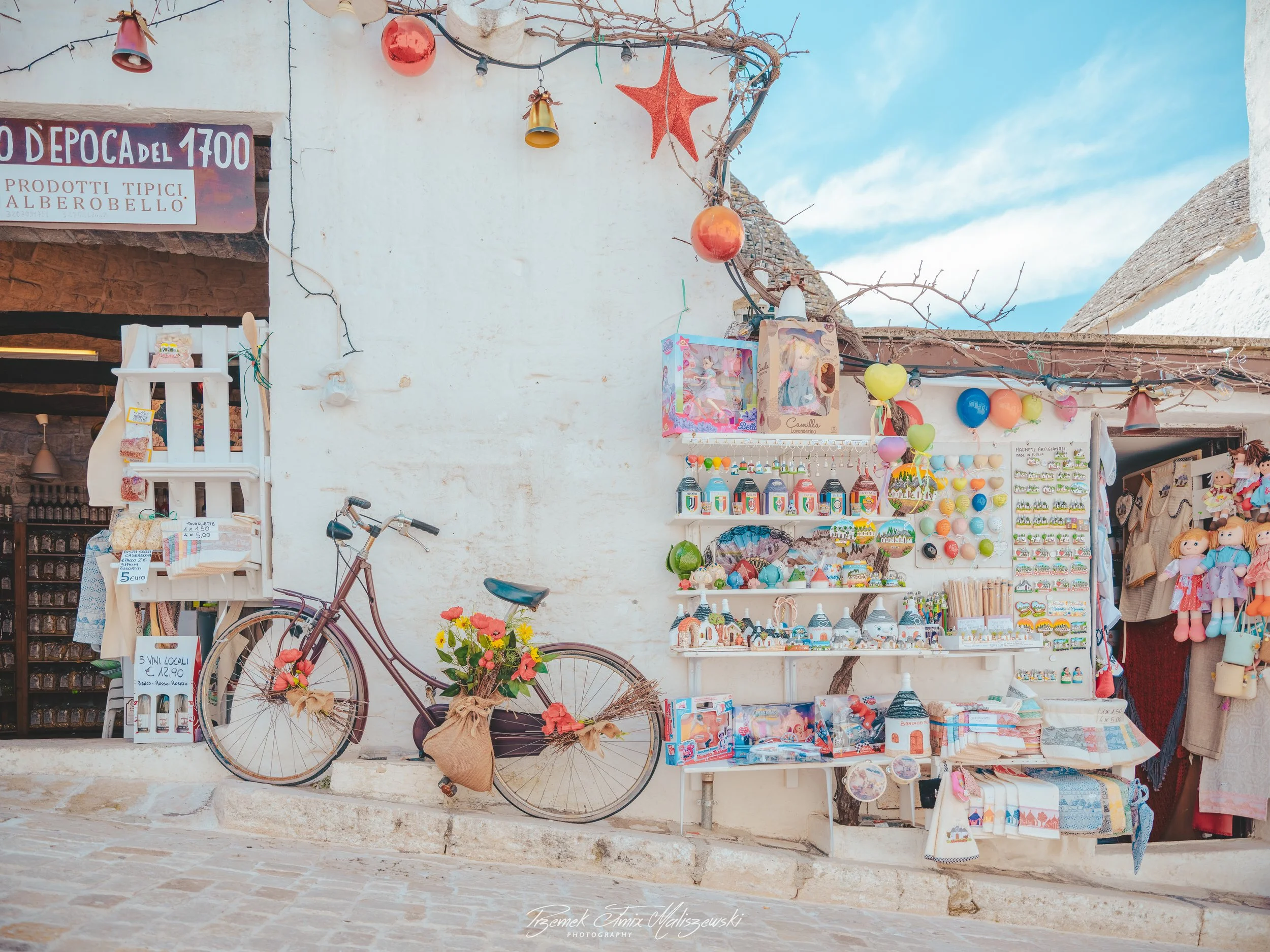
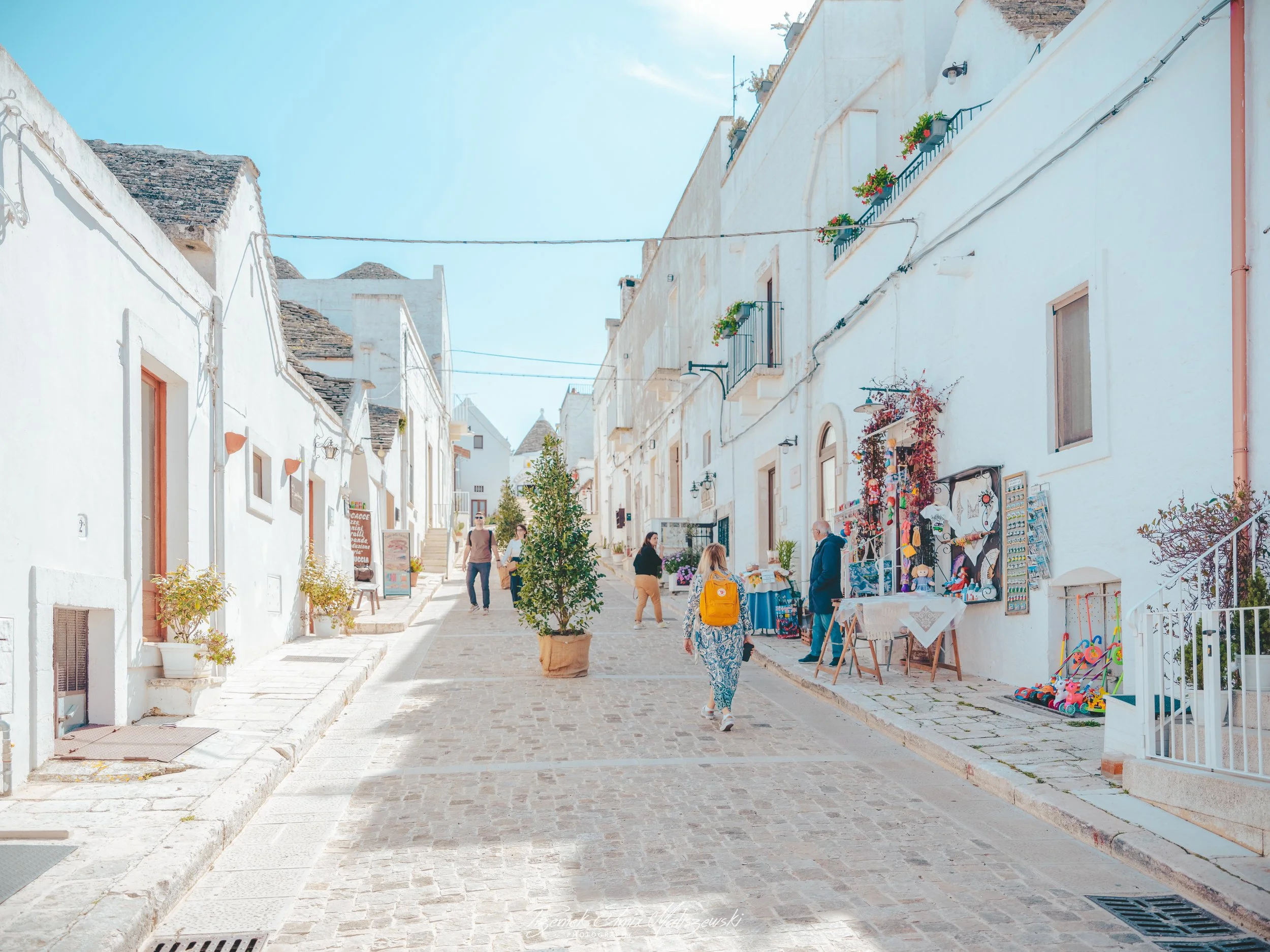
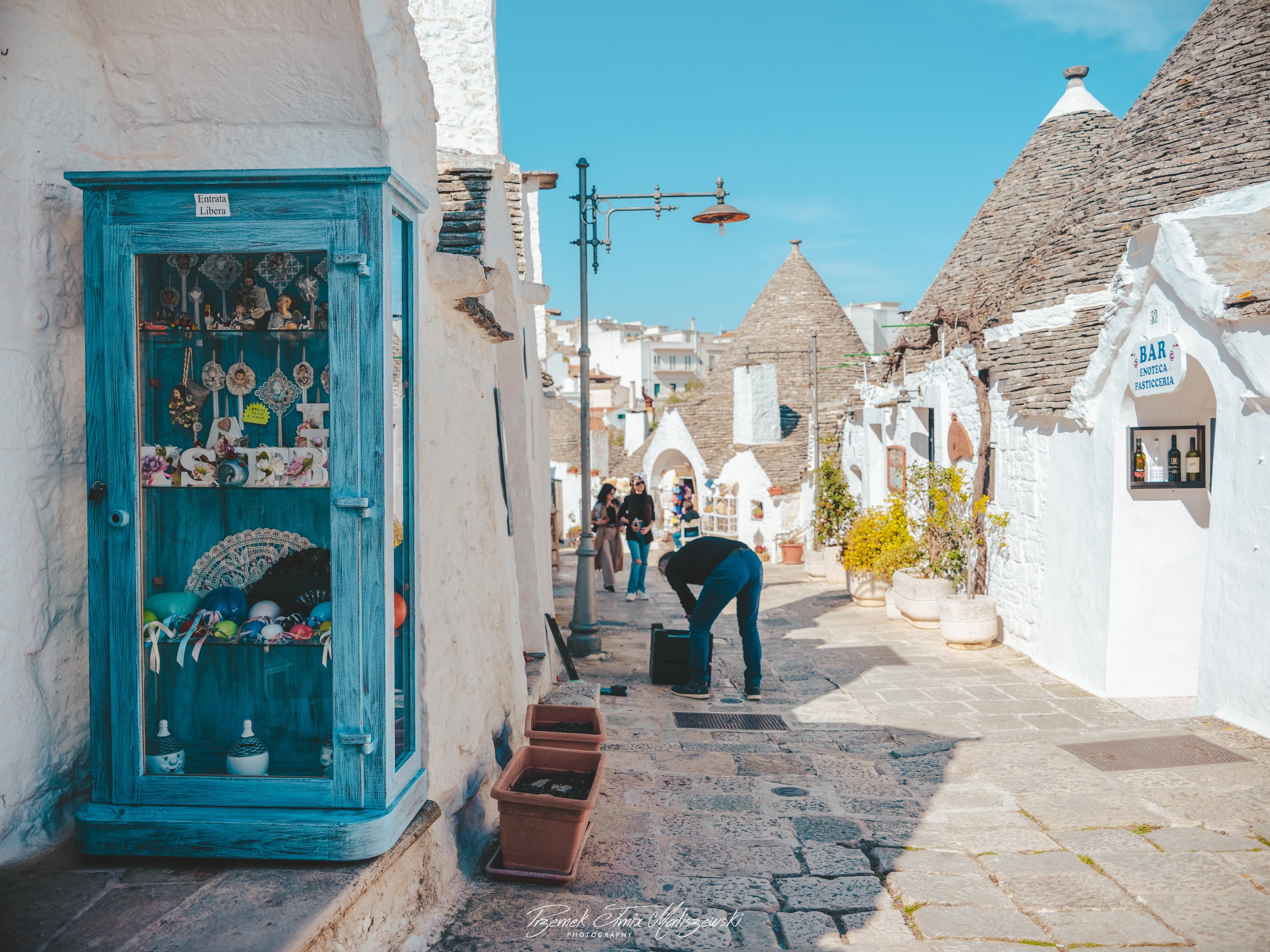
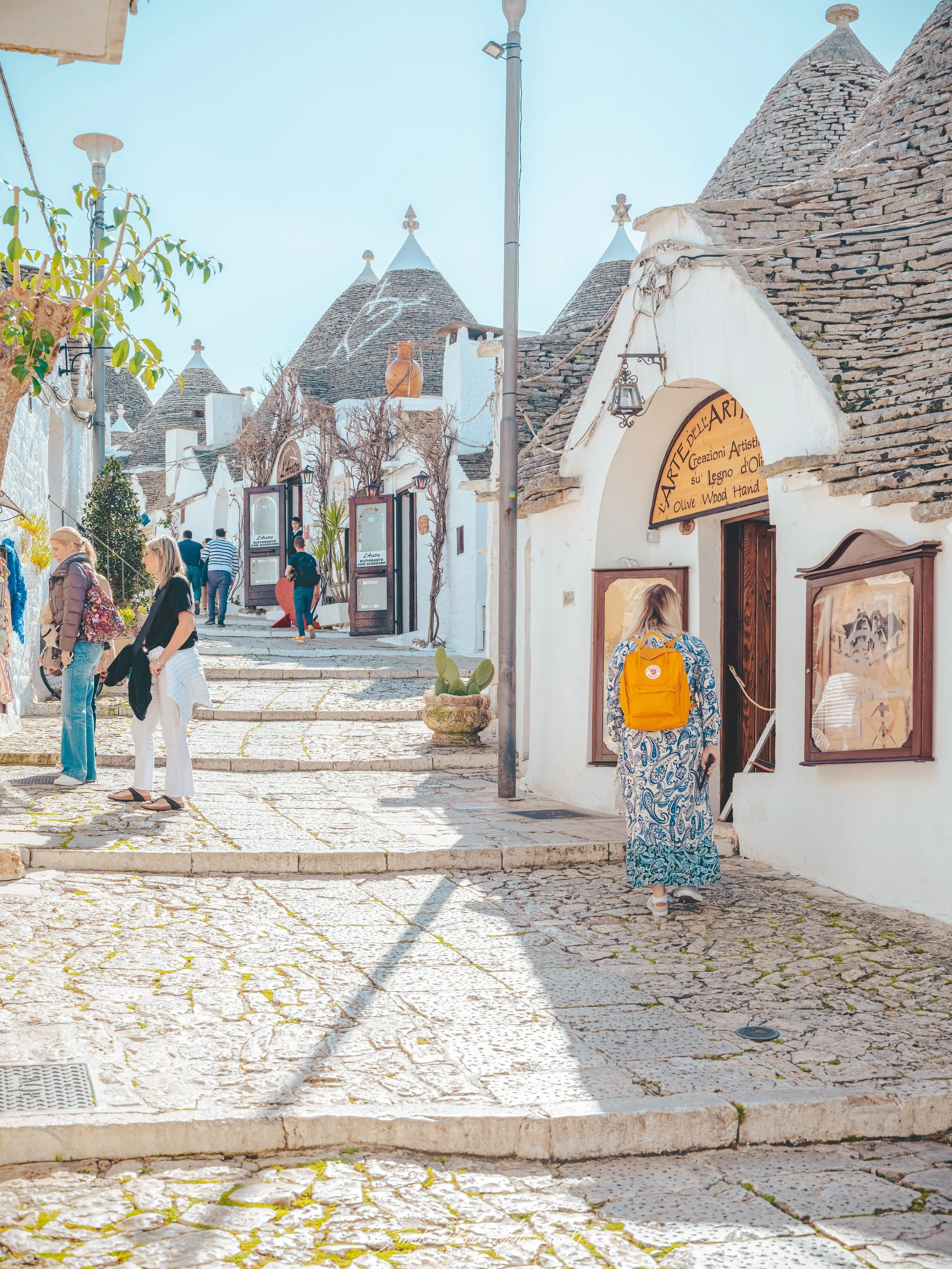
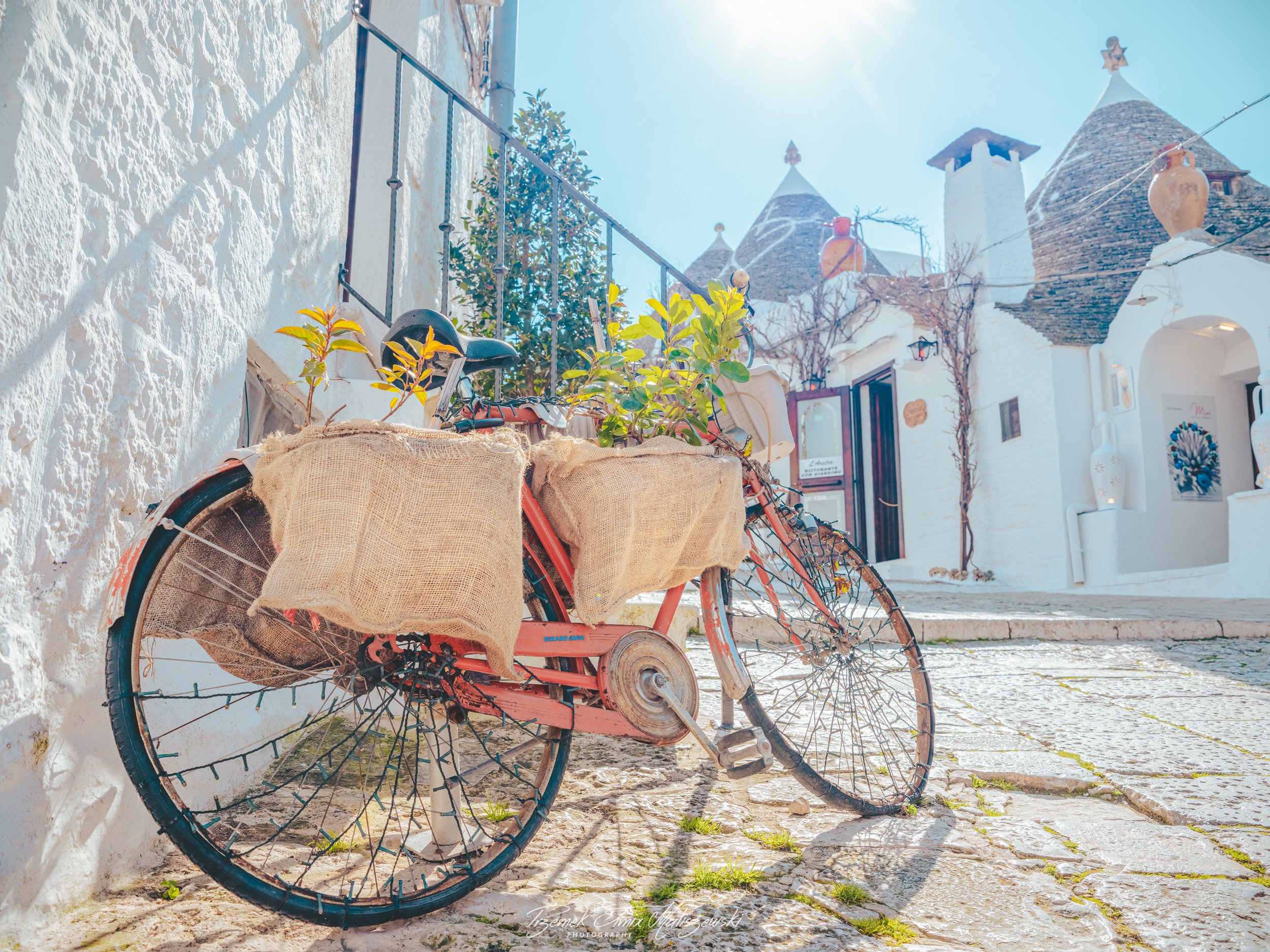
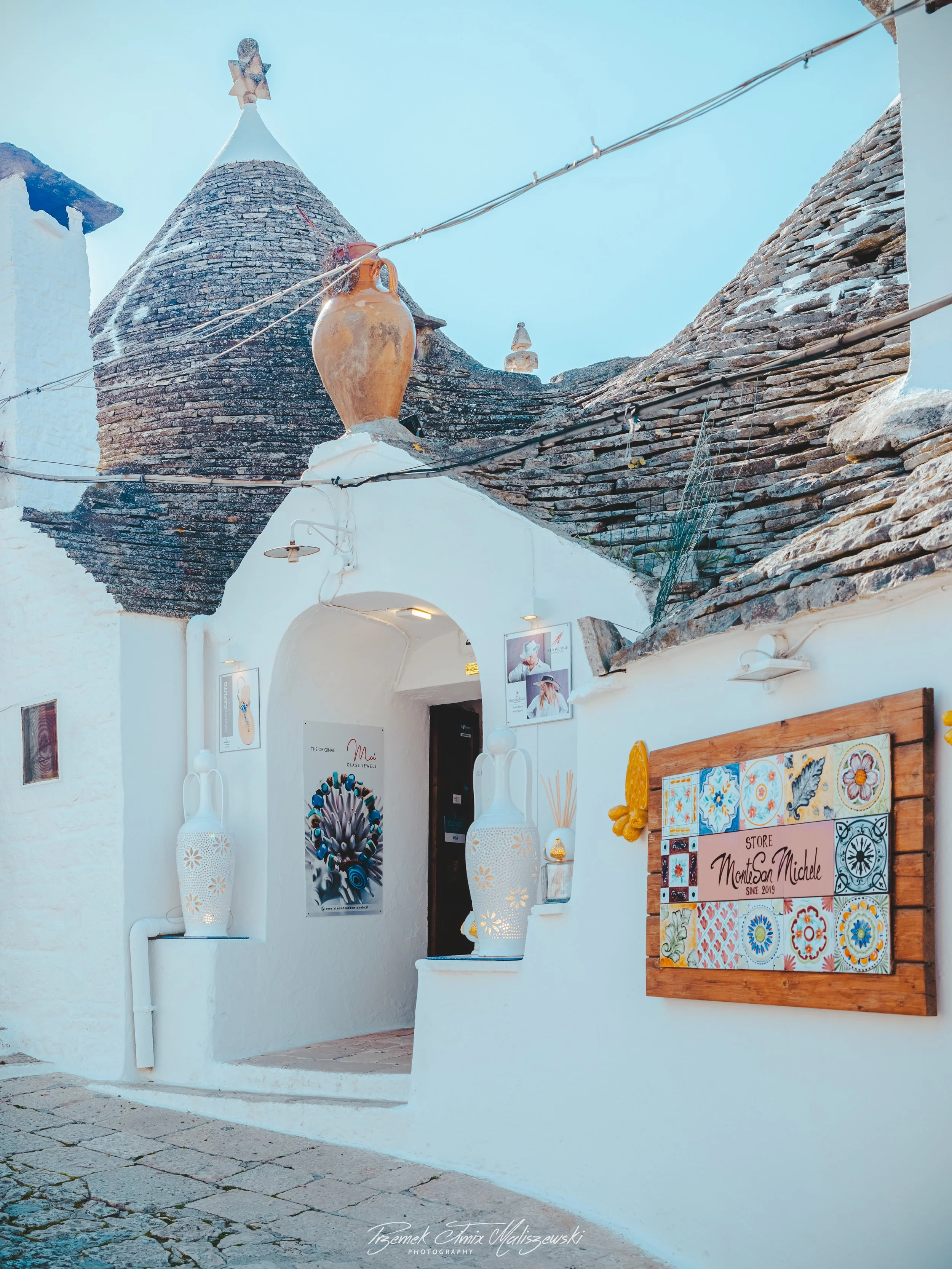
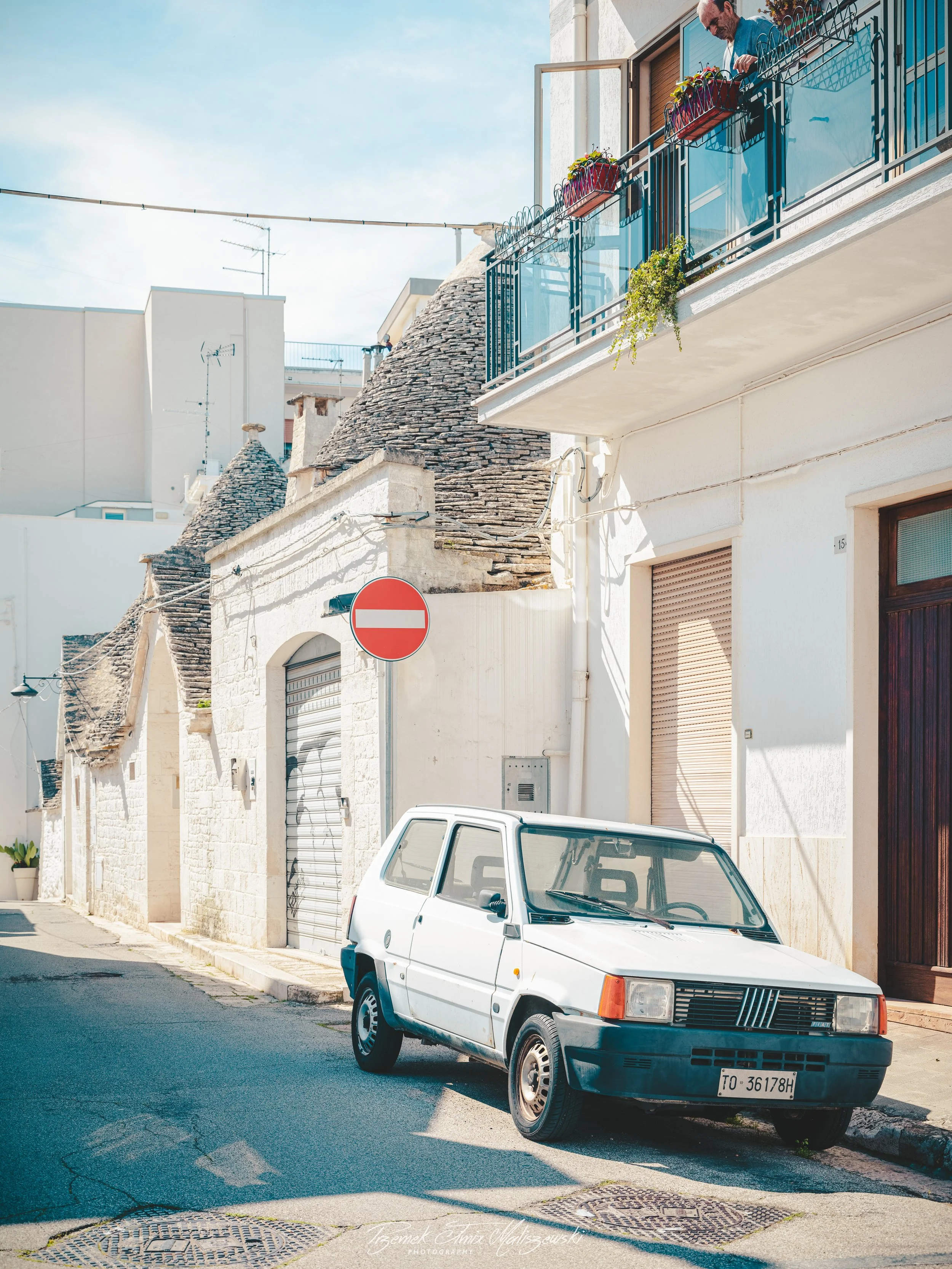
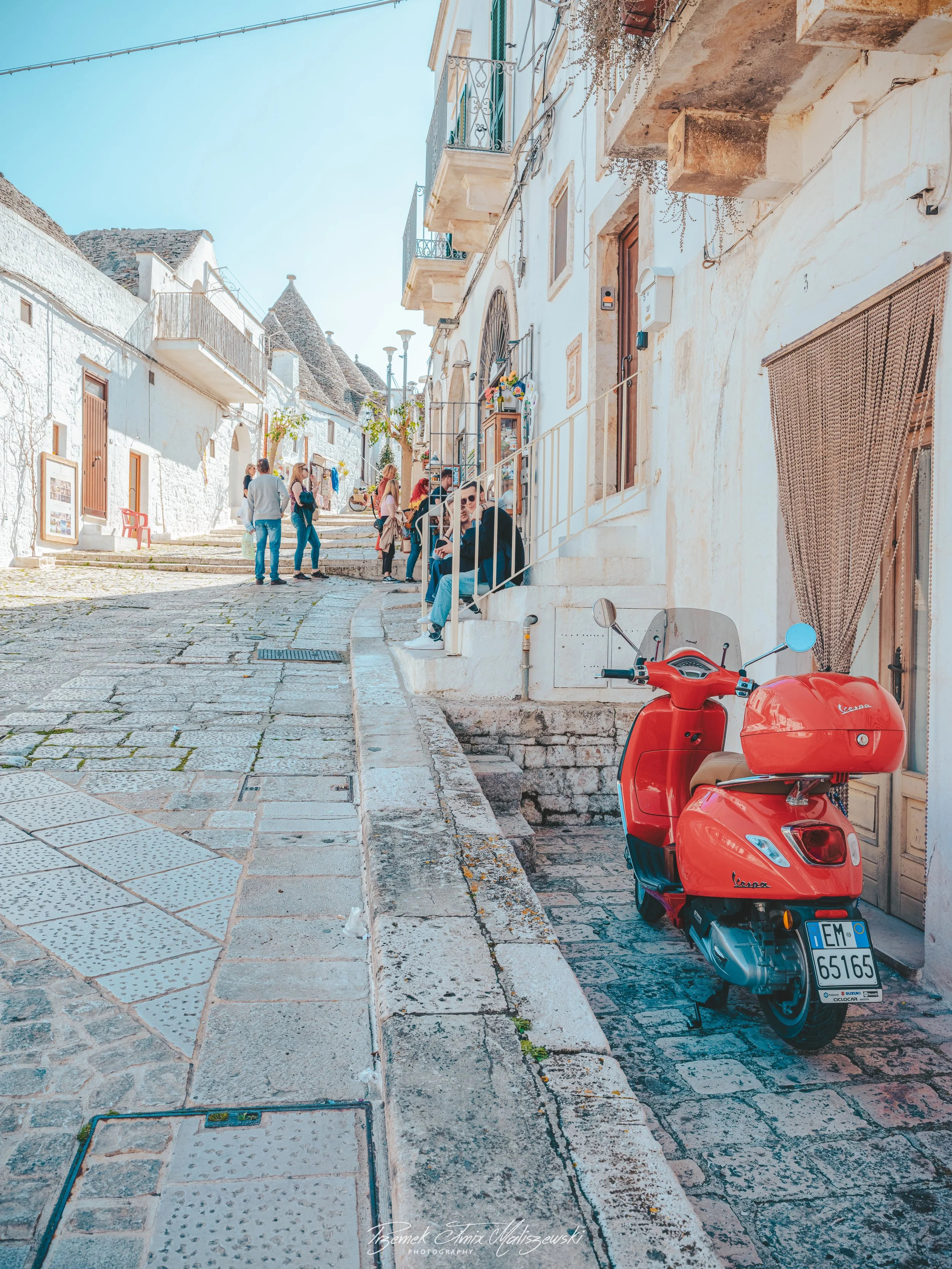
The trulli that can be admired in Alberobello are their more "civilized" versions, with plastered or heavily whitewashed walls and fully equipped interiors. Today, they typically house souvenir shops, as well as galleries and tourist rental accommodations. There are also those inhabited by private individuals, alongside new ones built using modern methods, yet still featuring the characteristic stone, round, and conical roofs — often topped with a cross or some other symbol — blending harmoniously into the surrounding architectural heritage.
The contemporary form architecturally related to trulli.
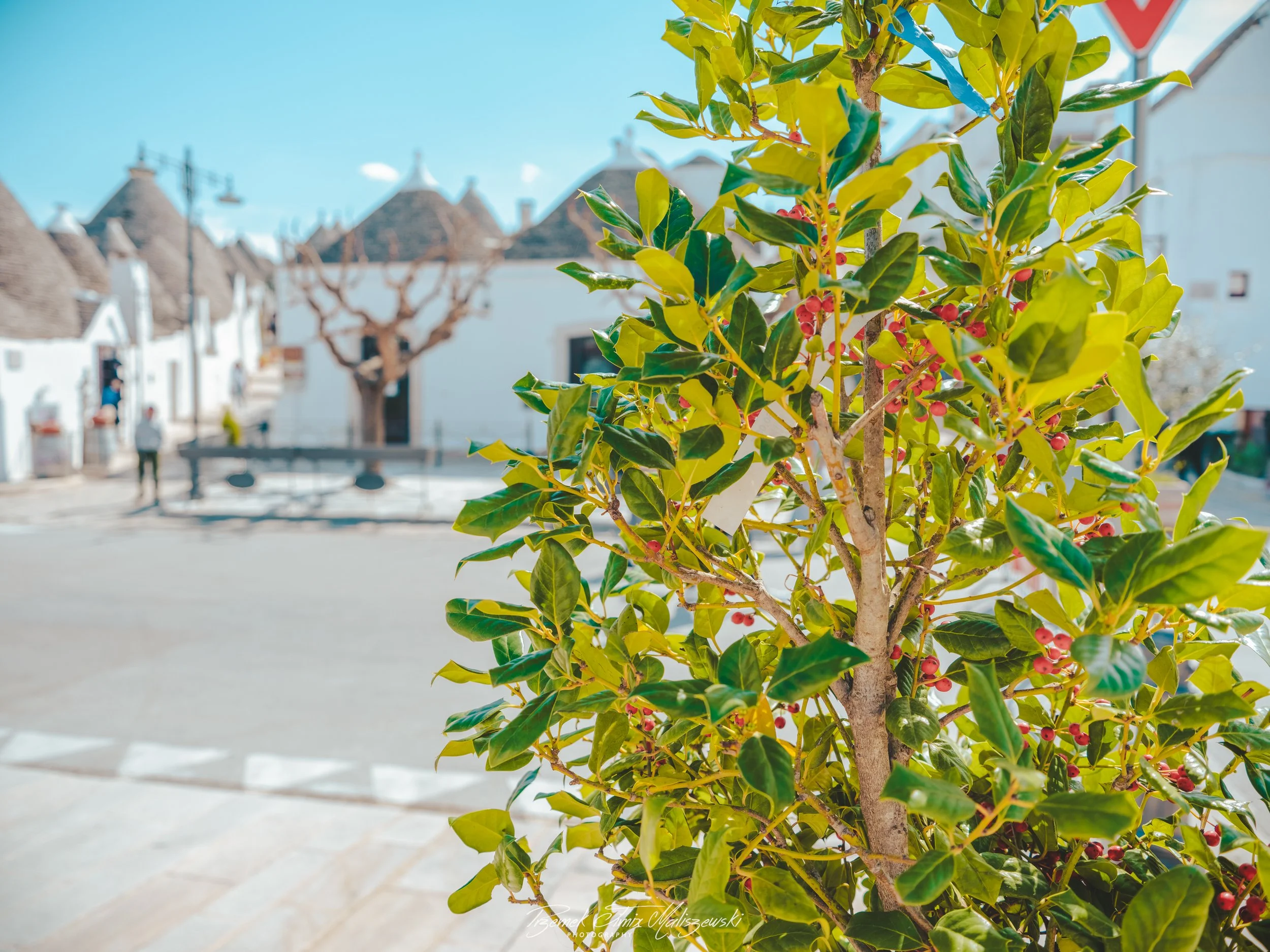
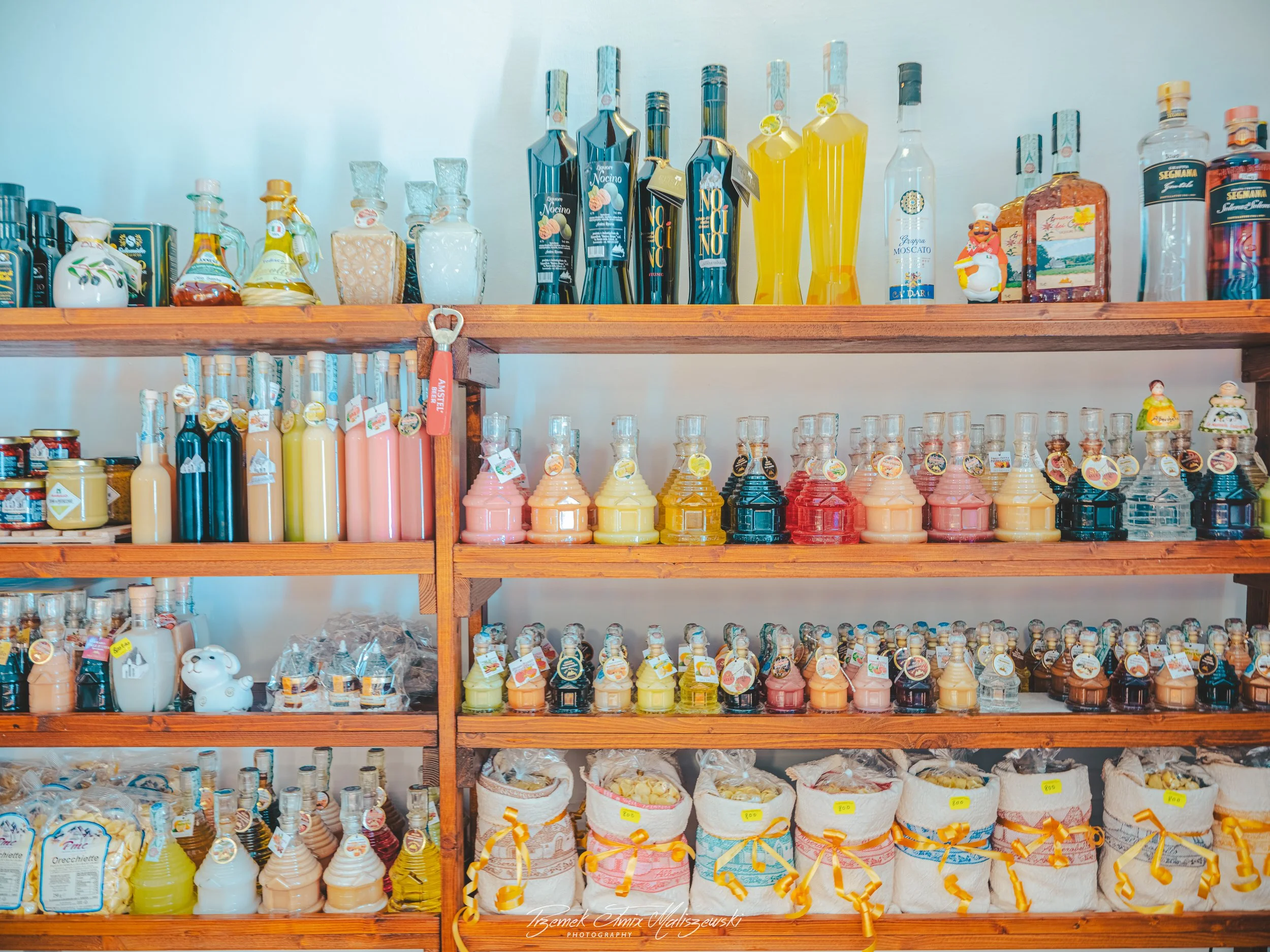
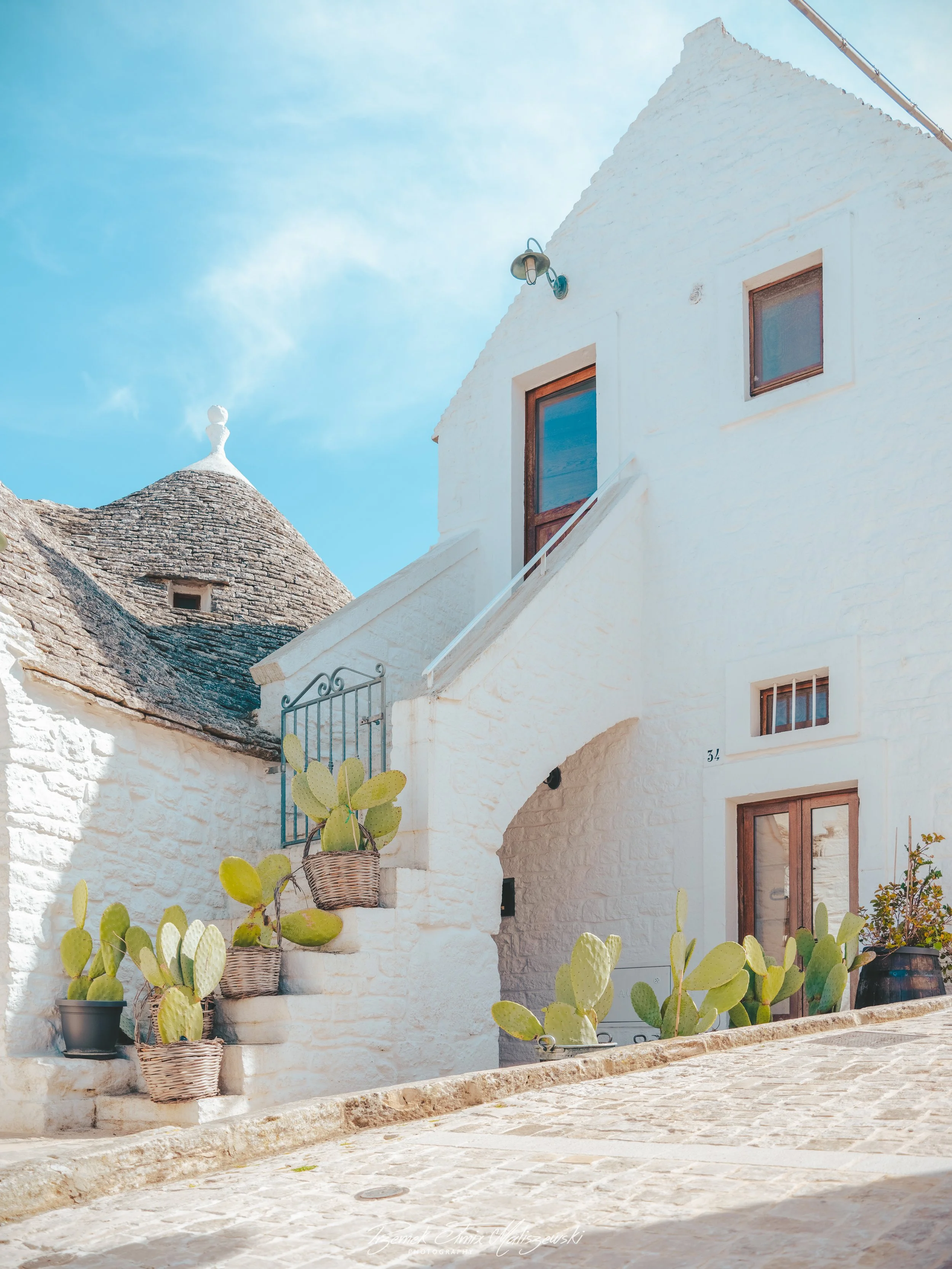
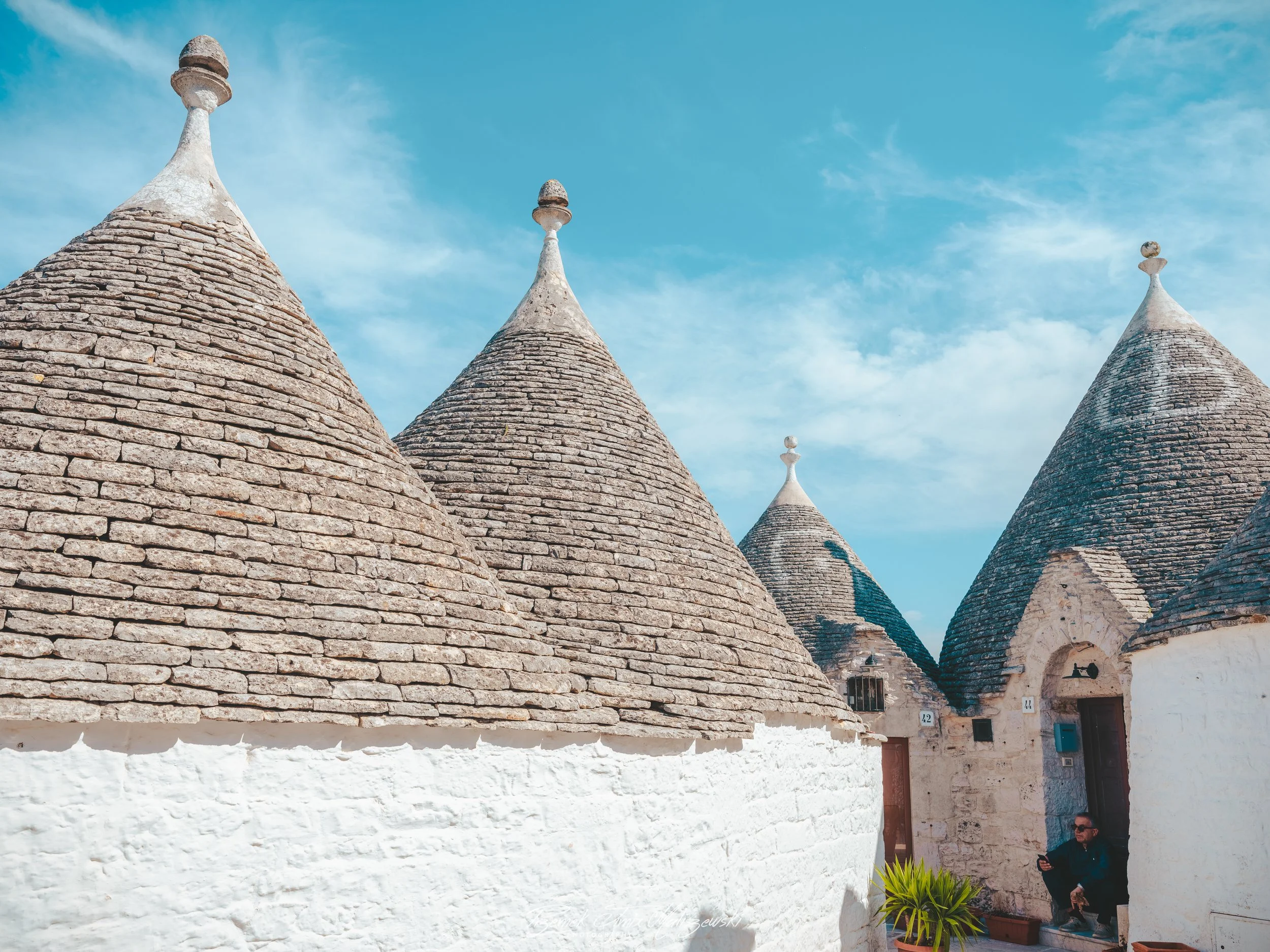
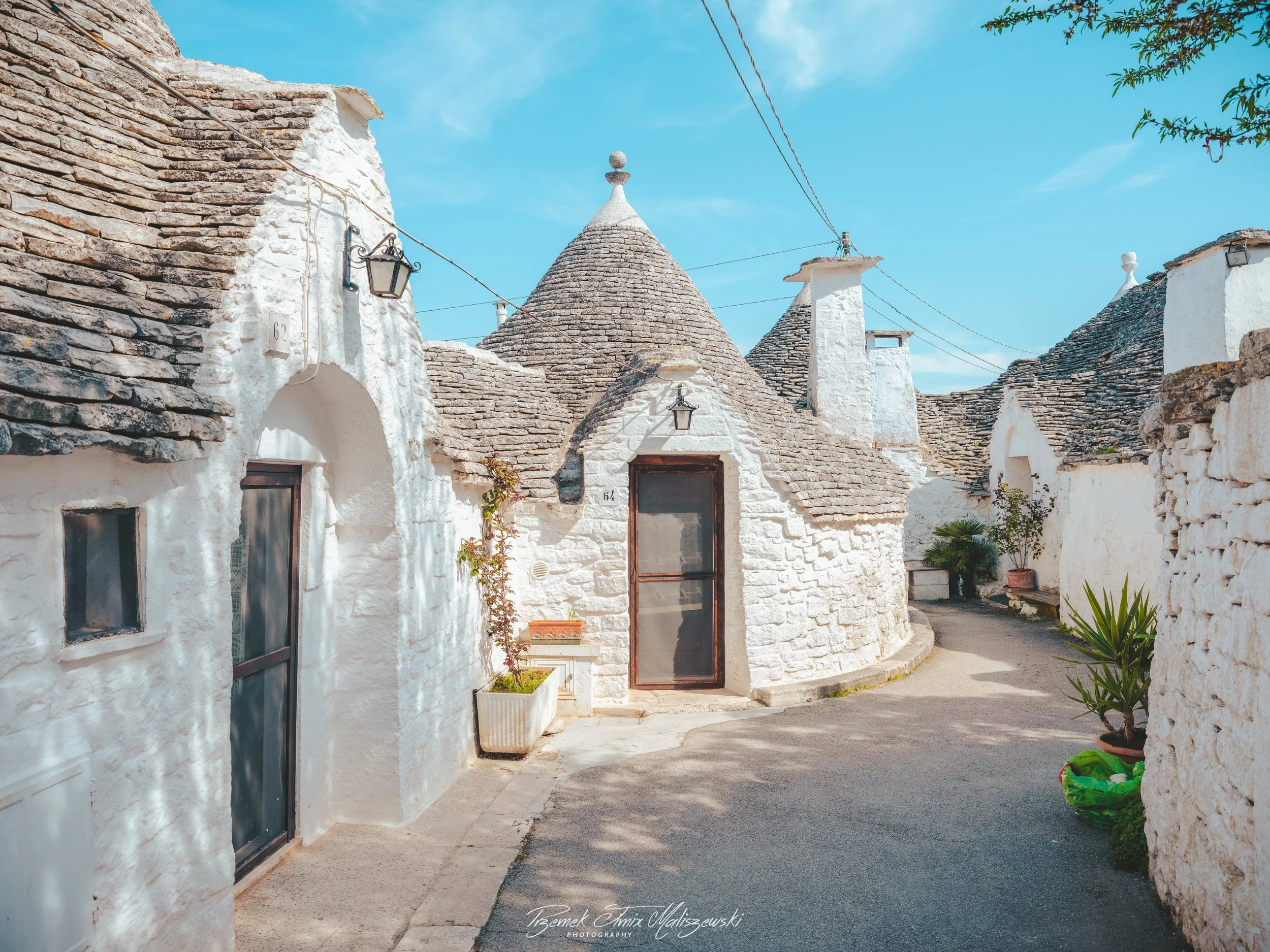
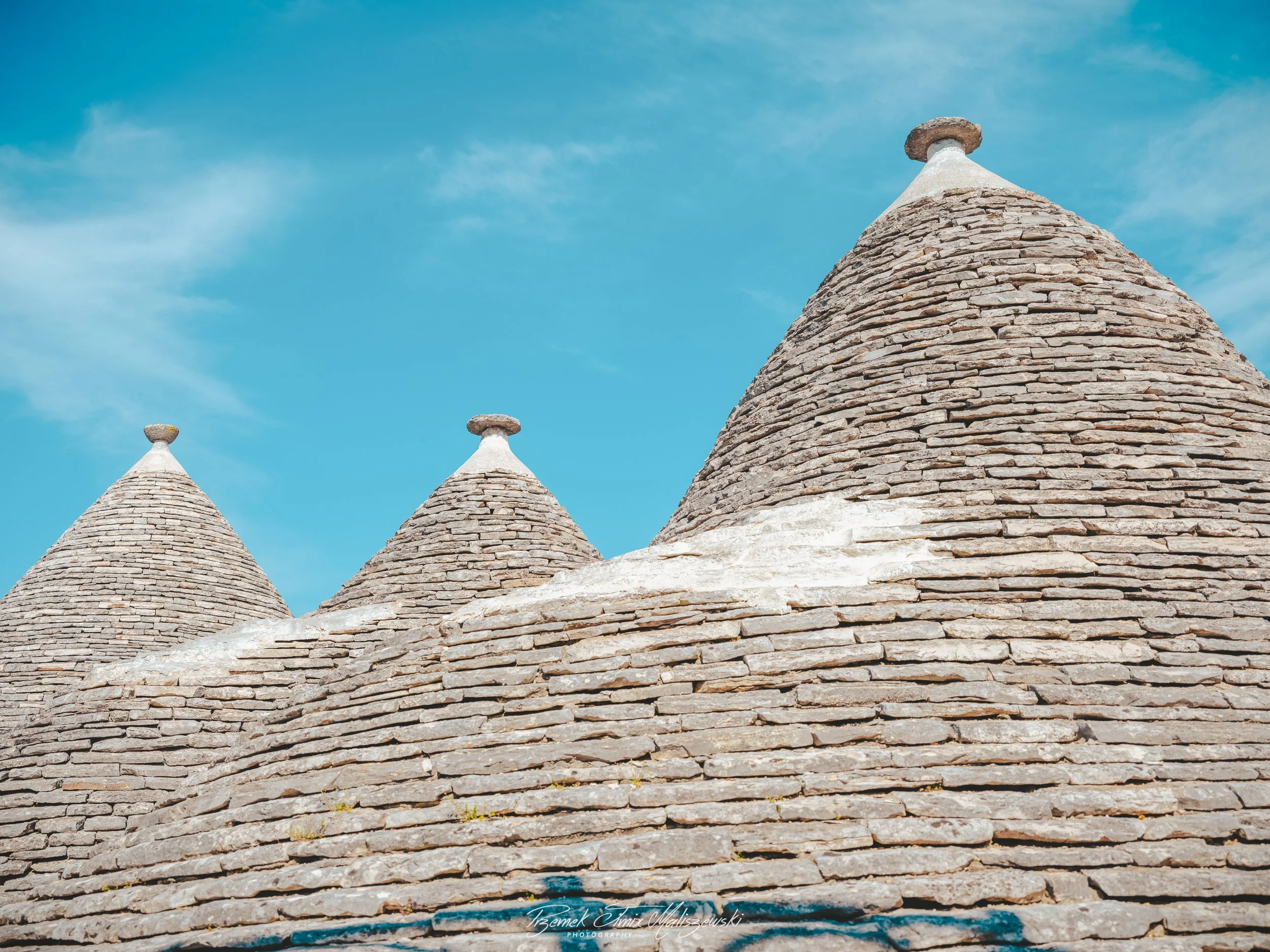
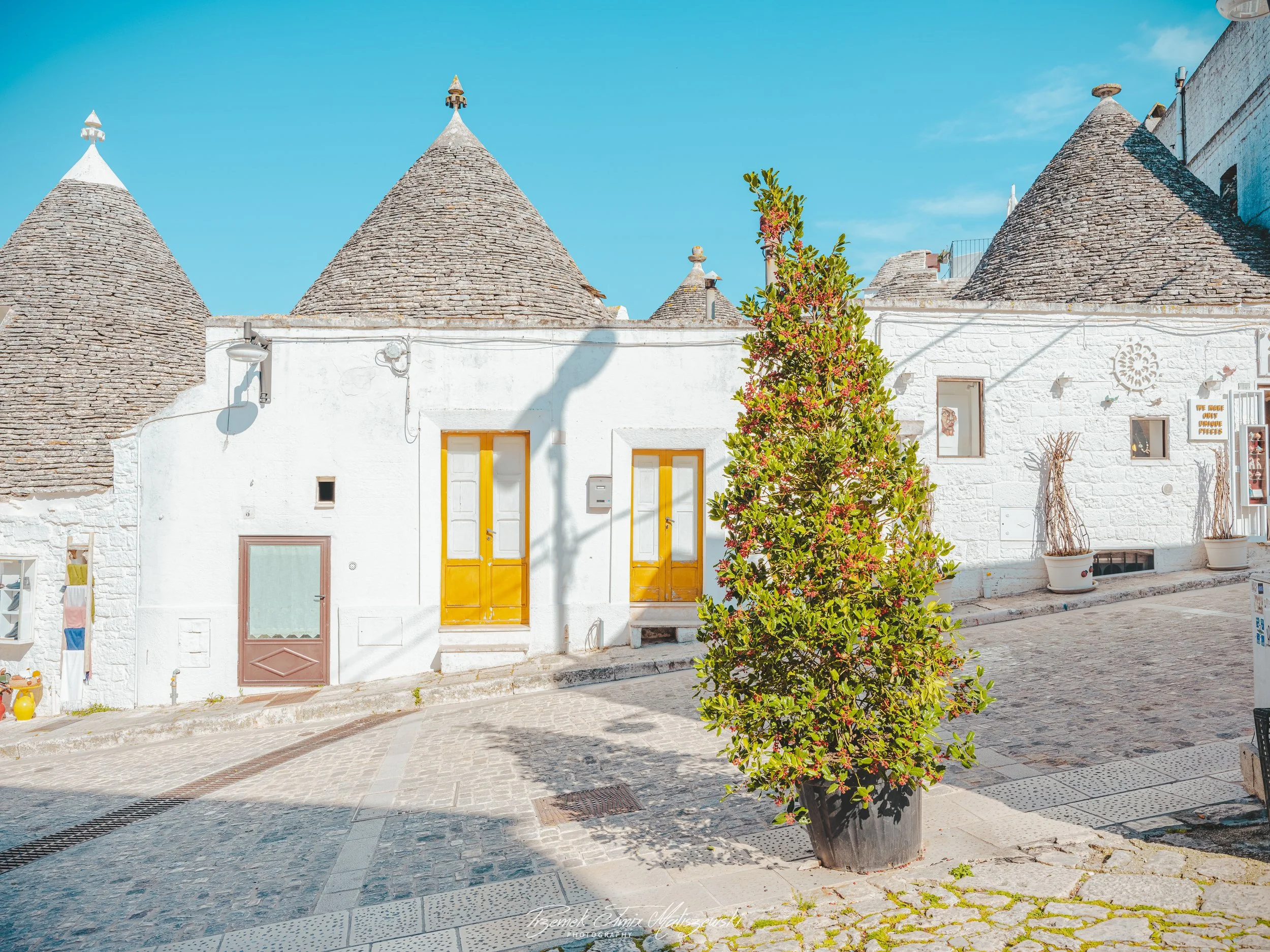
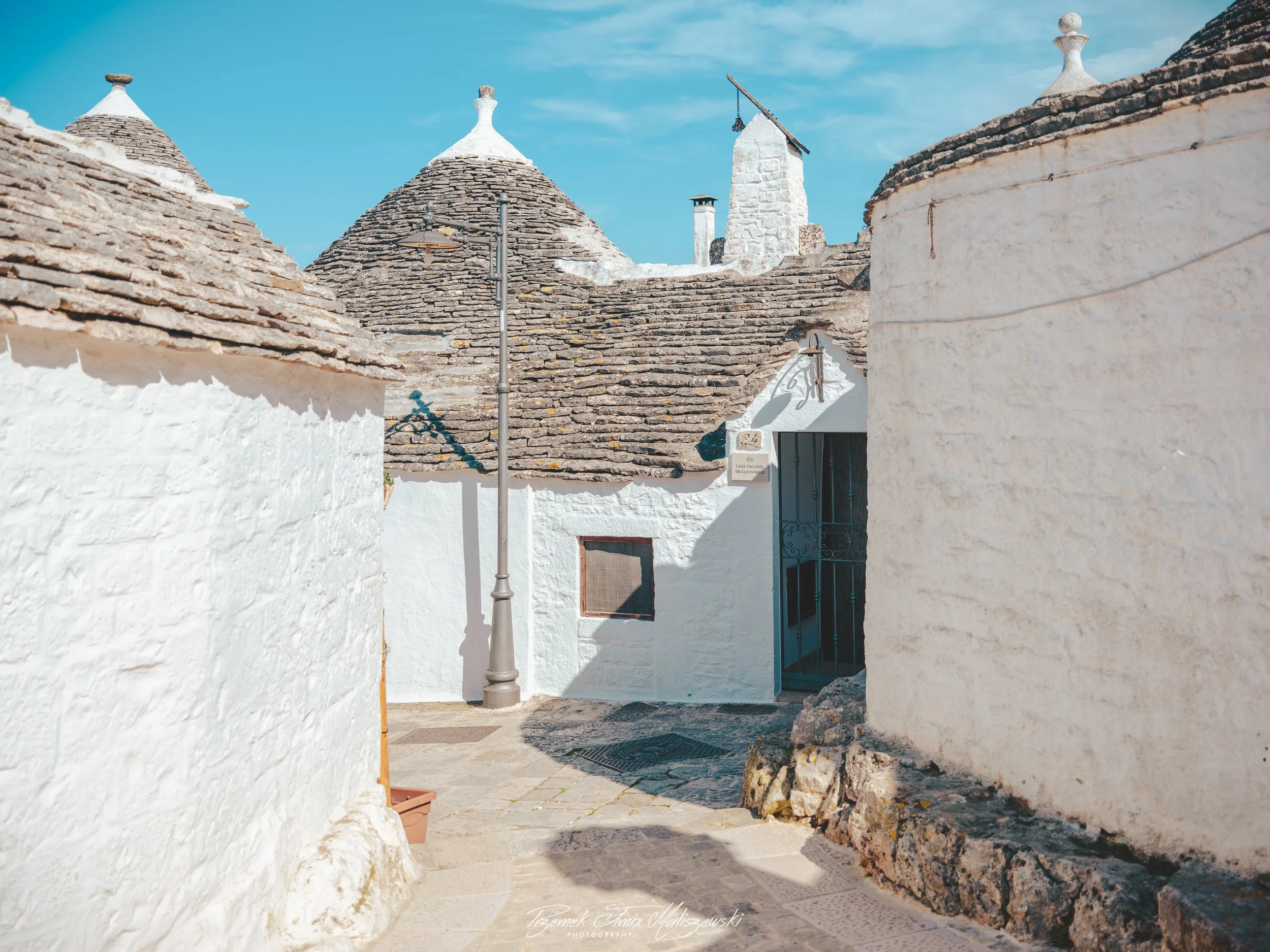
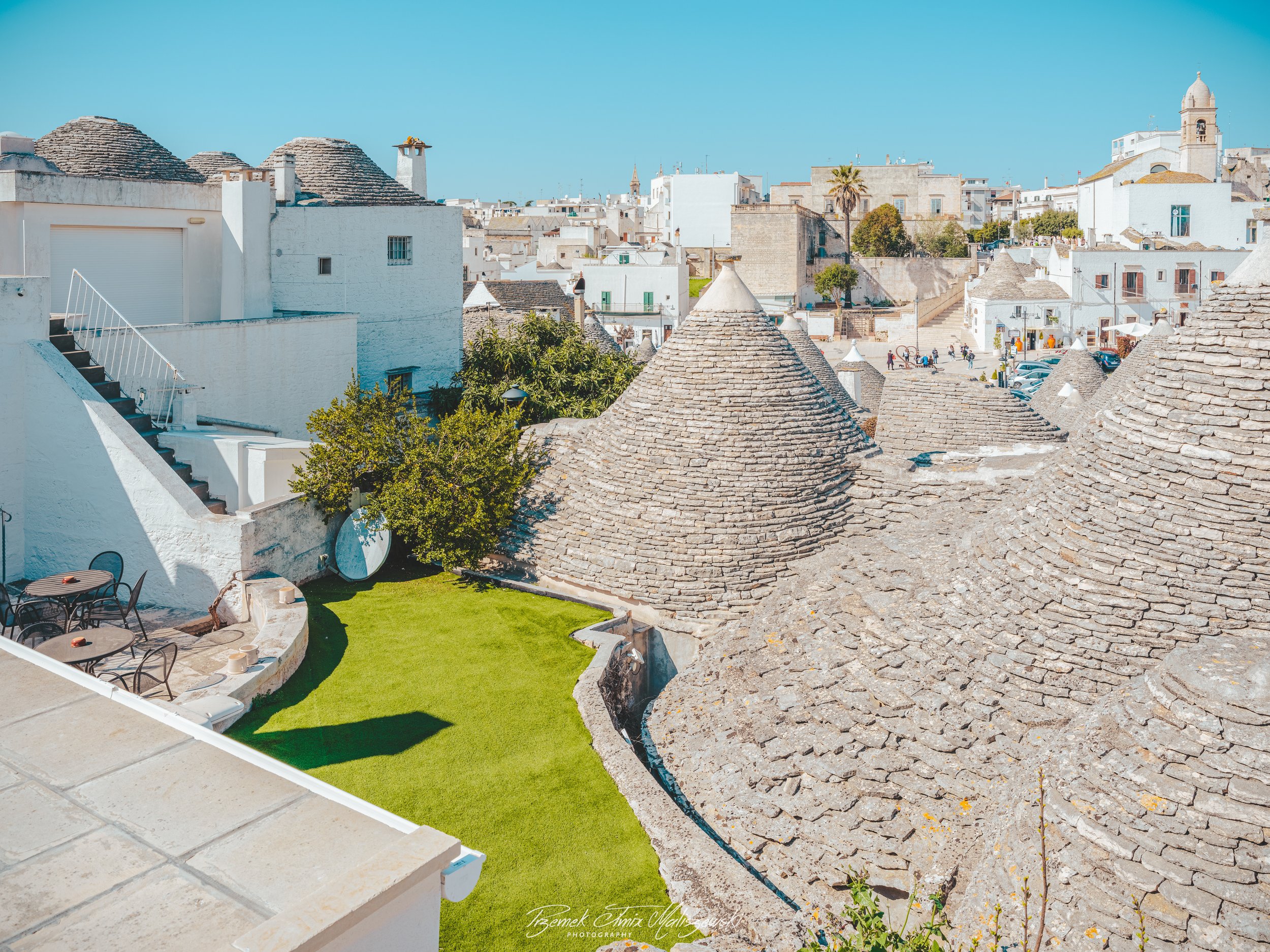
The age of the trulli is estimated in some cases to be several hundred years. The oldest buildings date back to the 13th century, some to the 15th, but the majority are usually 200 to 300 years old. The largest concentration of preserved trulli can be seen precisely in Alberobello, which has about 1,500 of them, as well as in nearby towns like Martina Franca.
From a photographic perspective, the landscape and shooting among the trulli of Alberobello resembles photographing on a ski slope in the fog: light meter readings can be ignored right away, and the scene must be overexposed quite significantly, especially on a sunny day, often by +1EV or slightly more. It is best to simply keep an eye on the histogram, and modern mirrorless cameras or smartphones with histogram display capabilities make this task much easier.